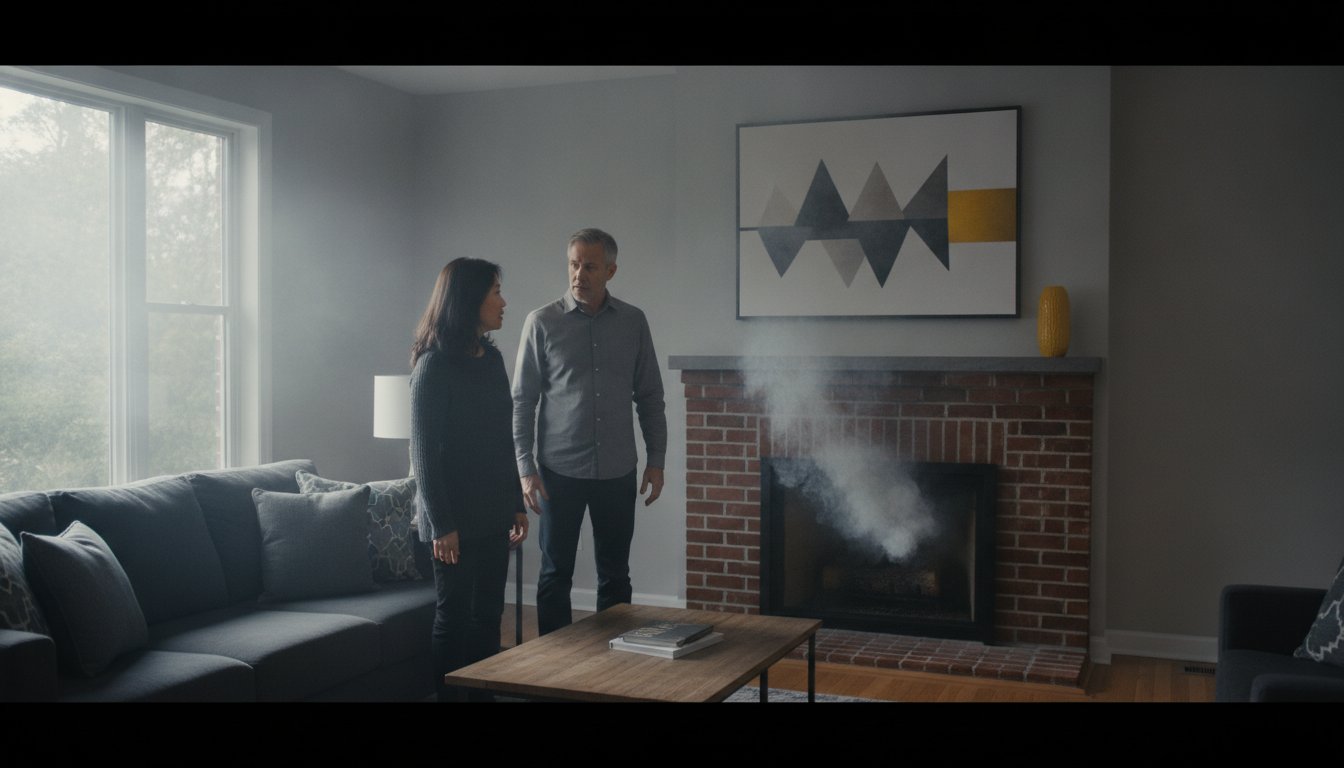
You strike a match. You settle in for a quiet evening. Suddenly, your living room fills with a thick, acrid haze. Your eyes sting. Your throat burns. The fear of a potential chimney fire sets in immediately. This isn't just a nuisance. It's a sign of smoke backing up into house chimney systems that requires your immediate attention. You shouldn't have to choose between a warm fire and breathable air. It's a frustrating experience that turns a cozy sanctuary into a dangerous environment.
We understand the urgency. Smoke backup is a physics problem. Solve the draft, and you solve the smoke. We'll help you identify exactly why your fireplace is failing and provide the immediate steps to clear your air. The U.S. Consumer Product Safety Commission estimates that over 16,000 residential fires originate in chimneys and solid-fuel appliances annually. Safety is the priority. There's no room for guesswork. This guide covers the root causes of poor drafting, from cold flues to dangerous creosote buildup. You'll learn how to troubleshoot the issue now and prevent future backups through proper maintenance and NFPA 211 compliance. Let's reclaim your hearth and protect your home.
Key Takeaways
- Safety first. Stop the fuel source immediately and evacuate the area if smoke becomes thick.
- Master the physics of drafting to resolve smoke backing up into house chimney vents and eliminate cold air plugs.
- Verify your damper's condition and clear internal blockages like debris or seasonal animal nests.
- Evaluate external factors such as roof height and wind patterns that disrupt your chimney’s natural draw.
- Prevent future hazards by scheduling annual professional inspections and certified cleanings to remove dangerous creosote.
Immediate Action: What to Do When Smoke Backs Up Into Your Home
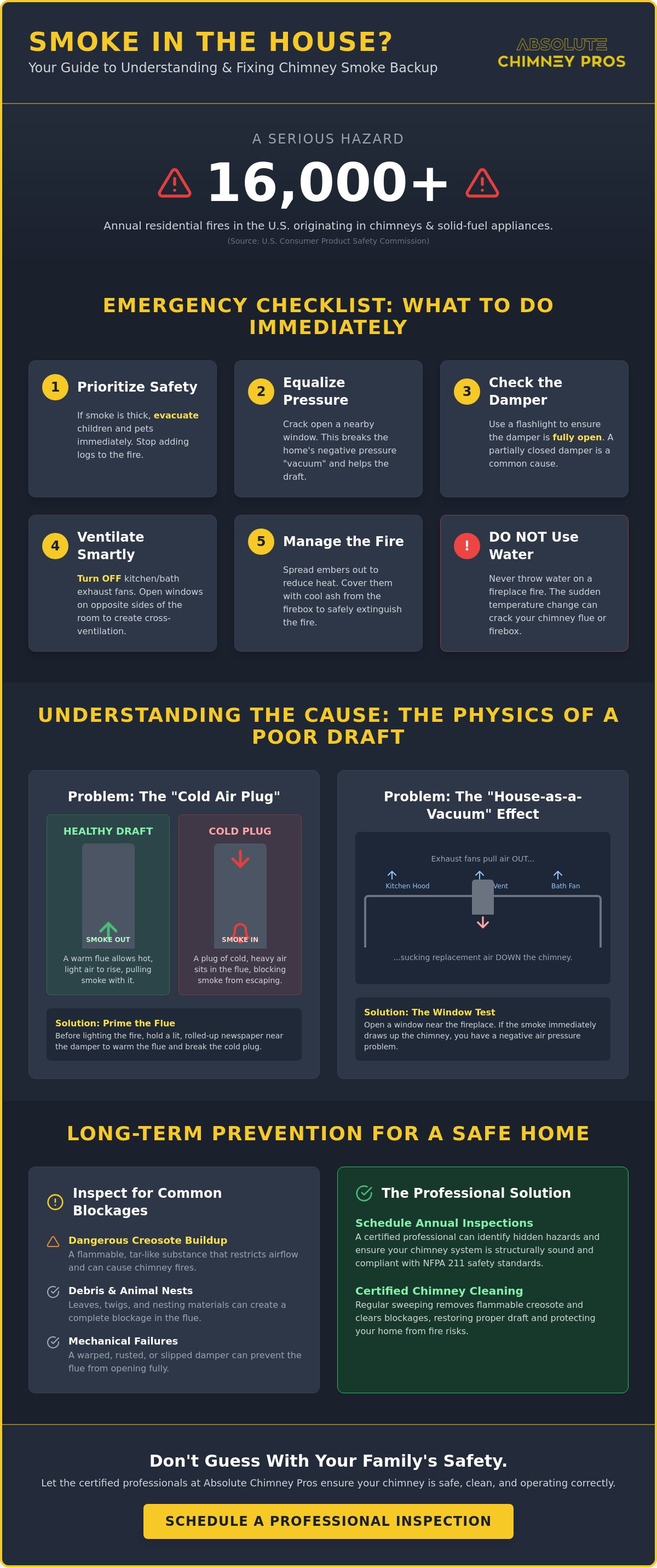
Smoke in the living room is a household crisis. Don't panic. Act with precision. Your first priority is life safety. If the smoke is thick or accumulating quickly, evacuate children and pets from the house immediately. Smoke contains carbon monoxide and fine particulates that cause immediate respiratory distress. Once the vulnerable are safe, stop adding fuel. Do not put another log on the fire. This only feeds the problem and increases the volume of toxins entering your home.
Open a nearby window immediately. This seems counterintuitive during a cold winter, but it's a critical safety step. Modern homes are built to be airtight. This often creates a negative pressure environment that disrupts The Physics of Drafting. By opening a window, you break that vacuum. You give the fire the oxygen it needs to push smoke up the flue instead of into your face. Next, verify the damper. Use a flashlight and a fire-resistant poker to ensure it's locked in the fully open position. A damper that's slipped, rusted, or warped is a primary reason for smoke backing up into house chimney systems. If the flames spread beyond the grate, use a fire extinguisher. If the fire stays contained, move to suppression.
Clearing the Air Safely
Create cross-ventilation to purge the haze. Open windows on opposite sides of the room to force a fresh air exchange. Turn off all exhaust fans immediately. Kitchen hoods and bathroom vents pull air out of the house. This competes with your chimney for air and often wins, effectively sucking smoke back down the flue. Avoid using ceiling fans. They don't vent smoke. Instead, they circulate toxins and push soot deeper into your furniture and curtains. Focus on moving air out through the windows, not around the room.
Managing the Active Fire
Control the heat source to stop the smoke at the root. Use your fireplace tools to spread the logs out. This reduces the intensity of the flame and slows smoke production. Grab a fire-resistant shovel and scoop up cool ash from the bottom of the firebox. Cover the glowing embers with the ash to stifle the oxygen and kill the fire safely. Never throw water on a fireplace fire unless it's an absolute emergency. The sudden temperature shift can crack your firebox or flue tiles. Water also creates a massive cloud of steam and wet soot that will coat your walls and ceilings.
Understanding Why Smoke Backs Up: The Physics of Drafting
Draft is not a suggestion. It is a requirement. It is the pressure difference between the air inside your flue and the air outside your home. This difference is what pulls combustion gases away from your living space. When this balance fails, you experience smoke backing up into house chimney systems. Temperature is the primary driver. Hot air rises because it is less dense. Cold air is heavy and sinks. If your chimney is built on an exterior wall, the masonry stays cold. This creates a "Cold Air Plug." This column of heavy, frigid air sits in your flue like a physical lid. When you light a fire, the rising smoke hits this dense air and is pushed back into the room. There is no guesswork involved. It is pure physics.
Negative Air Pressure and the "House-as-a-Vacuum"
Modern construction prioritizes energy efficiency. Homes are wrapped tight to prevent leaks. This creates a "House-as-a-Vacuum" effect. High-powered kitchen hoods, bathroom fans, and clothes dryers are aggressive. They pull air out of the building. To replace it, the house sucks air through the path of least resistance. Often, that is your chimney. This competition for air is one of the most common Mechanical Failures in residential ventilation. In multi-level NJ homes, the "Stack Effect" worsens this. Warm air rises to the top floors, creating a vacuum on the lower levels that pulls smoke inward. Perform the "Window Test" to confirm this. Open a window an inch while the fire is starting. If the smoke immediately clears, you have a negative pressure issue. If these issues persist despite your best efforts, a professional chimney inspection can identify if mechanical adjustments or a new liner are required.
Priming the Flue: Warming the Air
A cold flue needs to be primed before you start a fire. You must warm the air in the chimney to break the cold air plug. Step one: roll up a piece of newspaper into a long torch. Step two: light the end and hold it up near the open damper. You will feel the "pull" once the cold air plug breaks and the draft establishes itself. This is essential whenever the outdoor temperature drops significantly. Lighting a large fire in a cold flue is a recipe for a smoke-filled room. Warm the air first. Establish the flow. Only then should you ignite your kindling. Vigilance at the start prevents a crisis later.
Common Internal Blockages and Mechanical Failures
A clear path is mandatory. If the atmospheric conditions are perfect but the air still won't move, you likely have a physical barrier. The first checkpoint is your damper. This metal plate controls the flow of air and heat. Over time, moisture and high heat cause dampers to warp, rust, or seize. A damper that feels "stuck" or only opens halfway is a primary cause for smoke backing up into house chimney systems. Use a flashlight to visually confirm the plate is vertical. If the handle moves but the plate stays shut, the hardware has failed. Professional chimney repair is necessary to restore safety and functionality to the system.
Creosote: The Invisible Obstruction
Creosote is a byproduct of incomplete combustion that glazes your flue walls. It starts as a flaky soot but transforms into a thick, tar-like substance. This layer narrows the diameter of your flue, restricting airflow and trapping gases. According to EPA information on creosote buildup, this material is highly flammable and the leading cause of chimney fires. Homeowners must learn to recognize the signs of creosote buildup, such as a strong campfire smell when the fireplace is cold. Burning "wet" or unseasoned wood accelerates this process. The moisture in the wood prevents the fire from reaching high temperatures, leading to rapid accumulation and dangerous smoke backups.
Mechanical and Physical Blockages
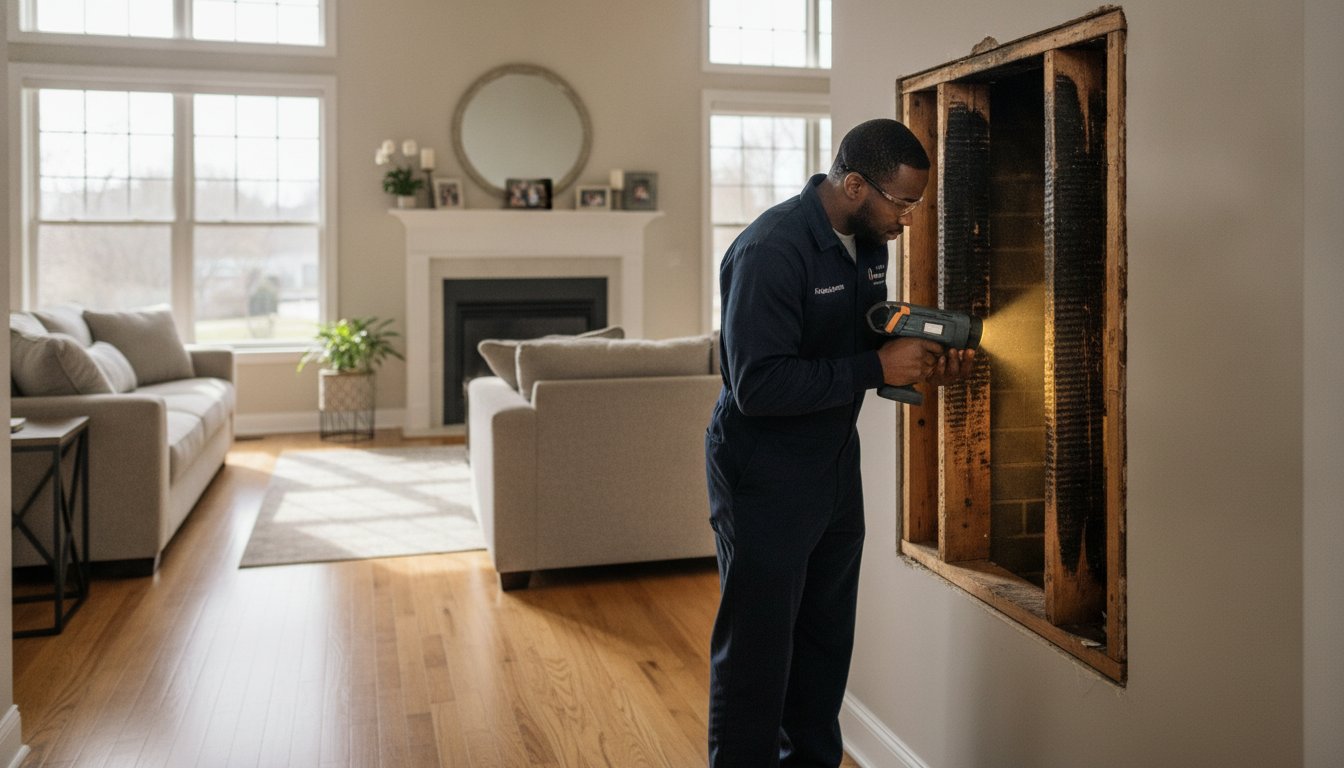
Your chimney is a target for debris and wildlife. Without a sturdy chimney cap, the flue becomes a collection point for leaves, twigs, and nesting materials. In New Jersey, spring brings a specific challenge: chimney swifts and squirrels. These animals see your flue as a secure nesting site. If you smell burning grass or see debris falling into the firebox, you have a biological blockage. This is a severe fire hazard. Another hidden danger is deteriorating masonry. Clay flue tiles can crack and shift over decades of use. A fallen tile can lodge itself in the chimney throat, creating a physical "dam" that traps smoke. Watch for small bits of red clay or mortar on your firebox floor. These are early warning signs of an internal collapse that requires immediate attention.
External Factors: Wind, Weather, and Chimney Design
The environment outside your home dictates the performance inside your home. Local weather patterns in the Philadelphia and New Jersey region significantly impact air movement. On humid, heavy days, atmospheric pressure increases. This dense air sits on top of your chimney like a weight. It prevents smoke from rising efficiently. When combined with a sudden temperature drop, this creates a recipe for smoke backing up into house chimney systems. Structural integrity is also a factor. Cracks in the chimney crown allow cold air to seep into the masonry. This chills the flue and kills the thermal buoyancy required for a steady draft. It is a chain reaction that ends in your living room.
Height is a matter of safety and physics. The National Fire Protection Association (NFPA) 211 standard mandates the "3-2-10 Rule." Your chimney must extend at least 3 feet above the roofline. It must also be 2 feet higher than any part of the building within a 10-foot radius. If your chimney is too short, the roof itself creates turbulence. This turbulence traps smoke and pushes it back down. This is not just a design flaw. It is a code violation that puts your home at risk. If you suspect your chimney fails these requirements, you need a professional chimney inspection to determine if an extension or a new cap is necessary.
Wind and Topography Issues
Wind is a common culprit for sudden downdrafts. High-pressure wind zones can create a literal "cap" over your flue. If your home is in an open area or on a hill, wind hitting your roof can be forced downward into the chimney. Nearby tree growth also changes air patterns over time. A tree that was small ten years ago may now be tall enough to disrupt the wind flow around your roof. Specialized "wind caps" or "vacuum caps" are designed to solve this. They use the wind's energy to actually pull smoke up and out, rather than allowing it to be pushed down. Vigilance about your surroundings is key to maintaining a clear draft.
Design Flaws and Masonry Issues
A chimney must be sized correctly for the fireplace it serves. If the flue is too large, the smoke cools too quickly and loses its lift. This is common in older homes where a large masonry chimney was built without a modern liner. A damaged or improperly installed chimney liner also allows air to leak through cracks. This "bleed" of air destroys the vacuum necessary for a strong draft. Additionally, chimneys located on the exterior of a house struggle more than indoor chimneys. They have less thermal mass to retain heat. They stay colder longer. This makes establishing a draft much harder during a NJ winter. If your liner is compromised, a professional chimney liner installation is the only permanent solution.
Long-Term Prevention: Professional Chimney Safety in NJ & PA
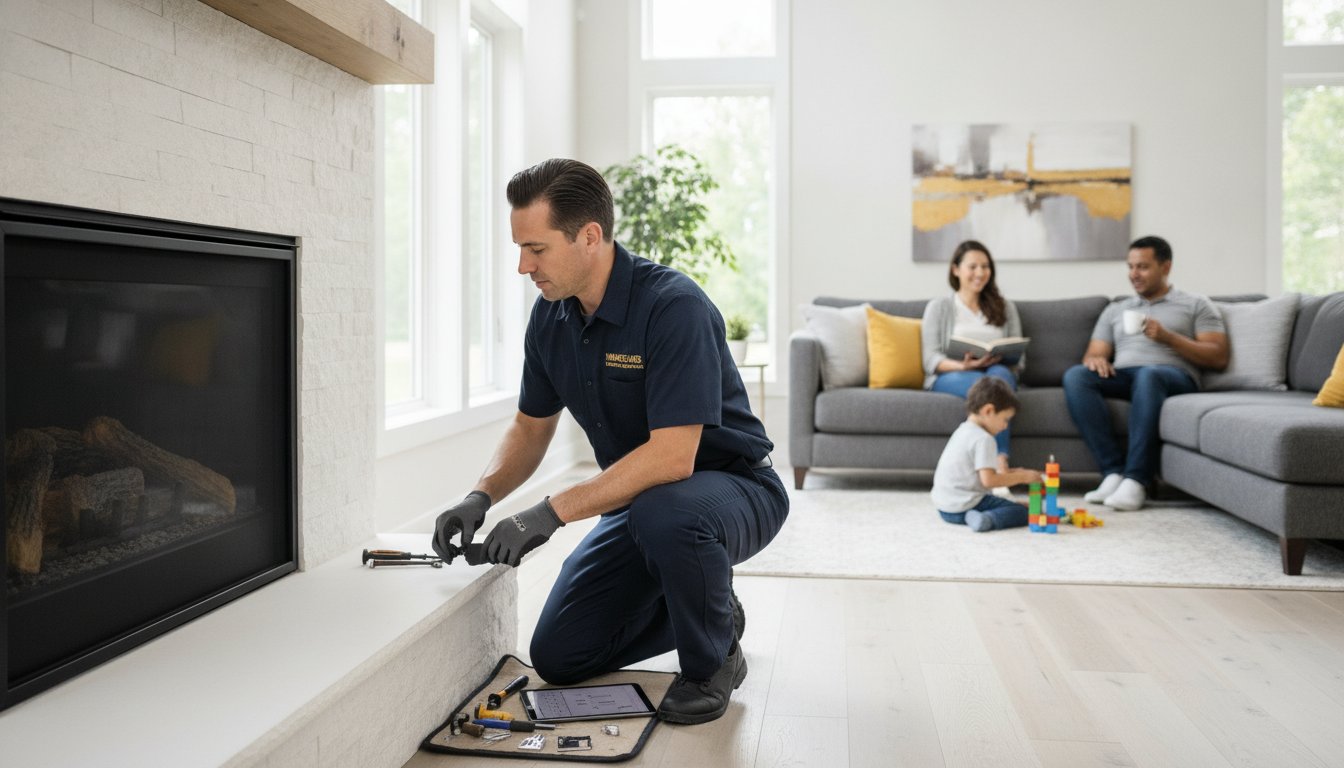
Prevention is a discipline. You've addressed the immediate crisis. Now, ensure it never returns. The most effective way to stop smoke backing up into house chimney systems is through consistent, professional oversight. Scheduling a chimney sweep NJ is your first line of defense. This isn't just about removing soot. It's about scraping away glazed creosote that restricts the flue passageway. You should also prioritize an annual chimney inspection New Jersey. This follows the NFPA 211 standard, which mandates yearly checks for all wood-burning appliances. Vigilance today prevents a hazard tomorrow.
Upgrade your hardware to solve recurring drafting issues. A top-sealing damper is a superior alternative to traditional throat dampers. It sits at the very top of the flue and creates an airtight seal. This prevents cold air plugs from forming when the fireplace isn't in use. It keeps the internal masonry warmer, making it easier to establish a draft. Pair this with a professional chimney cap. A cap is a small investment that prevents massive blockages from animals and debris. It also protects your liner from moisture, which is the primary cause of masonry deterioration in the Northeast.
The Value of a Certified CSIA Inspection
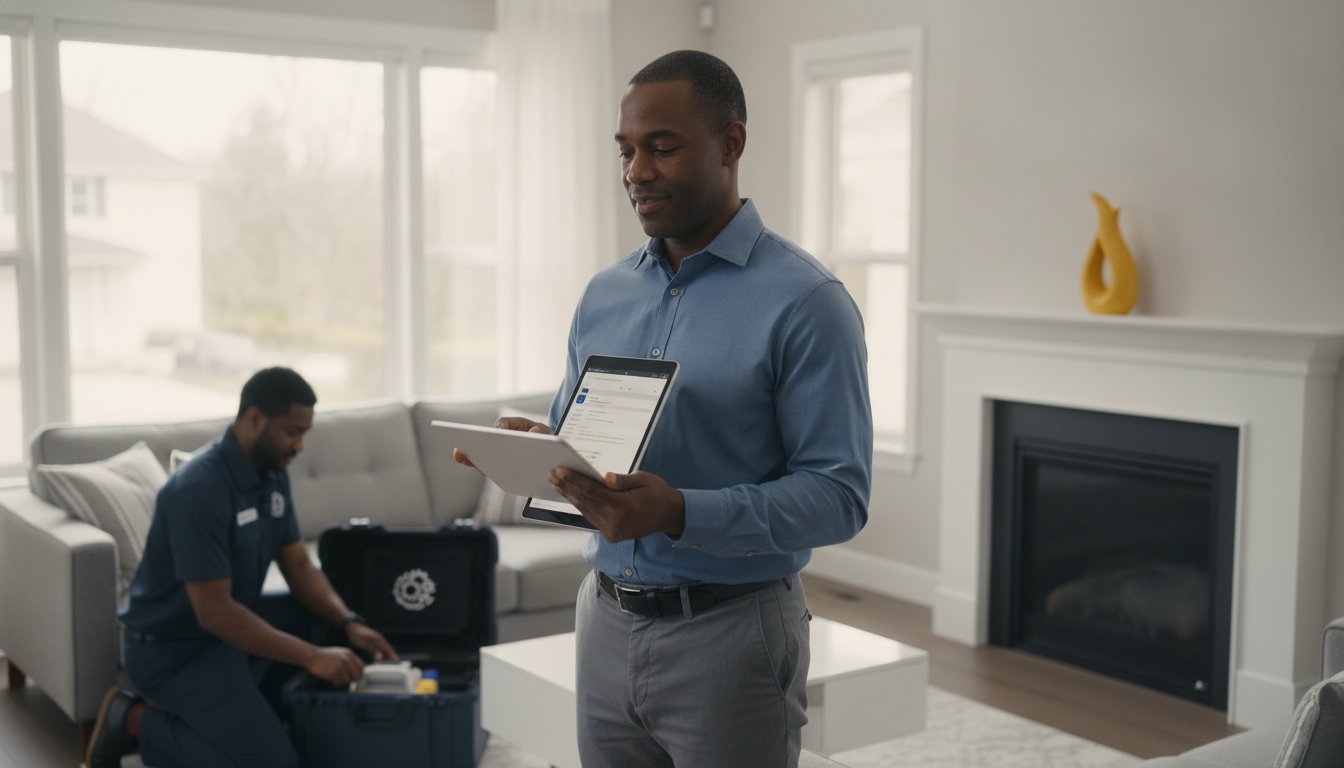
A standard cleaning is a surface-level fix. It won't reveal the hairline cracks in your liner or the structural shifts in your masonry. A Level 2 inspection includes a video camera scan of the entire internal structure. This technology identifies hidden obstructions and dangerous gaps that cause smoke to linger. Ensure your technician is registered as a home improvement contractor in Pennsylvania or licensed for New Jersey residential work. Reliability matters. Transparency is non-negotiable. Professional oversight provides the peace of mind that your system is functioning as designed.
Maintenance Habits for a Smoke-Free Home
Your habits determine your chimney's health. Only burn seasoned hardwood. Wood must have a moisture content below 20 percent to burn efficiently. Wet wood creates heavy, cool smoke that your flue cannot exhaust. Use a moisture meter to verify your fuel before it hits the grate. This simple step drastically reduces creosote accumulation.
Understand how often should chimney be cleaned based on your specific burning frequency. Don't wait for the first frost to call for help. Book your maintenance in the spring or summer to avoid the high-demand fall rush. This ensures your system is ready the moment the temperature drops. If you are still struggling with poor draft, contact Absolute Chimney Pros for a professional draft evaluation. We provide the technical mastery needed to keep your home safe and your air clear.
Secure Your Home and Restore Your Hearth
Fireplace safety is non-negotiable. You've learned to identify cold air plugs. You can now spot the signs of dangerous creosote. You understand how wind and roof height dictate your chimney’s performance. A smoke backing up into house chimney event is a clear warning. It tells you the system is failing. Don't ignore the signal. Protect your family from carbon monoxide and fire risks. Our CSIA-Certified Technicians have served NJ and Philadelphia for years. We bring technical mastery to every rooftop. We offer flat-fee inspection options to ensure there is no guesswork in your maintenance budget. Reliability is our standard. Honesty is our promise. Take control of your home’s environment now. Stop the haze before it starts. Schedule Your Professional Chimney Inspection Today. You deserve the peace of mind that comes with a clear flue and a safe hearth. Enjoy the warmth of your fireplace with the confidence of professional oversight.
Frequently Asked Questions
Is it dangerous if my fireplace smokes into the house?
Yes. It's a serious safety hazard. Smoke contains carbon monoxide and fine particulates that cause immediate respiratory distress. If you see smoke entering the room, your ventilation system has failed. This puts your family at risk of poisoning and increases the danger of a chimney fire. Stop the fire and clear the air immediately.
Can a dirty chimney cause smoke to back up?
Absolutely. A dirty flue is a primary cause of smoke backing up into house chimney systems. Creosote is a tar-like byproduct that glazes your chimney walls. As it thickens, it narrows the exit path for gases. This creates a bottleneck. If the smoke cannot escape through the top, it will follow the path of least resistance back into your living room.
Why does my fireplace smoke only when it is windy outside?
Wind creates high-pressure zones or downdrafts over your flue. This wind acts like a physical lid. It pushes smoke back down the chimney. This often happens if your chimney doesn't meet the 3-2-10 height rule or lacks a specialized wind cap. Nearby trees can also disrupt air patterns and force wind into your flue.
How do I know if my chimney damper is open or closed?
Perform a visual check with a flashlight. Look up into the top of the firebox. You'll see a metal plate. If the plate is horizontal, it's closed. If it's vertical, it's open. You can also feel for air movement. A closed damper blocks all air. Always verify the position with a fire-resistant poker before you light a match.
What is a cold air plug and how do I fix it?
A cold air plug is a column of heavy, frigid air trapped inside your flue. It's common in chimneys built on exterior walls. This heavy air prevents warm smoke from rising. To fix it, you must "prime" the chimney. Light a roll of newspaper and hold it near the open damper for sixty seconds to warm the air and establish a draft.
Will opening a window really stop the smoke?
Yes, if the cause is negative air pressure. Modern homes are often too airtight. This creates a vacuum that pulls air down the chimney to feed other appliances like dryers or kitchen hoods. Opening a window an inch provides "make-up air." This equalizes the pressure and allows the chimney to draft naturally again.
Does my gas fireplace need a chimney inspection too?
Gas fireplaces require annual professional inspections. They don't produce creosote, but they do produce carbon monoxide. Vents can still be blocked by bird nests, debris, or internal collapses. An inspection ensures that these deadly combustion gases are exiting your home safely. Don't skip this maintenance because you don't burn wood.
How much does it cost to fix a chimney drafting problem?
Costs vary based on the specific root cause. A simple cleaning to remove creosote is a different investment than a masonry extension or a new liner installation. A Level 2 video inspection is the best first step. It identifies the exact mechanical or structural failure. This removes the guesswork and provides a clear path to a permanent resolution.