What if your cozy evening by the fire is actually filling your home with invisible, odorless poison? It's a chilling thought. Most homeowners don't realize that a blocked flue is more than a nuisance. It's a critical ventilation failure. Recognizing chimney blockage signs before you strike a match is the only way to ensure your family's safety. According to the U.S. Consumer Product Safety Commission, over 200 deaths per year are linked to toxic gas venting issues. Whether it's a bird's nest or dangerous creosote buildup, your chimney must exhaust these gases efficiently. If it doesn't, the toxins have only one place to go: back into your living room.
You want a warm hearth, not a house fire or a carbon monoxide emergency. We understand the anxiety that comes with smelling strange odors or seeing smoke drift across your ceiling. It's frustrating and frightening. This guide will help you identify the specific warning signs of a blockage so you can stop using your fireplace before a disaster occurs. We will break down everything from physical obstructions to the subtle red flags that mean it's time for a professional inspection. You'll gain the clarity needed to protect your home and the confidence to know when to call in a certified expert.
Key Takeaways
- Recognize visual chimney blockage signs like smoke backing into your living room or dark, oily stains appearing on your walls.
- Understand how a blocked flue reverses the stack effect. This forces hazardous combustion byproducts back into your home.
- Identify hidden dangers through smell. This includes intense asphalt-like odors or foul scents from trapped wildlife and nesting materials.
- Discover why creosote buildup and missing chimney caps are the leading causes of ventilation failure.
- Learn why a professional Level 2 camera inspection is the only way to find and clear deep-seated obstructions safely.
Understanding the Risks of a Blocked Chimney Flue
A chimney is a precision-engineered exhaust system. It's designed to pull toxic combustion byproducts up and out of your home. A chimney blockage is any physical obstruction that prevents this safe passage. It could be a bird's nest, a fallen brick, or thick layers of creosote. When the path is closed, the system fails. Lighting a single fire in a blocked chimney can be catastrophic. It isn't just about smoke. It's about life safety. Learning to spot chimney blockage signs is the first step in home protection.
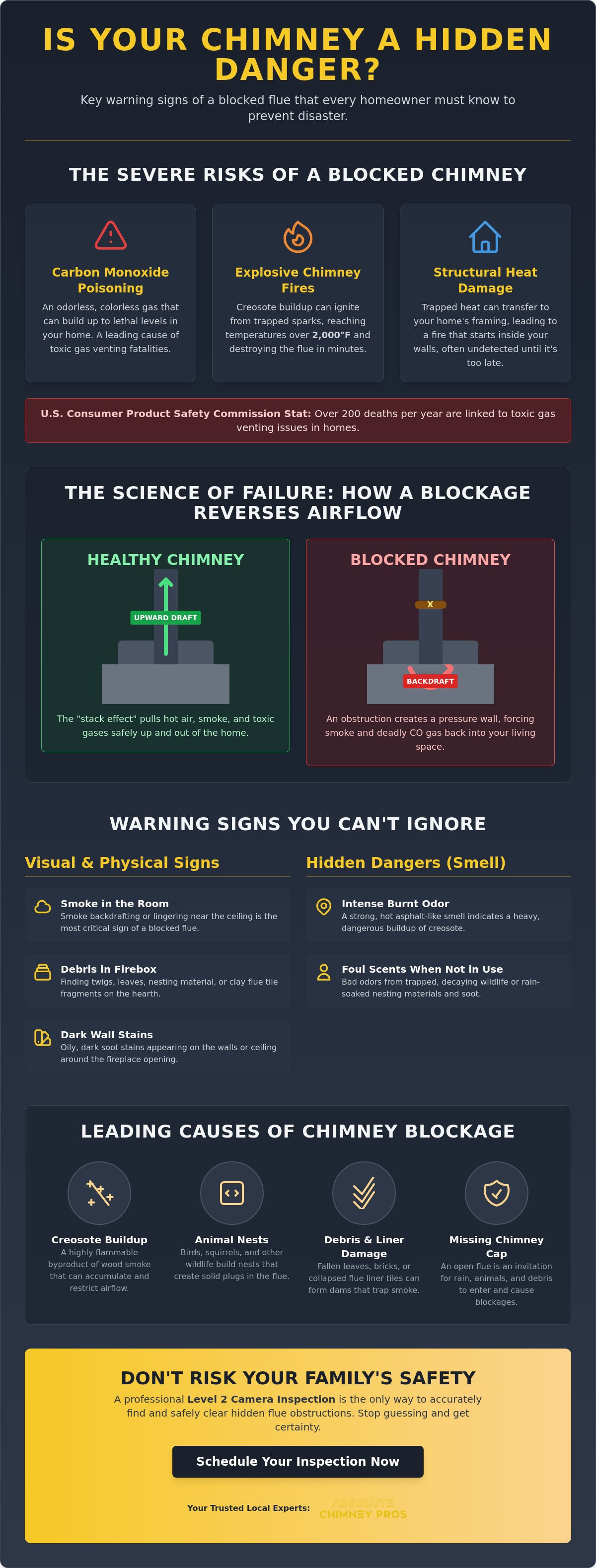
Efficient chimney function relies on the stack effect. Hot air is less dense than cold air. This creates a natural upward draft. A blockage disrupts this physics. It creates a pressure wall. Instead of rising, the heat and toxic gases are forced back down into your living space. This reversal is one of the most dangerous chimney blockage signs. It transforms your fireplace from a source of warmth into a source of poison.
The risks are immediate and severe. Blockages lead to three primary hazards: lethal carbon monoxide buildup, explosive chimney fires, and structural heat damage. Your chimney's masonry or liner isn't designed to hold stagnant, high-intensity heat. It's meant for moving air. When heat stays trapped, it can transfer through walls to ignitable materials in your home's framing. This can lead to a structure fire that begins inside your walls, often going unnoticed until it's too late.
The Silent Threat: Carbon Monoxide Accumulation
Carbon monoxide (CO) is often called the silent killer. It's colorless. It's odorless. You can't see it or smell it. When a flue is blocked, CO has nowhere to go. Even a partial obstruction can cause a slow, dangerous accumulation of this gas. You might feel dizzy or nauseous before you realize there's a problem. This is why working CO detectors are non-negotiable. Place them in every room where a fireplace or gas appliance is used. Don't rely on luck. Rely on sensors.
Chimney Fires and Creosote Ignition
Blockages don't just trap gas; they trap sparks. When a blockage prevents airflow, it also traps intense heat. This creates a pressure cooker environment. If your flue has creosote buildup, a trapped spark can ignite it instantly. A blocked chimney fire is terrifying. Temperatures can exceed 2,000 degrees Fahrenheit. This intensity can crack flue tiles and melt metal liners in minutes. For more information on protecting your hearth, review these chimney fire prevention tips. Vigilance is your best defense against total property loss.
Identifying Common Visual and Physical Chimney Blockage Signs
Visual cues are your first line of defense. They are often the most obvious chimney blockage signs. You don't need technical tools to see them. You just need to know where to look. When a chimney is clear, it functions invisibly. When it's blocked, your home starts showing physical symptoms of distress. These indicators are warnings. They tell you that your ventilation system is failing before a fire starts.
Smoke Backdrafting and Poor Draft
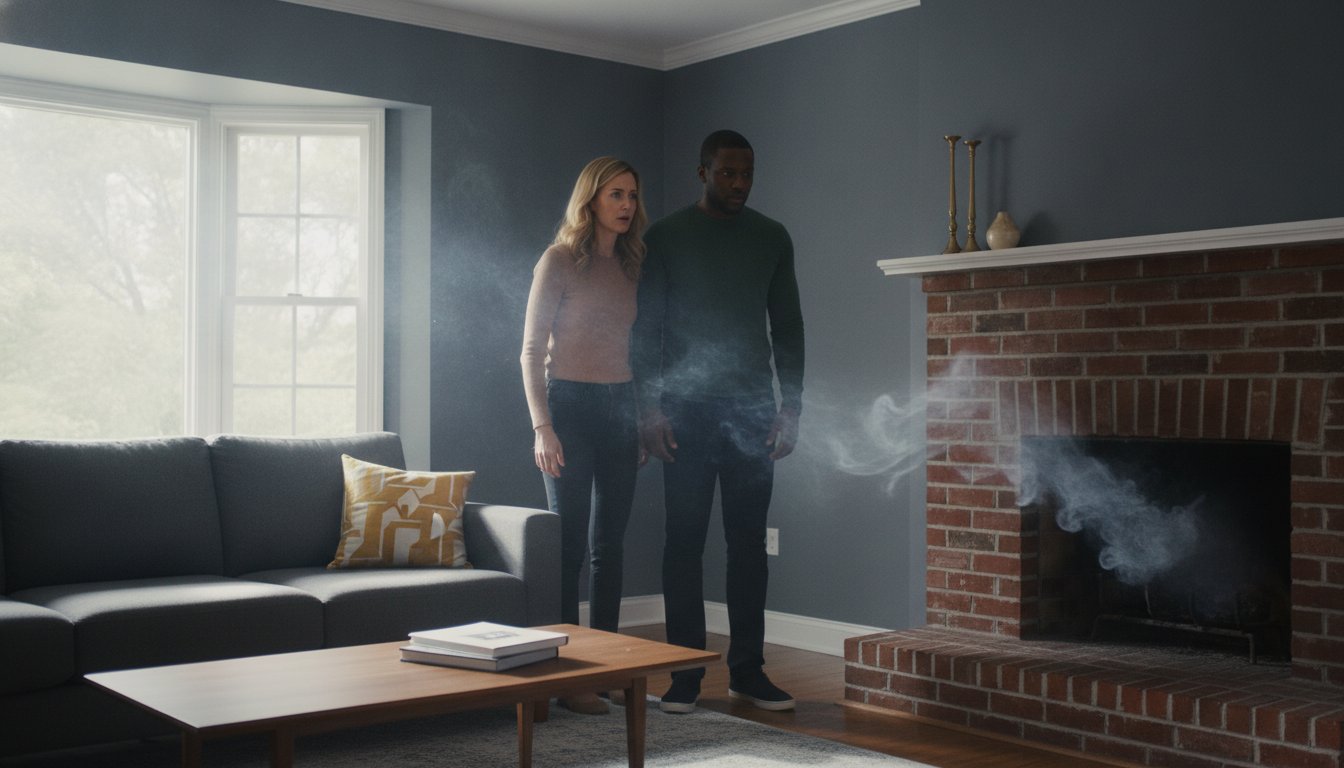
Backdrafting is the physical evidence of a significant obstruction. It happens when smoke enters your living space instead of rising through the flue. This is a critical failure. Smoke should never linger in the room if the damper is fully open. If you see haze near the ceiling or smell smoke while the fire is burning, the "stack effect" has failed. A blockage has created a pressure wall. Stop using the fireplace immediately. Open a window to clear the air. Do not relight the fire until a professional performs a chimney inspection to locate the source of the draft failure.
Debris and Flue Tile Fragments
Keep a close eye on your hearth and firebox. If you find twigs, leaves, or mud, you likely have animal residents. Birds and squirrels often build nests that act like a solid plug. Even more serious is the presence of red or grey clay fragments. These bits are pieces of your flue liner. When a liner decays, it undergoes spalling. Chimney spalling is the moisture-driven flaking of masonry surfaces. These falling pieces create internal "dams" that trap smoke and heat. A collapsing liner is a structural emergency that requires immediate attention.
Other chimney blockage signs include:
- Oily, dark stains appearing on the walls or ceiling near the chimney stack.
- A fire that is difficult to start or keeps going out due to oxygen starvation.
- "Weeping" or moisture streaks on the exterior masonry or interior fireplace walls.
- Visible piles of soot or creosote flakes in the firebox.
These physical symptoms indicate that the exhaust path is no longer viable. For a detailed breakdown of these indicators, review the Signs and Symptoms of a Chimney Obstruction from industry experts. Stains on your walls are often condensed creosote and water vapor. Unlike dry soot, creosote is a sticky, flammable byproduct. It can seep through mortar joints and ruin your drywall. If you see "weeping" masonry, the blockage is likely severe and moisture-heavy. Ignoring these signs leads to structural damage and increased fire risk. Don't wait for a total failure to take action.
Detecting Blockages Through Smell and Auditory Cues
Not all chimney blockage signs are visible to the naked eye. Sometimes, the danger arrives as a scent or a sound before you ever strike a match. Trust your senses. If your fireplace smells like a stale campfire in the middle of July, your flue is compromised. These sensory warnings are often the only indication that your ventilation system has transformed into a serious health hazard. Ignoring these cues can lead to a dangerous accumulation of toxic gases during your next fire.
The Scent of Creosote and Soot
In the New Jersey and Pennsylvania region, high humidity levels act as a megaphone for chimney odors. Moisture reacts with creosote. It creates a heavy, asphalt-like stench that permeates your living room. Don't confuse the light, dusty smell of fresh soot with the pungent, acrid aroma of glazed creosote. Stale odors mean the draft is failing. Air is sinking down the chimney instead of rising. This "backdrafting" of air often carries carbon monoxide into your home if the blockage is present during operation. Carbon monoxide is odorless, but the blockage causing its accumulation rarely is. If you smell these indicators, the risk of CO poisoning is significantly higher. The obstruction prevents the stack effect from functioning, stalling air movement entirely. To resolve this, schedule a professional chimney sweep NJ homeowners rely on for thorough, certified clearance.
Animal Activity and Nesting Signals
Your chimney is an attractive nesting site for local wildlife. Squirrels, raccoons, and chimney swifts frequently enter through damaged or missing caps. Listen for scratching, chirping, or fluttering sounds coming from behind the damper. These aren't just noises. They are signals of a physical plug. Animal nests are composed of twigs, mud, and dried grass. This material is highly flammable. It acts as a fuse for a chimney fire. A single spark can ignite a squirrel nest, leading to a fire that burns at extreme temperatures within the flue. If you notice a foul, rotting odor, an animal may be trapped and decomposing. These smells intensify after rain or during summer warm spells as moisture accelerates decomposition. A dead animal or a large nest creates a total obstruction. Lighting a fire under these conditions forces 100% of the smoke and toxic gases back into your home immediately. This is a life-safety emergency.
A musty or "closed-in" smell is another subtle warning. It indicates stagnant air and moisture trapped by debris or a collapsing liner. If your hearth smells like a damp basement, your flue isn't breathing. These sensory chimney blockage signs require immediate professional investigation. We use specialized tools to identify these hidden hazards before they become catastrophic. Never ignore what your nose or ears are telling you about your home's safety. Vigilance today prevents a disaster tomorrow.
Why Chimneys Get Blocked: Animals, Creosote, and Debris
Understanding the root cause is vital. You've identified the chimney blockage signs. Now, you must address the source. Most blockages aren't random. They are the result of neglected maintenance or external environmental factors. From chemical byproducts to local wildlife, your flue is a magnet for obstructions. Identifying these sources allows for targeted prevention. It turns a reactive repair into a proactive safety strategy. It ensures your home remains a sanctuary, not a hazard.
The Three Stages of Creosote
Creosote is the primary enemy of a clear flue. It's a highly flammable byproduct of burning unseasoned wood. It develops in three distinct phases. Stage 1 is a dusty, sooty deposit. It's easy to brush away. Stage 2 is crunchy and looks like black honeycombs. It contains more concentrated fuel. Stage 3 is the most dangerous. It's a thick, tar-like glaze. When Stage 3 creosote is heated, it expands. This further narrows the flue, creating a tighter blockage. This glaze is nearly impossible to remove with standard brushes. It requires specialized chemical treatments and professional intervention to eliminate the fire risk. High-efficiency stoves can actually accelerate this buildup if the wood isn't perfectly dry.
External Factors: Caps and Crowns
Your chimney's exterior is its first line of defense. A missing or damaged chimney cap is an open invitation for trouble. In the NJ/PA region, local pests like squirrels and raccoons look for warm nesting sites. Chimney swifts, a protected migratory bird, also frequently build nests in open flues. These nests act as solid plugs. Overhanging tree limbs are another risk. They drop leaves and twigs directly into the stack. Beyond debris, a cracked chimney crown is a silent threat. It allows water to seep into the structure. This water freezes and thaws, breaking internal flue tiles. These broken pieces fall and create "invisible" internal dams. To understand how water entry compromises your system, see our guide on fixing chimney flashing. Proper exterior maintenance prevents internal failure.
This maintenance often involves managing the surrounding landscape. For example, professional arborists like CDA TREE AND UTILITY can help ensure that overhanging branches are kept at a safe distance, preventing organic debris from ever reaching the stack.
Structural collapse is the final, most severe cause of a blockage. Age and moisture take their toll. If the internal masonry fails, the debris has nowhere to go but down. This creates a trap for smoke and heat. You cannot clear a structural collapse with a simple brush. It requires a comprehensive solution. If you suspect your flue is obstructed by debris or decay, contact us for a professional chimney sweep. We don't just clear the soot. We identify and resolve the underlying cause of the blockage. Don't let a hidden obstruction turn your fireplace into a hazard. Act before you light the next fire. Precision matters when your safety is on the line.
Professional Clearance and Long-Term Prevention Strategies
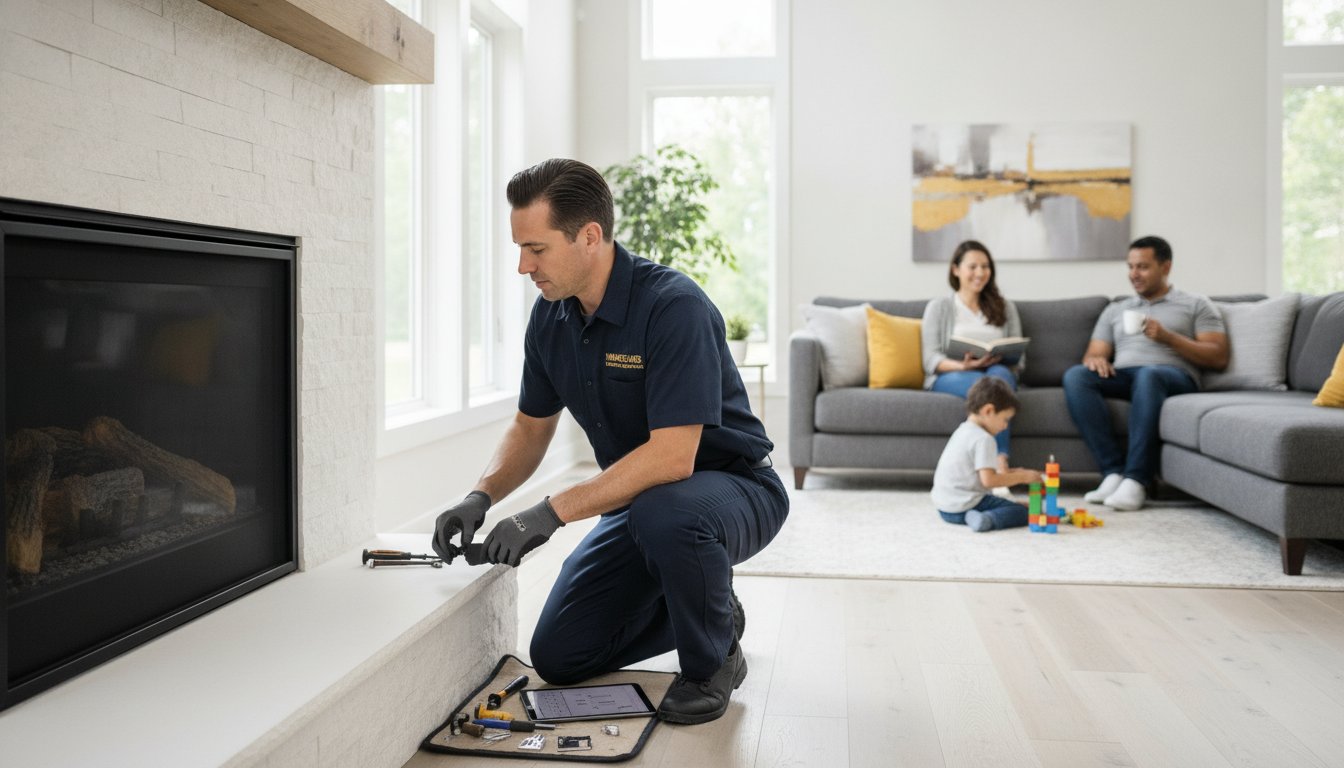
Spotting chimney blockage signs is only half the battle. Resolution requires precision. A blocked flue isn't a DIY project. Homeowners who attempt to clear their own chimneys often push obstructions deeper. They create compact plugs that are harder to remove. Worse, they risk releasing toxic soot and fine particulates into their living space. Professional clearance is about containment and technical accuracy. We utilize specialized high-power vacuums and industrial-grade brushes to ensure your home stays clean while the hazard is removed. There is no guesswork. We provide a definitive solution that restores your system's safety.
Long-term prevention is built on structural integrity. Installing a heavy-duty stainless steel chimney cap is the most effective way to exclude wildlife permanently. These caps act as a physical barrier against squirrels, raccoons, and birds. They also prevent leaves and branches from entering the stack. Unlike cheap aluminum alternatives, stainless steel resists corrosion and animal chewing. It is a one-time investment in home defense. When combined with a sound chimney crown, a quality cap keeps moisture out. This prevents the freeze-thaw cycles that lead to collapsing masonry and internal blockages.
The Value of a Camera Inspection
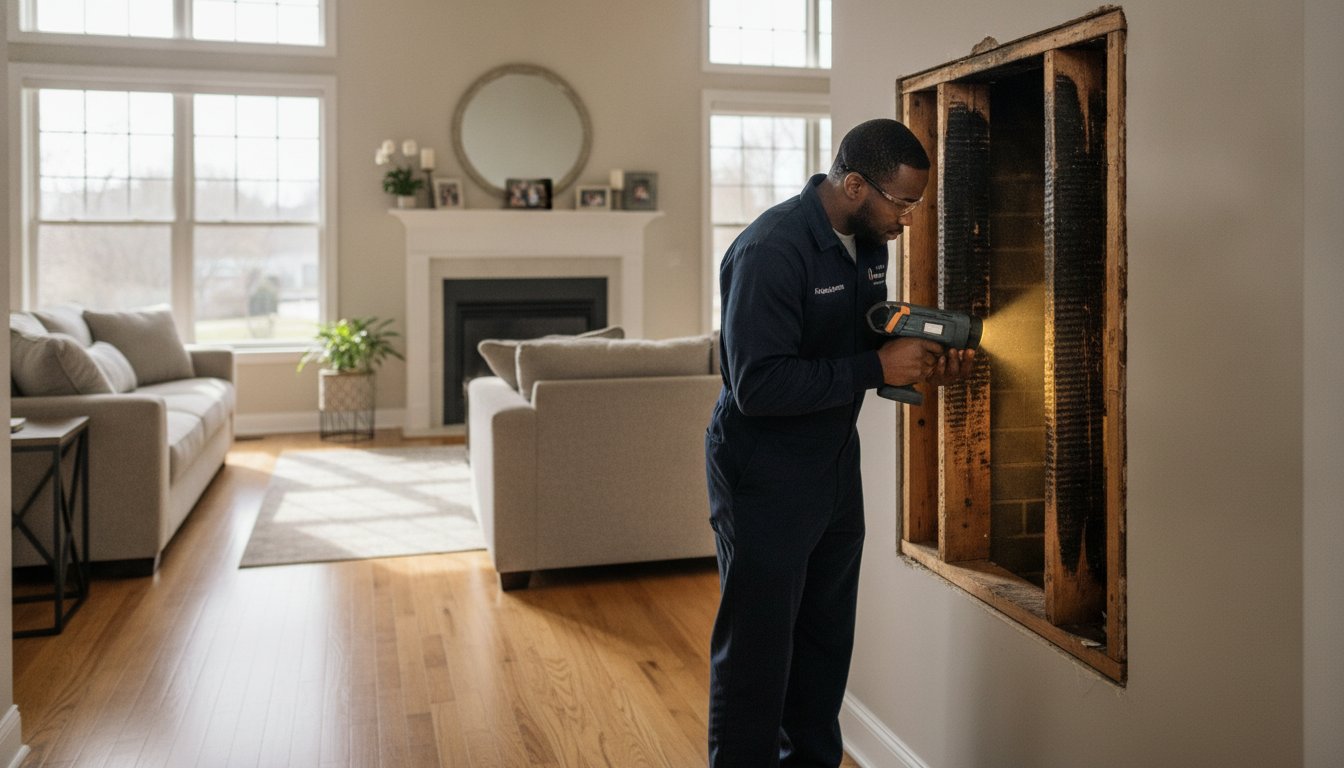
Visual checks from the hearth are insufficient. Technicians must see "around the bend" to confirm a flue is clear. A Level 2 camera inspection utilizes high-resolution video equipment to scan the entire length of the chimney. This technology identifies hairline cracks in the liner and hidden obstructions that the naked eye misses. It provides a transparent look at your system's health. If you've noticed chimney blockage signs, a camera scan is the only way to verify the flue is safe for use. Review our chimney inspection New Jersey guide to understand the full safety protocol. We provide a detailed report so you know exactly what is happening inside your walls.
Scheduling Your Annual Safety Review
Don't wait for the first cold snap to check your ventilation. We recommend scheduling inspections in the spring or summer. This allows you to beat the fall rush in New Jersey. It also provides ample time for repairs before the burning season begins. Remember that gas fireplaces are not exempt from maintenance. They frequently develop blockages from spider webs, dust, and debris that can lead to carbon monoxide leaks. Our gas fireplace service NJ includes a full ventilation check to ensure your home is protected. Annual maintenance is a disciplined habit. It's the difference between a safe winter and a household emergency. Take responsibility for your environment today.
Secure Your Hearth for a Safe Burning Season
Your fireplace should be a source of comfort, not a safety gamble. You now know that smoke backdrafting, foul odors, and strange scratching sounds are critical chimney blockage signs that demand immediate action. These symptoms indicate a complete breakdown in your home's ventilation system. Ignoring them risks lethal carbon monoxide poisoning or a catastrophic chimney fire. Professional oversight is the only way to ensure your flue is clear and structurally sound. We use advanced camera technology to find what the naked eye misses.
Don't wait for a dangerous malfunction to occur. We provide the technical mastery and ethical transparency needed to protect your environment. Schedule your flat-fee chimney inspection with Absolute Chimney Pros today. Our CSIA-certified technicians offer same-week appointments in NJ/PA. We provide honest service with no hidden fees on-site estimates. Take control of your home's safety before the temperature drops. A clear, well-maintained chimney provides true peace of mind for every cozy evening ahead.
Frequently Asked Questions
Can I clear a chimney blockage myself with a long pole?
No. You should never attempt to clear a flue with a pole or makeshift tool. This often compacts the debris and makes the obstruction much harder to remove. You also risk scratching or cracking the flue liner. Professional sweeps use specialized brushes and industrial vacuums to contain hazardous soot. DIY attempts usually lead to a mess in your living room and a damaged chimney.
What does a blocked chimney smell like during the summer?
A blocked flue typically smells like stale asphalt or a damp campfire. High summer humidity reacts with creosote and soot deposits inside the stack. Because the air isn't drafting upward, these heavy odors sink into your home. This pungent scent is one of the most reliable chimney blockage signs during the off-season. If your hearth smells musty, your ventilation is likely compromised.
How do I know if an animal is trapped in my chimney flue?
Listen for scratching, fluttering, or chirping sounds coming from behind the damper. You may also notice a foul, rotting odor if an animal has died inside the system. These sounds and smells are definitive indicators of a physical plug. Do not light a fire to "smoke them out." This will only trap toxic gases in your home and create a fire hazard from nesting materials.
Is smoke in the room always a sign of a physical blockage?
Not always, but you must treat it as one until a professional inspection is complete. Smoke can also result from a closed damper, a cold air plug, or improper house pressure. However, smoke entering the living space is a failure of the exhaust system. Never ignore a hazy room. Stop using the fireplace immediately and verify the flue is clear before relighting.
How often should I check for blockages if I live in New Jersey?
You must schedule a professional inspection at least once every year. The NFPA 2024 edition of Standard 211 requires annual inspections for all chimneys, fireplaces, and vents. In New Jersey, it is best to book this service in the spring or summer. This ensures any blockages from winter creosote or spring nesting birds are cleared before you need the heat in autumn.
Can a blocked chimney cause carbon monoxide poisoning even if I don’t smell smoke?
Yes. Carbon monoxide is a colorless and odorless gas. A partial blockage may allow visible smoke to exit while still forcing CO back into your home. You cannot rely on your senses to detect this silent killer. This is why working CO detectors are mandatory in every room with a fireplace. A blocked flue is a ventilation failure that can be lethal without warning.
What is the most common cause of chimney blockages in the Philadelphia area?
Creosote accumulation and animal nesting are the leading causes. Many Philadelphia homes feature older masonry chimneys that are also prone to structural decay. Falling bricks or mortar fragments can lodge inside the flue and create internal dams. These dams trap soot and debris, quickly leading to a total obstruction. Annual maintenance is the only way to identify these structural issues before they cause a fire.
Will a chimney cap prevent all types of blockages?
No. A high-quality stainless steel cap is excellent for excluding animals, birds, and large debris like tree branches. However, it cannot prevent internal creosote buildup or structural masonry collapse. A cap is a vital first line of defense, but it is not a substitute for professional cleaning. You still need regular inspections to ensure the internal passage remains clear and safe for use.