

According to the U.S. Consumer Product Safety Commission, residential structure fires involving fireplaces and chimneys account for an average of 15,400 incidents each year. Most ignite silently behind masonry walls. If you burn wood or run fuel-burning appliances without regular maintenance, the severe risks of a dirty chimney flue turn a comforting hearth into an unpredictable hazard.
You expect your fireplace to deliver warmth, not smoky odors hanging in your living room or quiet dread over invisible carbon monoxide poisoning. That concern is entirely justified. What actually happens when you delay flue maintenance is a compounding cycle of restricted airflow, toxic gas spillage, and combustible residue. In this guide, you'll discover the severe safety, health, and structural hazards hidden inside an uncleaned chimney flue and how to eliminate them. We examine the exact chemical dangers lurking within your venting system, highlight the critical warning signs that signal urgent cleaning, and review the rigorous professional standards needed to ensure total home safety.
Key Takeaways
- Incomplete combustion deposits flammable creosote along chimney walls, fueling intense flue fires that can crack clay liners and ignite surrounding framing.
- Obstructed draft dynamics compound the severe risks of a dirty chimney flue by forcing toxic, odorless carbon monoxide directly into your home.
- Warning signs like sluggish fireplace drafts, visible soot buildup, and lingering smoky odors demand immediate professional intervention.
- Certified rotary cleaning and camera-assisted evaluations systematically remove hidden hazards that standard visual checks and DIY brushes miss.
What Accumulates in a Dirty Chimney Flue?
Your chimney flue serves as the primary exhaust channel for high-temperature combustion gases. Every time you burn wood, volatile unburned hydrocarbons rise through this duct. When hot gases strike cooler flue walls, condensation occurs immediately. This process leaves behind sticky, flammable residue. A standard chimney venting system quickly transitions from light, powdery soot into dense, combustible glaze. Understanding the mechanical risks of a dirty chimney flue begins with recognizing exactly what clings to your interior masonry liner.
Chimney flue creosote is a dark, combustible chemical deposit formed by the condensation of incomplete combustion byproducts on interior flue surfaces. Its primary risk is serving as concentrated, highly flammable solid fuel that ignites intense structural fires when exposed to excessive heat.
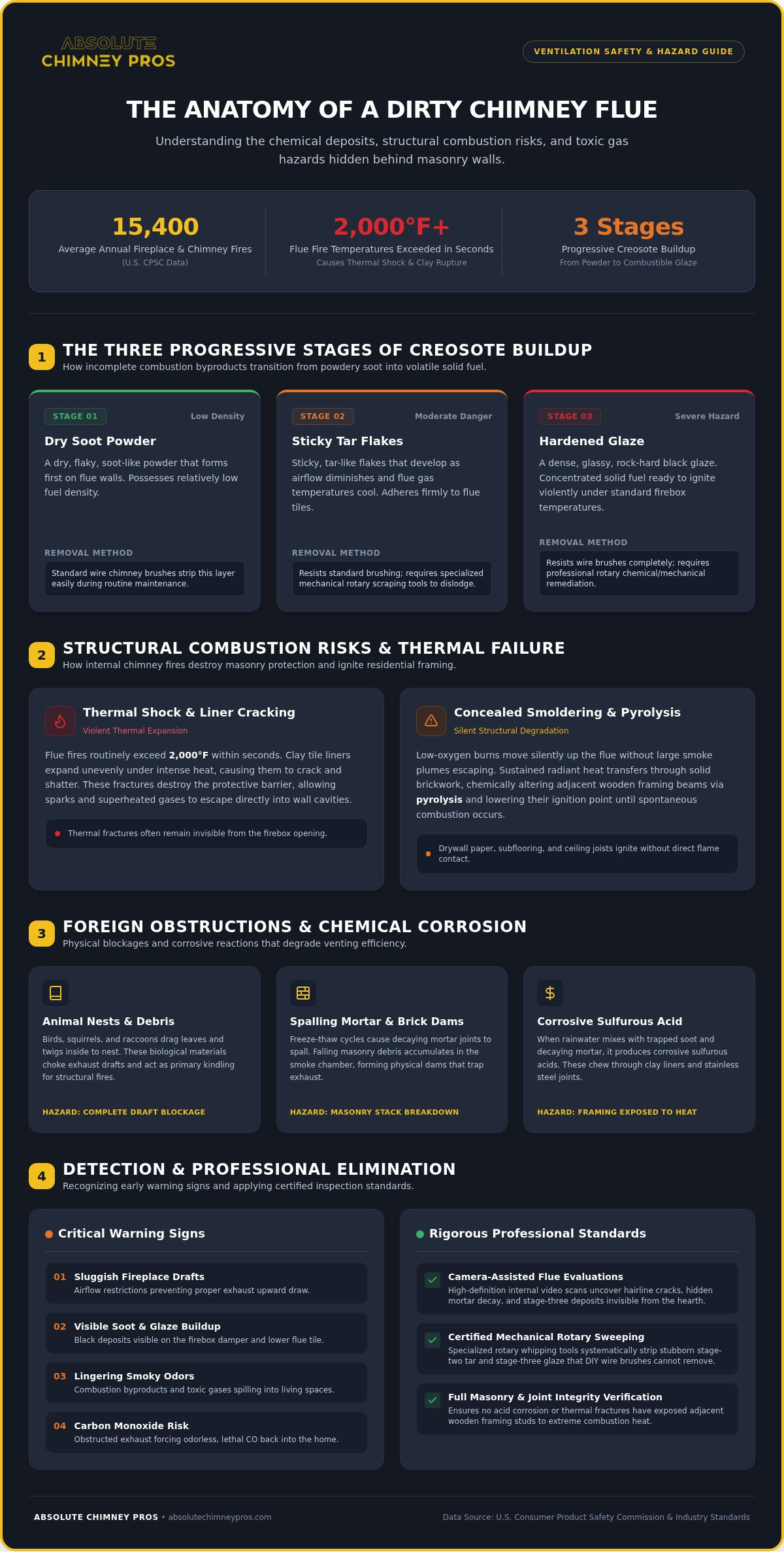
The Three Progressive Stages of Creosote Buildup
Creosote transforms chemically and physically over time. It progresses through three distinct, dangerous stages:
- Stage One: A dry, flaky, soot-like powder forms first. It has relatively low fuel density. Standard wire chimney brushes strip this layer easily during routine maintenance.
- Stage Two: Sticky, tar-like flakes develop as airflow diminishes. This layer signals restricted draft and cooler flue gas temperatures. It adheres firmly to flue tiles and requires mechanical rotary scraping tools to dislodge.
- Stage Three: A dense, glassy, rock-hard black glaze coats the walls. This is concentrated solid fuel. It resists wire brushes completely and represents the most volatile condition in modern venting systems, ready to ignite under standard firebox temperatures.
Foreign Obstructions: Debris, Nests, and Mortar
Combustion residue is not the only hazard narrowing the flue channel. Birds, squirrels, and raccoons frequently drag leaves and twigs inside to construct nests. These biological materials act like kindling, completely choking exhaust draft. In older masonry stacks, natural freeze-thaw cycles cause decaying mortar joints to spall. Bricks and mortar dislodge and drop into the smoke chamber, forming physical dams. When rain mixes with trapped soot and decaying mortar, it creates corrosive sulfurous acids. These acids chew through clay liners and stainless steel joints, exposing combustible home framing directly to heat.
Structural Chimney Fires: The Extreme Combustion Risk
When stage-three creosote ignites, the chemical reaction is violent. Flue fire temperatures routinely exceed 2,000 degrees Fahrenheit within seconds. Standard masonry chimneys are built to contain normal exhaust, not raging internal incinerators. The Structural Chimney Fires: The Extreme Combustion Risk highlighted by federal safety agencies stems from this rapid thermal transfer. Intense heat pushes straight through solid brickwork into surrounding wooden wall framing studs. Without intervention, radiant heat alone ignites drywall paper, subflooring, and ceiling joists behind your walls.
Homeowners often imagine a chimney fire sounding like a freight train roaring up the stack. While high-draft fires produce loud rumbles, many combustion events occur silently. Low-oxygen burns move slowly up the flue without dense plumes escaping the top, hiding the true risks of a dirty chimney flue until structural timber ignites.
Thermal Shock and Flue Liner Destruction
Sudden temperature spikes cause severe thermal shock. Clay tile flue liners expand unevenly under intense heat, cracking and shattering within minutes of creosote ignition. These fractures destroy the protective barrier between flue gases and your home. Sparks and superheated gases escape through shattered clay seams directly into wall cavities. Scheduling a comprehensive chimney inspection New Jersey homeowners rely on is critical to uncover hairline thermal fractures that remain invisible from the firebox opening.
Slow-Burning Chimney Fires and Hidden Frame Damage
Oxygen-starved chimney fires present a quiet, devastating threat to residential properties. When an obstructed flue restricts incoming air, creosote smolders slowly behind masonry walls:
- Concealed Smoldering: Low-intensity combustion continues unnoticed for hours, producing minimal exterior smoke while maintaining extreme internal heat.
- Structural Pyrolysis: Sustained radiant heat chemically alters adjacent wooden framing beams, lowering their natural combustion threshold over time.
- Spontaneous Ignition: Once wood has undergone deep pyrolysis, it can ignite during ordinary, low-temperature fireplace use weeks or months later.
Protecting your home from hidden structural damage requires preventative risk management. If you haven't verified the integrity of your flue tiles recently, partner with a certified technician through Absolute Chimney Pros to schedule a precise camera-assisted evaluation before lighting your next fire.
Toxic Fume Infiltration: Carbon Monoxide and Draft Failure
Natural draft relies on basic thermodynamics. Warm combustion gases are buoyant and rise through the stack, drawing fresh air into the firebox. When soot and creosote build up, they narrow the flue's internal diameter. This constriction chokes the exhaust volume. Smoke spills over the firebox lintel and rolls into living areas. One of the most insidious risks of a dirty chimney flue is how quickly this mechanical restriction stalls natural airflow and reverses venting direction.
Mechanics of Chimney Backdrafting and Indoor Pollution
A restricted chimney cannot produce the thermodynamic pressure differential needed to sustain an upward exhaust column. When hot gas loses upward momentum, heavy cold air from outside overpowers the stack. Downdrafts push combustion gases, airborne ash, and particulate matter backward into the home.
This backdrafting introduces fine particulate matter directly into your living spaces. Microscopic soot particles bypass the respiratory system's natural filtration, penetrating deep into lung tissue. This indoor pollution triggers asthma attacks, inflames bronchial passages, and leaves persistent smoky residues embedded in carpets and furniture.
The Silent Menace of Carbon Monoxide Accumulation
Visible smoke and acrid odors are obvious warnings, but obstructed flues harbor a far deadlier threat: carbon monoxide. This toxic byproduct of incomplete combustion is completely invisible, tasteless, and odorless. When heavy soot deposits block the venting channel, carbon monoxide cannot escape. It migrates into living areas unnoticed.
The health consequences are severe. According to data from the CDC, unintentional carbon monoxide poisoning claims over 400 lives and causes more than 14,000 hospitalizations across the United States each year. Research from the Chimney Safety Institute of America confirms that venting failures in residential heating systems and fireplaces are a leading driver of these domestic exposures.
Homeowners often rely solely on wall-mounted detectors for protection. Battery-operated alarms are vital life-safety devices, but they are reactive warnings, not physical prevention. They sound only after toxic gas concentrations have reached hazardous levels in your living room. Eliminating the chemical risks of a dirty chimney flue requires an open, unrestricted exhaust path that vents toxic emissions outside your home.
Warning Signs Your Chimney Flue Requires Immediate Cleaning
A neglected venting system rarely fails without warning. Identifying system degradation early lets you intervene before creosote ignites or toxic gas spills into your living space. If you notice any of the following five symptoms, stop using your fireplace immediately:
- Cold-hearth odors: Strong campfire or pungent barbecue smells entering your room when the firebox is completely cold.
- Sluggish combustion: Kindling struggles to catch, fires burn unusually slow, and smoke billows past the lintel.
- Oily damper runoff: Dark, tar-like grease coating the damper plate or dripping down into the firebox.
- Dense soot accumulation: Flue wall soot buildup measuring one-eighth of an inch or thicker.
- Stack noises: Rustling, scratching, or hollow rattling sounds originating behind the masonry walls.
Ignoring these visible cues dramatically increases the risks of a dirty chimney flue, leaving your home vulnerable to sudden thermal damage and toxic backdrafting.
Sensory Indicators: Smells, Sounds, and Poor Combustion
A foul, acrid smell coming from the hearth is often the first sign of a compromised exhaust channel. High humidity and summer rainstorms pull exterior air down the stack, rehydrating creosote deposits. This reaction pushes intense sulfurous soot odors right into your living room.
Draft problems also present clear performance issues. When creosote narrows the flue, incoming oxygen drops. Kindling smolders instead of catching cleanly. Fires produce excessive ash, struggle to stay lit, and constantly roll smoke back into the house. In addition, unusual rustling or flapping noises indicate animal nesting, while clicking sounds often signal dried glazed creosote peeling and collapsing inside the channel.
Physical Evidence: Soot Accumulation and Damper Resistance
Visual self-checks reveal physical proof of flue fouling. Grab a bright flashlight and look past the smoke shelf. The Chimney Safety Institute of America warns that once soot crust reaches one-eighth of an inch thick, cleaning is mandatory. At this depth, creosote carries enough fuel mass to sustain an independent chimney fire.
Check your metal damper assembly. Creosote buildup coats damper pivot pins, making the handle stiff and difficult to crank. A damper that fails to seat flat against the masonry frame creates draft gaps and drops acidic black flakes into your hearth. When soot tracks or dark stains develop across the exterior brick facade above the hearth, smoke rollout is already a recurring problem.
Don't wait for draft failure to disrupt your heating season. If your system displays any of these warning signs, take prompt action and schedule an expert chimney sweep to clear dangerous blockages before lighting your next fire.
Eliminating the Risk: Certified Inspection and Professional Sweeping
Eliminating the risks of a dirty chimney flue requires disciplined maintenance, not consumer shortcuts. Many homeowners attempt DIY sweeping or rely on chemical logs. These products do not resolve underlying structural threats. Certified chimney sweeps employ high-torque mechanical rotary systems and specialized whip heads that strip resilient deposits without scouring masonry walls.
Containment is just as critical as removal. During mechanical cleaning, technicians deploy commercial-grade, multi-stage HEPA vacuums. These systems create continuous negative pressure at the hearth opening. Carcinogenic soot, fine ash, and chemical particulates are pulled straight into sealed filtration units rather than circulating through your living room.
Why Professional Sweeping Beats Incomplete DIY Methods
Over-the-counter chemical cleaning logs release catalytic compounds that dry out surface soot. They cannot dissolve dense, hardened stage-three creosote glaze. Similarly, flexible manual rods and soft wire brushes sold at local hardware stores lack the rotational force needed to dislodge tarry residue. Pushing a brush blindly upward can also pack dislodged debris into flue elbows, creating immediate blockages.
Effective risk mitigation requires certified tools and trained precision. Partner with a skilled chimney sweep NJ homeowners trust to ensure complete deposit removal without risking liner abrasion.
Annual Maintenance Schedules and Long-Term Prevention
National safety protocols establish clear standards for home heating maintenance. The NFPA 211 standard mandates an annual safety inspection for all chimneys and vents, regardless of fuel type or how often you burn. NFPA guidelines classify these evaluations into three clear levels:
- Level 1: Visual evaluation of readily accessible flue components, damper operation, and firebox condition.
- Level 2: Video-assisted camera evaluation through the full length of the flue, mandatory during real estate transactions or following chimney fires.
- Level 3: In-depth assessment that accesses concealed structural areas when serious internal damage is suspected.
During a camera-assisted evaluation, high-definition optical lenses reveal hairline liner fractures, separated mortar joints, and combustible deposits hidden far beyond visual reach. Treating annual evaluations as preventative risk management protects your property from the severe risks of a dirty chimney flue, preserving structural masonry and delivering lasting home safety.
Take Control of Your Chimney Safety Today
Volatile creosote deposits, cracked flue liners, and backdrafted carbon monoxide turn your hearth into an active structural hazard. Leaving your venting system uninspected compromises indoor air quality and risks devastating home fires. You don't have to accept the compounding risks of a dirty chimney flue when proactive, certified maintenance eliminates every mechanical danger lurking behind your walls.
Protecting your household begins with verifiable proof. Absolute Chimney Pros brings disciplined precision to every project. Our CSIA-certified technicians conduct thorough video-assisted evaluations to expose hidden liner fractures, stubborn stage-three glaze, and dangerous draft restrictions. We offer transparent, flat-fee chimney safety inspections with zero hidden costs, alongside prompt same-week scheduling across New Jersey and the Philadelphia region.
Safeguard your living space and preserve your masonry before striking your next match. Schedule your professional safety inspection with Absolute Chimney Pros today!
Frequently Asked Questions
What happens if a dirty chimney flue is never cleaned?
If left uncleaned, a chimney flue accumulates layers of combustible creosote that eventually turn into rock-hard glaze. This restricts exhaust airflow, damages internal masonry liners through acidic corrosion, and creates an extreme fire hazard. Over time, draft failure forces hazardous smoke and toxic combustion byproducts straight into your living space. For homes across New Jersey and the Philadelphia area, untreated buildup often results in catastrophic flue fires and costly structural masonry failure.
Can a dirty chimney flue cause carbon monoxide to enter the house?
Yes. When creosote, soot, or animal debris chokes the exhaust duct, the natural draft fails completely. Combustion gases cannot escape out the top of the stack. Instead, toxic fumes backdraft past the damper and spill into your living quarters. This invisible migration is among the most lethal risks of a dirty chimney flue, exposing your household to dangerous carbon monoxide concentrations long before standard wall alarms detect smoke.
How thick does creosote have to be before it becomes dangerous?
Creosote becomes an active fire hazard once it reaches just one-eighth of an inch in thickness. At this depth, there is sufficient concentrated fuel mass along the flue walls to ignite and sustain an independent, rapid-spreading chimney fire. If the buildup reaches a quarter of an inch or crystallizes into a dense glaze, you should stop using your fireplace immediately until a certified sweep mechanically removes the combustible layer.
Do chimney cleaning logs actually work to clean a dirty flue?
Chimney cleaning logs do not replace professional maintenance. These products burn chemical additives that dry out flaky surface creosote, making it slightly easier to brush away. However, they don't remove the debris or dissolve hardened stage-three glaze. Loosened debris often flakes off and collects on the smoke shelf or damper, creating a sudden blockage. Relying solely on sweeping logs leaves serious fire risks lurking inside your stack.
How do I know if my chimney flue is dirty without climbing on the roof?
You can check your flue directly from the firebox without climbing onto your roof. Shine a high-powered flashlight past the open damper and scratch the flue wall with a plastic putty knife. If you scrape off soot thicker than one-eighth of an inch, cleaning is required. Strong campfire odors during warm or rainy days, a stiff damper control handle, and smoke rolling into your room also signal heavy internal soot buildup.
What does a chimney fire sound like if creosote ignites?
A high-draft chimney fire typically sounds like a roaring freight train, a low-flying jet engine, or heavy wind rushing through a narrow pipe. You might also hear loud popping, cracking, and snapping as clay tiles shatter under sudden thermal shock. However, slow-burning, oxygen-deprived flue fires can be nearly silent. They produce muffled ticking or clicking noises behind the wall as hot creosote expands, smoldering quietly while scorching structural studs.
Is it safe to use a fireplace with a slightly dirty flue?
Operating a fireplace with soot accumulation is never recommended. Even light layers reduce thermal efficiency and narrow draft velocity, accelerating additional deposit formation. More importantly, you cannot visually confirm what lies higher up the stack from the hearth. What looks like minor soot at the bottom often masks dense glaze higher up. Avoiding the hidden risks of a dirty chimney flue means scheduling a certified inspection before lighting fires each season.


