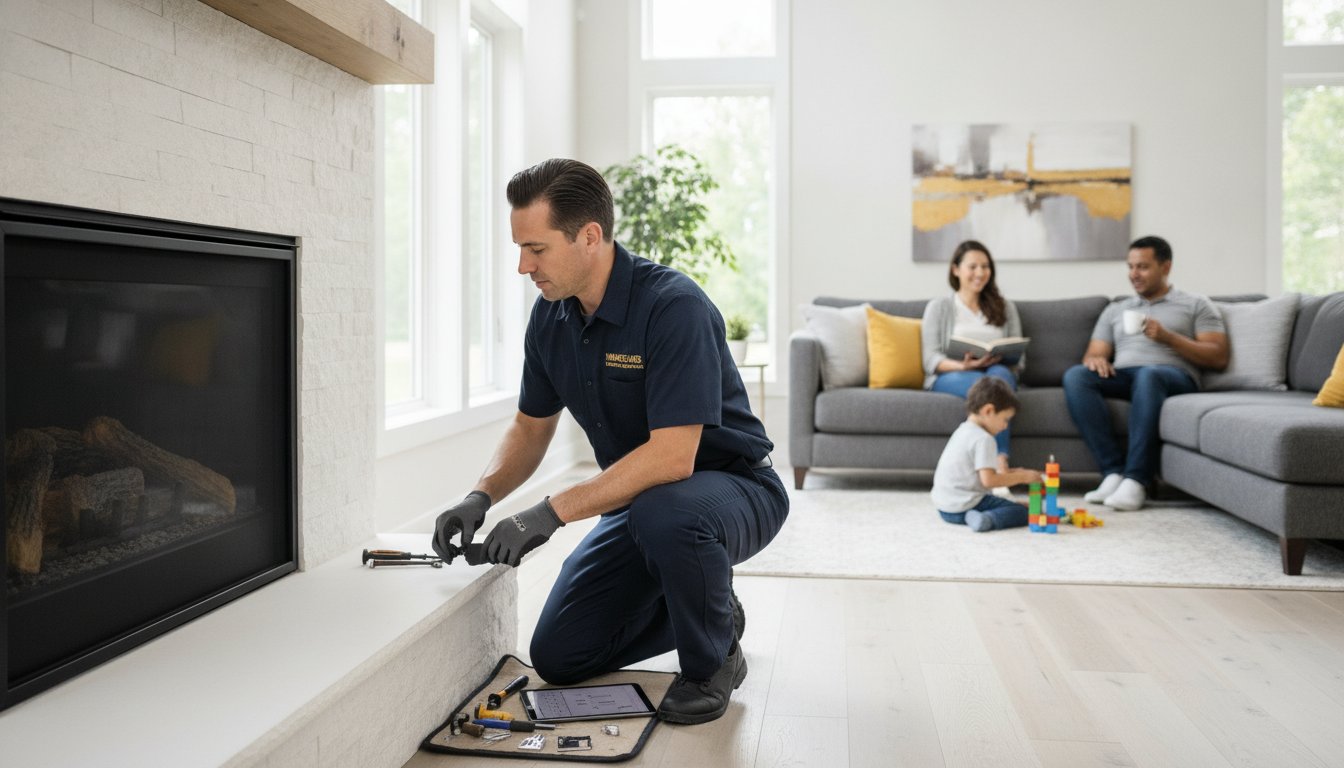
Your chimney's mortar isn't just cosmetic filler. It's a structural seal. Most New Jersey homeowners ignore those hairline cracks until a total rebuild is the only option left. It's a costly mistake. New Jersey's frequent freeze-thaw cycles turn minor gaps into major hazards by forcing water into the masonry. If you've noticed crumbling mortar joints or water leaks in your firebox, you're right to be concerned about your home's safety. You need a solution that lasts.
Conflicting quotes from contractors often leave you wondering if you're being oversold. This guide simplifies the process. You'll learn how professional chimney repointing NJ stops structural decay and prevents the need for an expensive chimney rebuild. We'll cover everything from the impact of the 2021 International Residential Code to identifying the signs of moisture intrusion. You'll discover how to restore your chimney's integrity and find a CSIA-certified expert who prioritizes precision over a quick patch job. Stop the decay before it spreads.
Key Takeaways
- Identify the critical "lifespan gap" between your bricks and mortar to prevent long-term structural failure.
- Stop the damage caused by the NJ freeze-thaw cycle with professional chimney repointing NJ before moisture shatters your masonry.
- Distinguish between cosmetic fixes and structural repairs to ensure your chimney remains safe and code-compliant.
- Recognize the warning signs of efflorescence and joint decay to avoid the massive expense of a complete chimney rebuild.
- Learn the exact grinding and preparation techniques necessary for a high-performance, water-tight seal.
What is Chimney Repointing and Why Does Your NJ Home Need It?
Understanding What is Repointing is the first step in protecting your home's most vulnerable masonry. It's the technical process of removing decayed mortar and replacing it with fresh, high-performance material. This isn't a cosmetic choice. It's a structural necessity. When mortar fails, your entire chimney structure is compromised. You need a solution that addresses the root of the decay before it spreads.
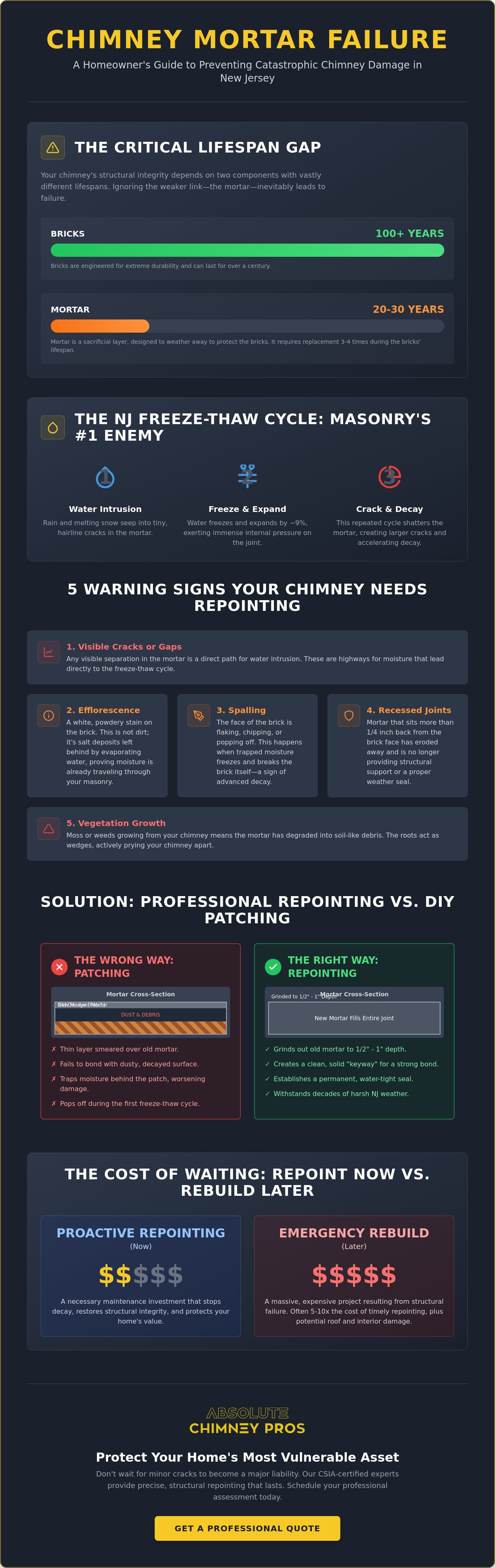
There's a significant "lifespan gap" in masonry systems. Bricks are incredibly durable. They often last 100 years or more. Mortar is the weak link. It typically fails within 20 to 30 years. This means your mortar will likely need replacement three or four times during the life of your bricks. Ignoring this gap leads to what professionals call the "sandcastle effect." As the mortar turns to dust, the bricks lose their support. They begin to shift. Eventually, the internal structure can collapse under its own weight, leading to massive repair bills.
Professional chimney repointing NJ acts as your primary defense against gravity and wind loads. It restores the vertical strength of the stack. Without solid joints, your chimney becomes a safety hazard. It's no longer just a masonry issue; it's a structural liability that threatens your roof and your family's safety. For homeowners looking to secure their entire exterior, Powersol Solutions offers expert roofing and siding services that complement structural masonry work. Vigilance today prevents a total collapse tomorrow.
The Role of Mortar in Masonry Systems
Mortar is designed as a sacrificial element. It's meant to take the brunt of the weather to protect your more expensive bricks. A proper mortar mix must be flexible. If the mix is too rigid, the bricks can't expand and contract with the heat. This results in "spalling," where the face of the brick literally pops off. Repointing is the structural restoration of the mortar joint that ensures this balance remains intact.
Repointing vs. Patching: Why DIY Fails
Homeowners often try to save money by "patching" visible cracks. They smear a thin layer of new mortar over the old, decaying joints. This is a mistake. New mortar cannot bond to dust and loose debris. It creates a shallow seal that won't last. During the first NJ winter freeze, moisture trapped behind that patch will expand. The patch will pop off, leaving the original crack even larger than before.
True chimney repointing NJ requires a disciplined approach. We grind out the old mortar to a depth of 1/2 to 1 inch. This creates a clean, solid "keyway" for the new mortar to grip. It's the only way to ensure a permanent, water-tight bond. A professional job provides the depth and precision needed to withstand the Northeast's aggressive climate. Don't settle for a surface-level smear when your chimney's integrity is at stake.
Signs Your Chimney Needs Repointing in the NJ/PA Climate
New Jersey winters are brutal on masonry. The primary culprit is the freeze-thaw cycle. When moisture enters small cracks in your mortar, it eventually freezes. Water expands by approximately 9% when it turns to ice. This expansion exerts immense internal pressure. It effectively shatters the mortar joints from the inside out. In the NJ/PA region, this cycle happens dozens of times each season. Without timely chimney repointing NJ, your chimney's structural integrity will rapidly decline.
Look for efflorescence. This white, powdery substance on your brickwork is often dismissed as a cosmetic issue. It isn't. It's a clear sign of water migration. As moisture moves through the masonry, it carries salt to the surface. If you see these deposits, your mortar is already porous and failing. Left unaddressed, this moisture leads to spalling. This occurs when the brick face flakes off because the mortar no longer provides a proper seal. This is a progressive condition. It doesn't get better on its own.
Vegetation is another red flag. If you see moss, weeds, or small plants growing from your chimney, you have a structural emergency. Roots act like wedges. They physically pry the bricks apart. This indicates the mortar has turned to soil-like debris. To understand the full scope of these risks, consult the Historic Masonry Repointing Guide for professional standards on identifying decay. You need a disciplined assessment to catch these issues early.
Visual Indicators of Mortar Decay
Perform a visual check from the ground. Deeply recessed joints are a primary warning sign. If the mortar sits more than 1/4 inch back from the brick face, it's too thin to support the structure. Look for visible cracks and gaps. These are highways for water intrusion. Loose bricks are the final stage before a partial collapse. If a brick moves when touched, the bond is gone. You need immediate chimney repair to stabilize the stack and prevent a total rebuild.
Internal Symptoms of External Failure
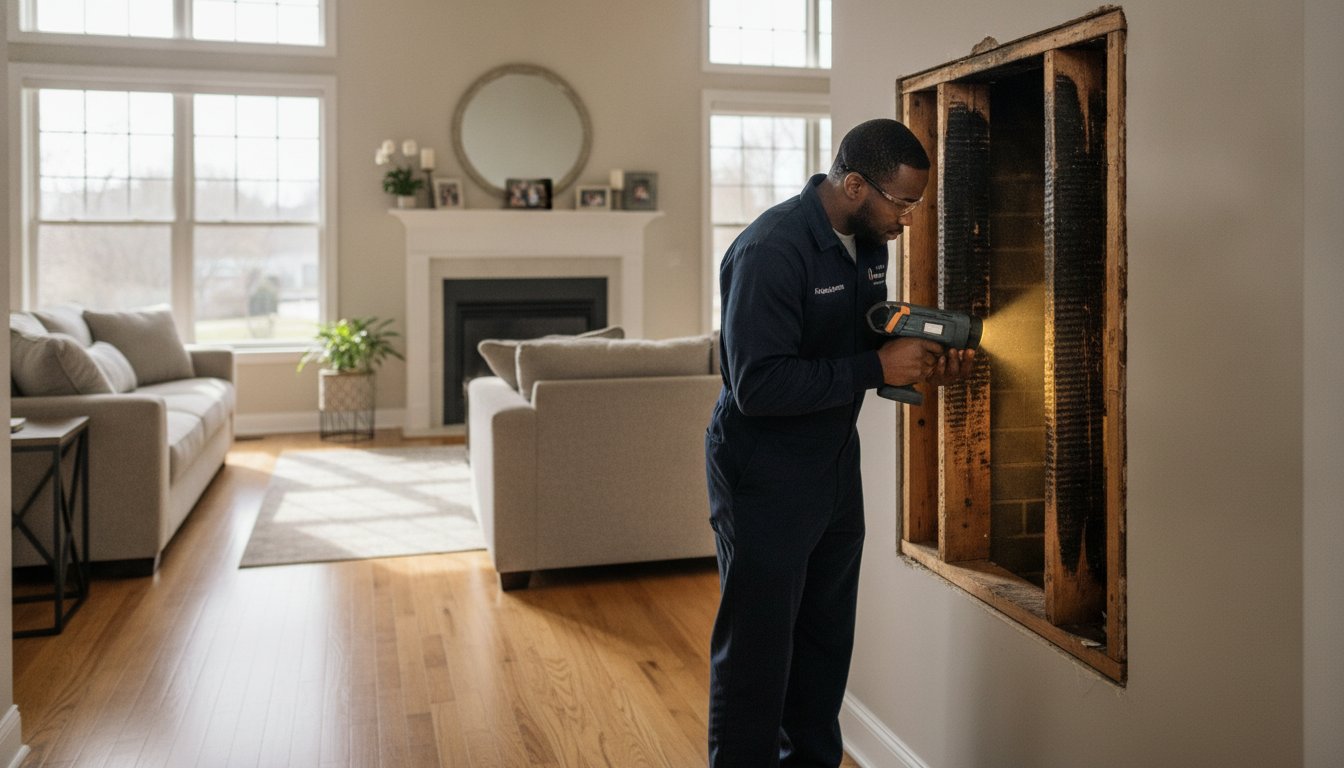
The damage isn't always visible from the outside. Check your firebox for dampness or water stains. Moisture often travels down the flue or through the masonry walls. You might also find mortar chunks or sandy debris in your cleanout door. This means the interior joints are disintegrating. For a complete safety review of these symptoms, see our guide on chimney inspection New Jersey. Don't wait for a leak to become a flood. Professional chimney repointing NJ stops the water before it enters your living space.
Repointing vs. Tuckpointing vs. Rebuilding: The Cost-Benefit Analysis
Confusion between repointing and tuckpointing is common. Many contractors use these terms interchangeably. They shouldn't. Repointing is a structural necessity. It focuses on the depth of the joint and the compressive strength of the mortar. Its goal is to restore the physical bond between bricks. Tuckpointing is an aesthetic technique. It uses two different mortar colors to create a "perfect" thin-line appearance. While it looks sharp, it's often a cosmetic mask that ignores underlying decay. For chimney repointing NJ, structural integrity must always come before visual flair.
Ignoring mortar failure has a high-cost consequence. A total rebuild is the only solution once the masonry reaches a state of collapse. This is an avoidable financial burden. Think of repointing as investment protection. A $2,500 repointing job today can prevent a $15,000 total rebuild tomorrow. By addressing crumbling joints now, you stop the decay before it requires structural reconstruction. Vigilance is your best financial strategy. Don't wait for the bricks to shift before you take action.
When is Tuckpointing the Right Choice?
Tuckpointing has its place. It's ideal for historical homes where preserving a specific "thin joint" look is vital for curb appeal. However, it has limitations. In high-moisture coastal NJ areas, the layered mortar used in tuckpointing can trap water. This leads to premature failure. Absolute Chimney Pros prioritizes structural repointing. We ensure the mortar mix is engineered for durability and safety first. Aesthetics are secondary to a chimney that won't leak or lean.
The Tipping Point: When Repointing Isn’t Enough
There is a point of no return. If your chimney is leaning or showing significant lateral movement, repointing won't save it. This indicates a core failure. The internal wythe of brick has likely detached from the flue or the structural backup. In these cases, the chimney is no longer a single unit. It's a pile of loose material held up by gravity. If your structural issues have reached the flue or compromised the venting system, consult our chimney liner installation NJ guide. At this stage, a partial or full rebuild is the only way to ensure your home remains safe from fire and carbon monoxide risks.
The Professional Chimney Repointing Process
Professional chimney repointing NJ is a methodical, multi-stage operation. It requires specialized equipment and technical precision. It's not a simple DIY project. Every step is designed to restore structural integrity and create a permanent, water-tight seal. We follow a disciplined sequence to ensure your masonry survives the harsh Northeast climate. This isn't just about appearances. It's about safety.
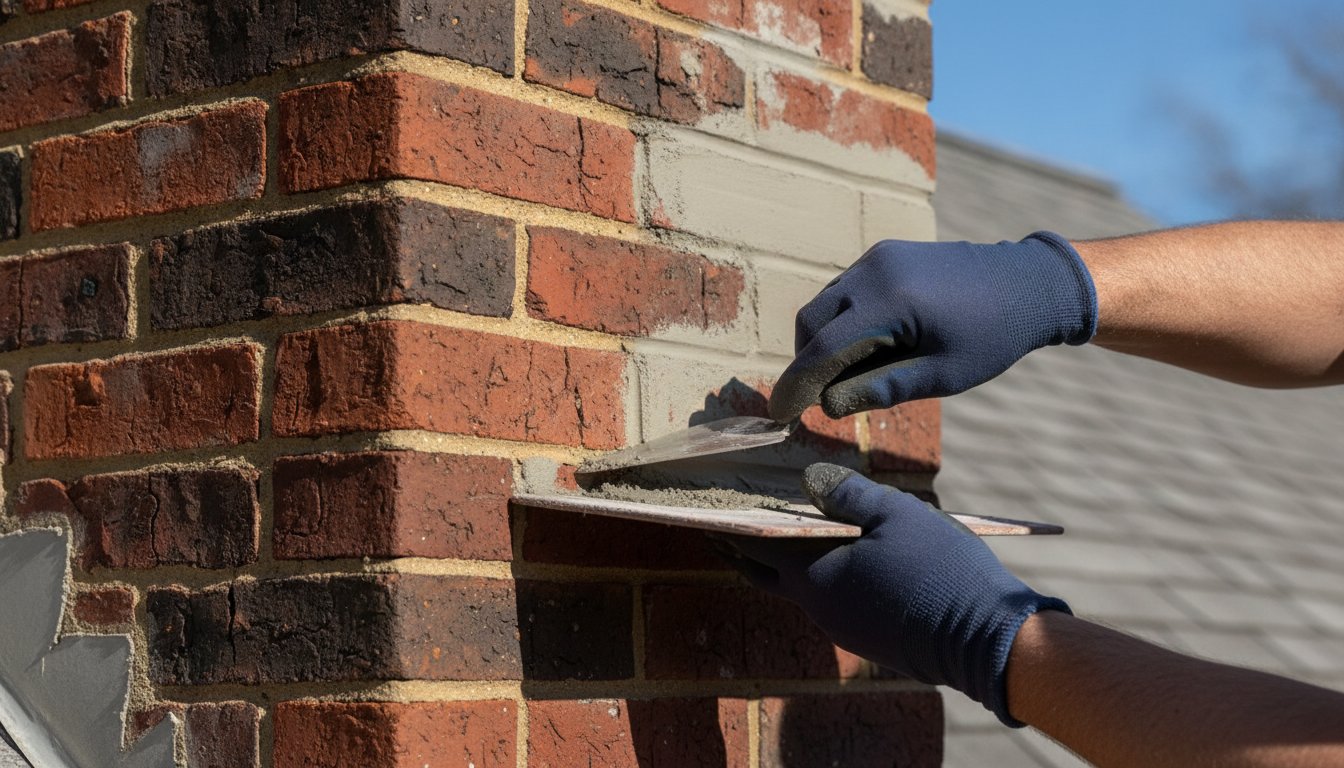
Surface preparation is the foundation of a successful job. We start by removing all dust, debris, and loose material. Without a clean surface, the new mortar cannot bond. Precision grinding follows. We remove old mortar to a specific depth of 1/2 to 1 inch. This creates the necessary "keyway" for the new material to grip. If you go too shallow, the mortar will simply pop out during the next freeze. If you go too deep, you risk damaging the structural bricks. Professional grinding must reach a minimum depth to ensure structural adhesion.
Mortar matching is a critical technical step. We analyze your existing masonry to match both the strength and color. This isn't just for curb appeal. If the new mortar is harder than the surrounding bricks, it will cause the bricks to shatter during thermal expansion. We use the "lift" technique to prevent this. This involves applying mortar in thin layers. Each layer is allowed to become "thumbprint hard" before the next is added. This methodical layering prevents shrinkage cracks and internal voids. Final tooling then shapes the joint to shed water away from the structure, preventing future intrusion.
Stage 1: Mechanical Grinding and Dust Control
Hand-chiseling is often insufficient for modern structural repointing. It's slow and rarely reaches the uniform depth needed for a lasting bond. We use mechanical grinders to ensure a clean, precise joint. To protect your NJ property from hazardous silica dust, we utilize vacuum-shrouded grinders. These systems capture particles at the source. This keeps your air clean and your landscaping free of masonry debris.
Stage 2: Mortar Selection and Curing
Selecting the right mortar is a science. Most residential NJ chimneys require Type N mortar. It offers a balance of flexibility and strength at roughly 750 PSI. Type S is often too rigid for residential brickwork and can lead to spalling. The curing process is equally vital. Repointing requires specific temperature windows in NJ/PA. We only perform this work when temperatures stay above 40°F to ensure the mortar sets correctly. We meticulously blend the new joints with your home’s original architecture for a seamless finish. If your mortar is turning to dust, don't wait for a structural failure. Schedule a professional chimney repair to secure your masonry today.
Why Choose Absolute Chimney Pros for Your NJ Repointing Project?
Selecting a contractor for chimney repointing NJ is a choice that affects your home's long-term safety. You don't just need a mason. You need a specialist who understands how a chimney functions as a complex venting system. Absolute Chimney Pros operates as a protective partner for homeowners across the region. We bring a disciplined, no-nonsense approach to every project. Our goal is simple. We restore your chimney's structural integrity so you don't have to worry about it for another thirty years.
Our technicians hold CSIA certification. This isn't just a badge. It's a guarantee of technical mastery. We understand the intersection of masonry and fire safety. Most general masons focus on how the bricks look. We focus on how they perform. We treat your chimney as the primary safety barrier for your home. This means we use engineered mortar mixes designed specifically for the Northeast's aggressive climate. We don't guess. We use precision tools and proven methods to ensure a permanent bond.
Transparency is the foundation of our business. We provide honest, on-site estimates that reflect the actual condition of your masonry. You won't deal with hidden fees or "surprise" rebuild requirements after the work begins. We identify the specific hazards facing your chimney and provide a definitive solution. Our decades of local experience allow us to anticipate the challenges of NJ's freeze-thaw cycles. We've seen what happens when repointing is done poorly. We make sure it's done right the first time.
Our Commitment to Safety and Precision
Every chimney repointing NJ project we undertake includes a basic safety review. We check to ensure your flue is intact and your venting system is operating correctly. This comprehensive oversight provides peace of mind that a surface-level patch job cannot offer. Our licensed and insured professionals respect your property and your schedule. We maintain a clean worksite and utilize dust-control technology to protect your environment. Same-week appointments are often available for homeowners with urgent masonry concerns. We show up, assess the situation, and execute the task with clinical precision.
Schedule Your Professional Masonry Evaluation
Water damage doesn't take time off. It is a progressive force that eventually leads to structural failure. Don't wait for the next Nor'easter to discover a leak in your firebox. A proactive evaluation is the only way to avoid a five-figure rebuild cost. We offer flat-fee inspections that identify minor joint decay before it becomes an emergency. Take responsibility for your home's well-being today. Our team is ready to provide the professional oversight your property deserves.
Schedule your chimney repointing estimate with Absolute Chimney Pros today!
Secure Your Home’s Structural Integrity Today
Your chimney's mortar joints are the only thing standing between your home and the destructive power of New Jersey's winter. Ignoring those hairline cracks leads to the "sandcastle effect" and eventual structural failure. Timely chimney repointing NJ isn't just a maintenance task; it's a strategic investment. It protects your masonry from aggressive freeze-thaw cycles and prevents the massive financial burden of a total rebuild. You've learned how to spot the signs of decay. Now it's time to act.
You need a partner who prioritizes safety and technical precision. Absolute Chimney Pros provides the expert oversight necessary to keep your family safe. Our CSIA-certified technicians are ready to assess your masonry and provide a transparent, definitive solution. We offer same-week appointments and operate as licensed and insured NJ masonry experts. Don't let a minor crack become a major liability. We are here to ensure your chimney remains a safe, functional part of your home for decades to come.
Get a Professional On-Site Estimate for Chimney Repointing in NJ
Take the first step toward a safer, more resilient home today. Your peace of mind is our priority.
Frequently Asked Questions
How much does chimney repointing cost in New Jersey?
The cost for your project depends on the height of the chimney, the total square footage of masonry, and the depth of the existing decay. Every home is unique. We conduct a thorough on-site evaluation to determine the specific needs of your masonry. This ensures a precise quote based on the actual labor and materials required for a permanent structural seal. We prioritize transparency and provide a detailed report before any work begins.
How long does a professional repointing job typically take?
A professional chimney repointing NJ project typically takes between one and three days to complete. Larger chimneys or those with significant structural decay may require additional time for meticulous grinding and the multi-layer "lift" technique. We prioritize efficiency and property protection. Our goal is to restore your chimney's integrity quickly without rushing the essential curing phases. We work methodically to ensure a clean, professional finish.
Can I use a chimney immediately after it has been repointed?
You should wait at least 24 to 72 hours before using your fireplace after the work is finished. Mortar requires a specific curing window to reach its full compressive strength and water-resistant properties. Lighting a fire too soon can cause the mortar to dry unevenly or crack from the thermal expansion. We provide specific post-service instructions based on the mortar mix used. Patience during the curing phase ensures a long-lasting bond.
Is repointing the same thing as tuckpointing?
Repointing is the structural replacement of failed mortar joints to restore the bond between bricks. Tuckpointing is a cosmetic process that uses contrasting mortar colors to create the illusion of thin, perfectly straight lines. While tuckpointing is popular for historical curb appeal; it does not always address the deep structural voids that a professional repointing job resolves. We prioritize structural safety over aesthetic masks. Our focus is on long-term durability.
What happens if I ignore crumbling mortar on my chimney?
Ignoring crumbling mortar allows water to penetrate the internal core of your chimney structure. This leads to progressive failure, internal flue collapses, and serious fire hazards. Small cracks today become structural emergencies tomorrow. Vigilance is your best defense against a massive reconstruction bill. Stop the moisture intrusion now before it compromises the safety of your entire home. Delaying repairs only increases the eventual cost and risk.
What is the best time of year to repoint a chimney in NJ?
The best time for chimney repointing NJ is between April and October. Mortar requires consistent temperatures above 40°F to cure correctly and form a permanent bond. Scheduling during these warmer months ensures the material sets without the risk of freezing. This prevents the moisture inside the new mortar from expanding and ruining the joint before it hardens. Proper timing is essential for a water-tight structural seal.
Will homeowners insurance cover the cost of chimney repointing?
Homeowners insurance rarely covers the cost of repointing because it is classified as preventative maintenance. Most policies only pay for sudden, accidental damage such as a lightning strike or a fallen tree. For homeowners facing interior damage from masonry leaks, Floodsafe Restoration LLC provides specialized assistance with restoration and the insurance documentation process. Regular masonry upkeep is the homeowner's responsibility. Investing in repointing now is the most effective way to prevent long-term structural decay that insurance will not cover. Proactive maintenance saves you thousands in avoidable rebuild costs.
How do I know if my bricks need to be replaced along with the mortar?
Bricks need replacement if they are spalling, which means the exterior face is flaking or popping off. You should also replace any bricks that are cracked entirely through or move when touched. If the brick itself is soft or crumbling; repointing the joints will not restore the chimney's safety. We identify these compromised units during our initial inspection to ensure a complete restoration. A solid foundation requires both healthy bricks and strong mortar.