
A clean-looking firebox doesn't mean your home is safe. The most dangerous fire hazards are often hidden just out of sight behind your damper. You want to enjoy your hearth without worrying about smoke backing up into your living room or that strange campfire smell in the middle of July. It's normal to feel uneasy when you aren't sure how to know if chimney needs cleaning. Uncertainty is a risk you can't afford to take with your family's safety.
We'll provide a definitive yes or no framework for your home's safety. This guide breaks down seven critical red flags, explains the non-negotiable 1/8-inch creosote rule, and helps you distinguish between harmless soot and life-threatening buildup. You'll learn exactly what to look for and what to smell for during your own visual inspection. You'll gain the peace of mind that comes from knowing exactly when to call in a CSIA-certified professional before you light your next fire.
Key Takeaways
- Spot sensory red flags. Learn why campfire smells in July indicate a serious fire hazard.
- Master the 1/8-inch rule. Understand the exact thickness that makes creosote buildup dangerous.
- Perform a basic scrape test. Use our guide on how to know if chimney needs cleaning to assess your home's risk level.
- Schedule for safety. Discover why NJ and Philadelphia homeowners benefit from off-season CSIA-certified inspections.
- Distinguish soot from creosote. Know the three stages of buildup and which one requires immediate intervention.
Common Visual and Sensory Red Flags in Your Fireplace
Your fireplace communicates through sight and smell. Ignoring these signals is a gamble with your home's safety. If you are wondering how to know if chimney needs cleaning, start by observing the firebox and the air quality in your living room. Your chimney is a ventilation system; when it fails, the evidence is often right in front of you.
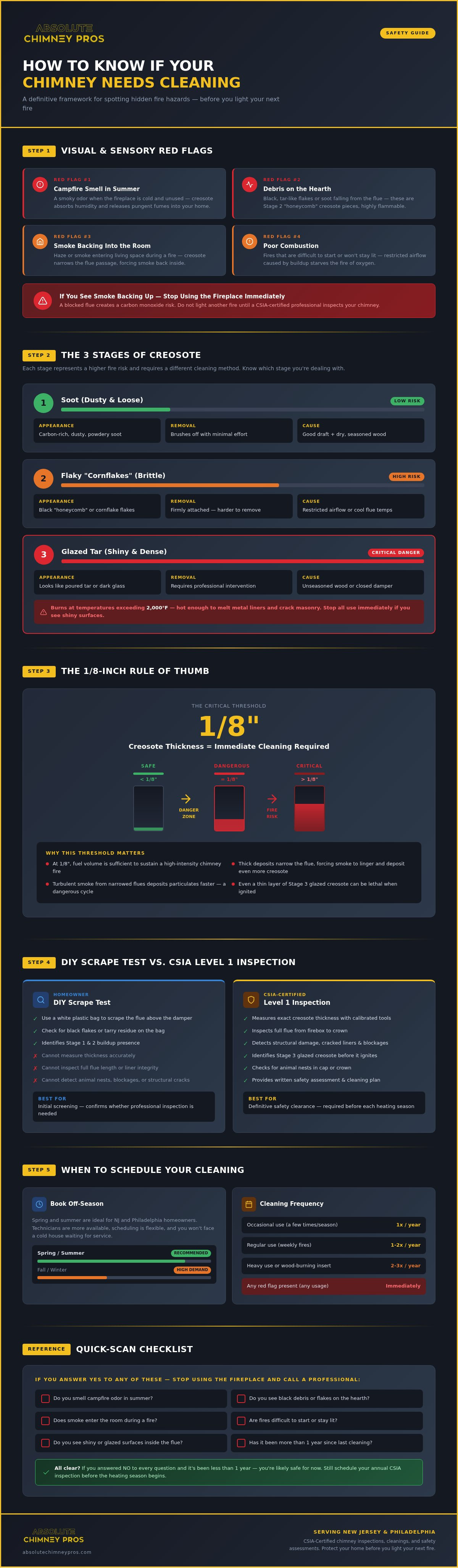
- Unpleasant odors: A strong, campfire-like smell when the fireplace is cold.
- Debris on the hearth: Visible soot or black, tar-like flakes falling from the flue.
- Smoke backup: Haze or smoke entering the room during a fire.
- Poor combustion: Fires that are difficult to start or won't stay lit.
Look for "honeycomb" textures in the soot. These flakes are stage two creosote. They are highly flammable and break off as the chimney cools. If you find black debris on your hearth, the fire risk is already elevated. This is a physical warning that your flue's interior is coated in combustible material.
Why Your Fireplace Smells Like a Campfire
Creosote is a carbon-based byproduct. It holds onto odors. During humid New Jersey summers, this buildup acts like a sponge. High moisture levels react with the acidic compounds in the creosote. This creates a pungent, smoky aroma that drifts into your home. A "clean" smell doesn't exist in a fireplace; any scent is a sign of residue. Odors often indicate restricted airflow. This is a primary indicator for how to know if chimney needs cleaning before the next heating season begins.
Interpreting Smoke and Draft Issues
Smoke should move up, not out. If haze fills your room, your flue is compromised. Heavy creosote deposits narrow the passage. In some cases, birds or squirrels have nested in the cap. This creates a dangerous barrier. Restricted draft leads to more than just a messy room; it creates a risk of carbon monoxide poisoning. If you notice smoke backing up into house chimney areas, stop using the fireplace immediately. Our CSIA-certified technicians see this frequently in older Philadelphia homes. A blocked flue is a failed safety system. It requires professional intervention to restore proper airflow and ensure your family's protection.
Understanding Creosote: The 1/8-Inch Rule of Thumb
Creosote is the primary cause of chimney fires. It's a carbonaceous, highly flammable byproduct that forms when wood smoke cools and condenses. This isn't just dirt. It's a chemical residue that acts as fuel. In NJ and Philadelphia, where hardwood is often burned, this buildup happens faster than most homeowners realize. Learning how to know if chimney needs cleaning requires understanding that this substance changes over time, becoming more dangerous as it layers.
The Three Stages of Creosote Buildup
Creosote evolves through three distinct phases. Each stage represents a higher level of fire risk and requires different cleaning methods.
- Stage 1: Mostly soot. It's carbon-rich and dusty. It brushes off with minimal effort. It's common in chimneys with good drafts and dry wood.
- Stage 2: This looks like black cornflakes. It's brittle but attached firmly to the flue walls. It's harder to remove and indicates restricted airflow or cooler flue temperatures.
- Stage 3: This is the glazed stage. It looks like poured tar or dark glass. It's the most dangerous because it's dense and highly concentrated. It often occurs when you burn unseasoned wood or operate a stove with the damper closed too far.
Why 1/8-Inch is the Point of No Return
Once creosote buildup reaches 1/8-inch in thickness, the risk of a chimney fire increases exponentially. This isn't an arbitrary number. It's the critical threshold where the volume of fuel becomes sufficient to sustain a high-intensity fire. Thick creosote buildup chimney deposits restrict the draft. This forces smoke to linger longer, which in turn causes more creosote to deposit. It's a dangerous cycle that compromises your liner's integrity.
The physics of this buildup are simple but deadly. As the passage narrows, the velocity of the smoke changes. This creates turbulence. Turbulent smoke stays in the chimney longer. This provides more time for particulates to stick to the walls. The more it sticks, the narrower the flue becomes. Glazed creosote is especially deceptive. Even a thin layer can be lethal. When it ignites, it burns at temperatures exceeding 2,000 degrees Fahrenheit. This is hot enough to melt metal liners and crack masonry. If you see any shiny surfaces inside your flue, stop using the fireplace. This is the most urgent answer to how to know if chimney needs cleaning. For absolute certainty, you should consult with a CSIA-certified technician to assess your flue's condition. We provide the technical precision needed to identify these hazards before they become emergencies.
The DIY Scrape Test vs. Certified Level 1 Inspections
A DIY check serves as a practical starting point. It provides no safety guarantee. Many homeowners use a fireplace poker to scratch the flue lining. This is the standard "scrape test." If the scratch reveals a layer of 1/8-inch or more, you have your answer for how to know if chimney needs cleaning. However, this method has a critical flaw. Creosote doesn't deposit evenly. It often clusters at the top of the flue or behind the smoke shelf. These areas are impossible to reach with a poker. Relying on a hearth-level scrape leaves the most dangerous sections of your chimney unexamined.
A CSIA-certified technician brings more than a flashlight to your home. We use specialized mirrors and high-intensity lighting to see what you miss. We look for structural shifts, animal nesting, and early-stage masonry decay. Our flat-fee inspection option removes the guesswork. It provides professional verification that your system is vented correctly. This oversight is the difference between a functional fireplace and a house fire risk.
How to Safely Check Your Flue
You can perform a basic visual assessment with a high-lumen flashlight. Open the damper and look upward. You aren't just looking for "black stuff." You are looking for texture. Harmless soot is matte and dusty. Dangerous creosote is shiny, thick, and looks like hardened tar. Check the damper hardware itself. If the metal is stiff, rusted, or coated in a gritty residue, your flue is overdue for service. Rust on a damper often signals moisture intrusion. This accelerates the transition of soot into stage-three glazed creosote. This visual cue is a reliable indicator for how to know if chimney needs cleaning before your next fire.
When a Camera Inspection is Mandatory
A standard Level 1 inspection covers everything visible to the naked eye. Sometimes, we need to see deeper. If you've experienced a chimney fire or noticed a sudden change in draft, a camera inspection is mandatory. This involves threading a specialized video system through the entire length of the flue. It reveals internal cracks in the clay liner or gaps in the mortar joints. These flaws allow heat and carbon monoxide to leak into your home's framing. A professional chimney inspection New Jersey residents trust ensures these hidden structural threats are identified. We provide a comprehensive safety report with every inspection. This transparency gives you the peace of mind that a simple DIY scrape cannot offer.
When to Schedule: Timing Your Cleaning for Maximum Safety
The calendar is your first tool for fire prevention. The industry standard "Once a Year" rule ensures you don't miss hidden decay or blockages. Heavy users should also follow the "One Cord of Wood" rule. If you burn more than one cord of wood in a season, you likely need a mid-season check. Knowing how to know if chimney needs cleaning involves tracking your fuel consumption as much as your calendar. Waiting until the first cold snap in October is a mistake. Demand spikes. Schedules fill. You might be forced to light a dangerous fire while waiting for an open slot.
Wood type also dictates your maintenance cycle. Hardwoods like oak and maple burn cleaner and hotter. Softwoods like pine contain high resin content. This resin creates more smoke and faster creosote accumulation. If you primarily burn softwoods, your threshold for a professional sweep is much lower. Regularity is the only way to ensure your flue remains a safe exit for toxic gases.
The Impact of the Northeast Climate
New Jersey and Philadelphia residents face unique environmental challenges. High summer humidity causes creosote to expand and soften. This produces the distinct campfire odor that many homeowners notice in July. Moisture reacts with the sulfur in soot to form acidic compounds. This acid eats away at your masonry and metal liners. The winter freeze-thaw cycle then expands these tiny cracks into structural failures. Summer is the optimal time for maintenance. We offer same-week appointments during these warmer months. This ensures your system is ready for use before the temperature drops.
Usage Factors That Accelerate Buildup
Burning unseasoned or "green" wood is a major hazard. Green wood contains high moisture levels. This moisture robs the fire of heat. It leads to incomplete combustion and rapid soot accumulation. Smoldering fires are equally problematic. Restricted air creates cooler smoke. This smoke condenses into creosote quickly. Even gas fireplaces require an annual safety check. They don't produce creosote, but they can suffer from bird nests, debris blockages, or burner malfunctions. If you haven't had an inspection since last winter, you are already behind. Schedule your CSIA-certified chimney sweep today to secure your home's safety and gain total peace of mind.
Professional Chimney Sweeping in New Jersey and Philadelphia
Absolute Chimney Pros serves as the primary shield for homeowners across New Jersey and Philadelphia. We don't just sweep flues; we secure environments. Our team consists of CSIA-certified technicians who understand the specific architectural demands of Northeast masonry. While visual red flags provide a starting point for how to know if chimney needs cleaning, they cannot replace a professional diagnostic. We bring technical precision to every job site. Our process is designed for efficiency and cleanliness. We use high-powered industrial vacuums and specialized drop cloths to ensure your living room remains spotless. You receive a comprehensive safety report that documents every finding. This transparency is the foundation of our service.
Certification is a non-negotiable requirement for modern home maintenance. Insurance providers often require proof of professional service from CSIA-certified technicians to validate claims following a fire. We provide this documentation with every visit. Our on-site estimates eliminate the stress of the unknown. We don't believe in hidden fees or surprise surcharges. You get a clear, honest assessment of your chimney's health before any work begins. This direct approach has made us a trusted partner for families who prioritize safety over shortcuts. If you are questioning how to know if chimney needs cleaning, our flat-fee inspection provides the definitive answer you need.
The Absolute Chimney Pros Difference
Vigilance is our standard. We provide protective oversight for your home's most complex ventilation system. Our reporting is transparent and thorough. We show you exactly what is happening inside your flue using advanced imaging tools. There is no guesswork involved. Our certified experts prioritize your family's safety by identifying structural vulnerabilities that untrained eyes miss. We look for failing mortar, cracked flue tiles, and improper clearances that could lead to catastrophe. We act as your guide through the maintenance process, simplifying complex tasks into actionable safety steps.
Take Action Before the Next Burn
Safety is a proactive choice. Don't wait for a smoke backup or a chimney fire to tell you there's a problem. We offer same-week appointments for NJ and PA residents with urgent safety concerns. Our schedule fills quickly as the temperature drops, so early booking is essential for maintaining your peace of mind. A flat-fee inspection is a small investment in your home's long-term integrity. It removes the anxiety of the "first fire of the season" and ensures your hearth remains a source of comfort rather than a hazard. Schedule your certified chimney inspection today and let our experts verify your home's safety before your next burn.
Prioritize Your Home's Safety Before the First Frost
Your chimney is more than a decorative feature. It's a critical safety system. Relying on guesswork is a risk your family can't afford. You now understand the sensory warnings like July campfire smells and the physical signs of stage-three glazed creosote. You know the 1/8-inch rule isn't just a suggestion; it's the industry threshold for fire prevention. Mastering how to know if chimney needs cleaning is about recognizing these red flags before they escalate into emergencies.
Don't leave your protection to chance. Our CSIA-certified technicians provide the precision and transparency you deserve. We offer flat-fee inspections to remove the mystery from your maintenance schedule. With same-week appointments available across NJ and Philadelphia, we ensure your hearth is ready when the temperature drops. Secure your home with a CSIA-certified chimney inspection from Absolute Chimney Pros today. We are here to act as your vigilant partner in home safety. Enjoy your next fire with the confidence that comes from professional oversight.
Frequently Asked Questions
How can I tell if my chimney needs cleaning without climbing on the roof?
You can perform a basic assessment from your hearth. Open the damper and use a high-lumen flashlight to inspect the flue walls. Use a fireplace poker to scrape the surface. If the scratch reveals a layer of 1/8-inch or more of black residue, you have your answer for how to know if chimney needs cleaning. Look for black flakes or "honeycomb" debris falling onto the smoke shelf or hearth floor.
What does dangerous creosote look like inside a chimney?
Dangerous creosote appears in three distinct stages. Stage two looks like crunchy, black cornflakes or a honeycomb texture. Stage three is the most lethal. It looks like a thick, shiny, black glaze that resembles hardened tar or dark glass. If your flue walls look like they've been painted with wet tar, stop using the fireplace immediately. This is highly concentrated fuel that can ignite with a single spark.
Why does my fireplace smell like smoke even when there is no fire?
This odor is usually caused by creosote deposits reacting to humidity. In the damp climates of New Jersey and Philadelphia, moisture pulls the smoky aroma out of the residue in your flue. It often indicates a "downdraft" where air is pushing into your home instead of pulling out. This unpleasant, campfire-like smell is a primary sensory indicator for how to know if chimney needs cleaning before the next heating season.
How often should a chimney be cleaned if I only use it occasionally?
You still require an annual safety inspection regardless of usage. Even with light use, birds can nest in the flue or masonry can crack during Northeast freeze-thaw cycles. The NFPA recommends a yearly check to ensure the system is structurally sound. If you burn a full cord of wood, you likely need a cleaning. Occasional users often neglect maintenance, which leads to hidden hazards like stage-three creosote buildup.
Is it safe to use a chimney cleaning log instead of a professional sweep?
No, these logs are not a substitute for a CSIA-certified sweep. They contain chemicals that may loosen some creosote, but they don't remove the debris. The loosened material can fall and block the damper or smoke shelf, creating a new fire hazard. They also cannot identify structural cracks or animal blockages. A professional cleaning is the only way to ensure the flue is clear and safe for use.
Can I clean my own chimney to save money?
DIY cleaning is risky and often incomplete. Standard consumer brushes cannot always remove hardened stage-three creosote. You also lack the specialized cameras needed to check for internal liner cracks or mortar gaps. If you miss a small area of buildup or a structural flaw, the "savings" could cost you your home. Our CSIA-certified technicians provide a comprehensive safety report that DIY methods simply cannot match for your protection.
Does a gas fireplace chimney ever need to be cleaned?
Yes, gas fireplaces require annual safety inspections. They don't produce creosote, but they do generate carbon monoxide. Blockages from bird nests, debris, or fallen masonry can force this deadly gas into your living space. We also check for pilot light issues and burner malfunctions. In Philadelphia and NJ, these systems are critical for winter comfort and must be verified as safe by a professional each year.
What happens if I never clean my chimney?
You face a high risk of a structure fire. Creosote will continue to layer until it reaches the 1/8-inch threshold and beyond. Eventually, a stray spark will ignite this fuel. These fires burn at over 2,000 degrees, which can melt metal liners and crack masonry walls. You also risk carbon monoxide poisoning if the draft becomes restricted. Neglecting maintenance eventually leads to a total system failure and expensive structural repairs.


