
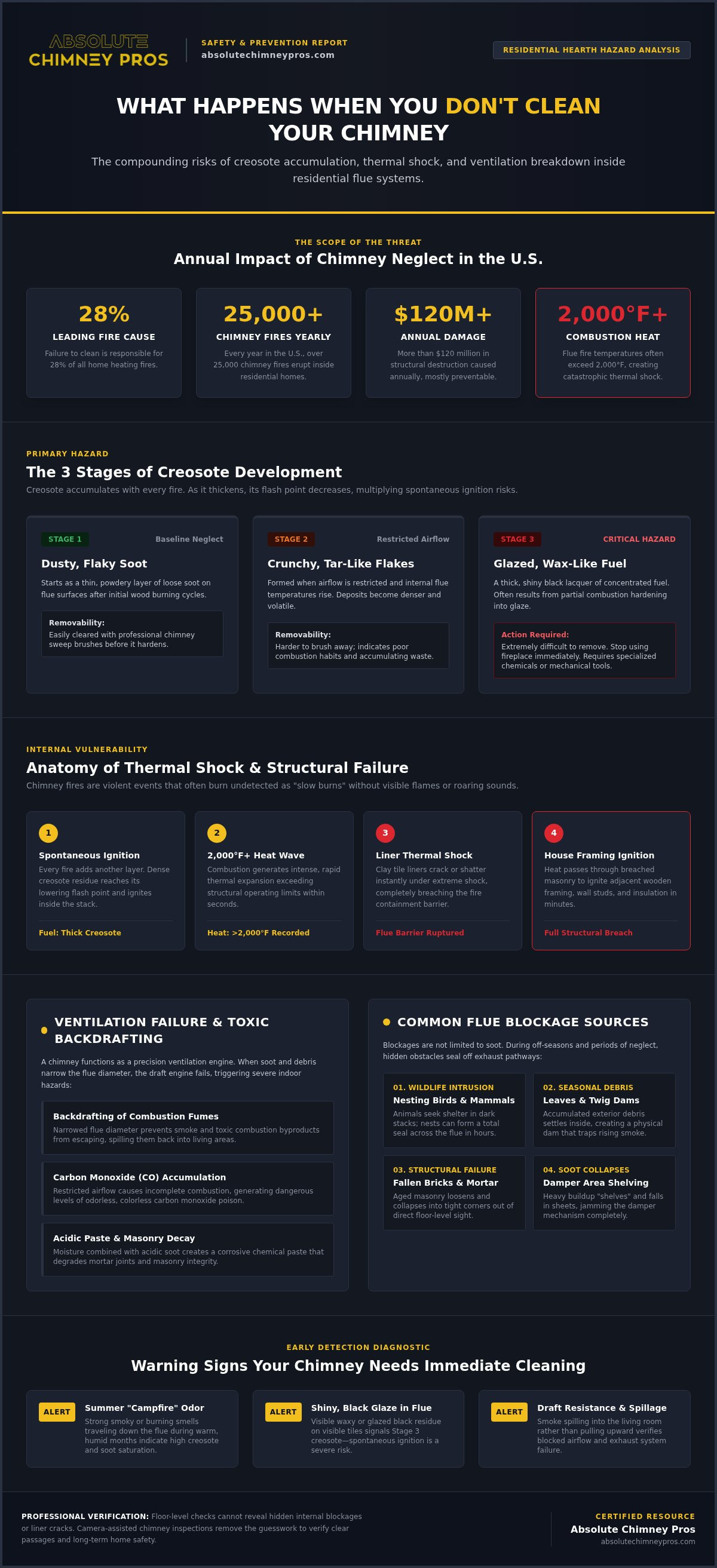
Did you know that failure to clean your chimney is the leading cause of home heating fires, accounting for 28% of all incidents? It's a sobering reality. Most homeowners enjoy the warmth of a hearth but forget the volatile residue building up inside the flue. You might wonder exactly what happens if you don't clean your chimney for a season or two. It's a gamble with your safety. Every year, more than 25,000 chimney fires in the U.S. cause over $120 million in structural damage. Most of these disasters were entirely preventable.
We understand the uncertainty. It's easy to ignore a strange smell or assume the structure is sound because you can't see the interior. You want peace of mind, not a massive repair bill. This guide will reveal the severe fire hazards, hidden structural decay, and invisible health risks associated with a neglected system. You'll learn how to identify dangerous Stage 3 creosote and spot the warning signs before they lead to a crisis. We'll show you how to protect your family and your home's value through professional oversight and disciplined maintenance.
Key Takeaways
- Creosote is a volatile fuel that builds up with every fire. Learn how it creates a high-risk environment for spontaneous ignition.
- Blocked flues trap toxic gases like carbon monoxide inside your living space. Discover the mechanics of backdrafting and how to stop it.
- Moisture and acidic soot create a corrosive paste that destroys masonry. Understand how neglect leads to expensive structural repairs.
- Recognize the specific warning signs, such as a campfire smell in summer, that reveal what happens if you don't clean your chimney.
- Professional, camera-assisted inspections remove the guesswork. Learn why certified oversight is essential for long-term home safety.
The Silent Threat: Creosote Buildup and Chimney Fire Hazards
Creosote is a highly flammable byproduct of wood combustion that coats your flue walls. It's the primary answer to what happens if you don't clean your chimney. Creosote is the #1 cause of residential chimney fires. This substance accumulates every time you burn wood. It starts as a thin layer but thickens over time. As it grows denser, its flash point decreases. This means the hotter the fire, the more likely the residue will spontaneously ignite. It turns your chimney into a ticking time bomb. Every fire you light adds another layer of volatile fuel.
The Three Stages of Creosote Development
Identify the threat early. Creosote evolves through three distinct physical states. Stage 1 is a dusty, flaky soot. It's the baseline of neglect. At this level, a professional chimney sweep NJ can easily clear the debris before it hardens. Stage 2 is more aggressive. It presents as crunchy, tar-like flakes. This indicates restricted airflow and higher internal heat. It's harder to brush away and suggests your burning habits are creating excessive waste.
Stage 3 is a safety crisis. It's a glazed, wax-like coating that acts as concentrated fuel. This glaze often results from the combustion of creosote deposits that didn't fully ignite but hardened into a lacquer-like finish. It's extremely difficult to remove. It requires specialized chemical treatments or heavy-duty mechanical tools to clear safely. If you see a shiny, black coating in your flue, stop using the fireplace immediately.
How a Chimney Fire Damages Your Home
A chimney fire is a violent, high-heat event. Temperatures often exceed 2,000 degrees Fahrenheit. Many homeowners don't even realize a fire is occurring. These "slow burns" can happen inside the flue without visible flames or a roaring sound. The intense heat causes immediate thermal shock. This makes clay tile liners crack or shatter instantly. Once the liner is breached, the heat has a direct path to your home's wooden framing. It can ignite the studs and insulation behind the masonry in minutes. A single fire event can render the entire structure unsafe for future use. Neglect isn't just a maintenance issue. It's a structural liability that compromises your entire property.
Invisible Dangers: Carbon Monoxide and Flue Blockages
A chimney is more than a brick structure. It is a precision engine for ventilation. Its primary job is to create a draft that carries toxic combustion gases safely out of your home. When the flue is clear, physics does the work. When it is neglected, that engine fails. One of the most terrifying answers to what happens if you don't clean your chimney is the total failure of this exhaust system. Soot buildup doesn't just sit on the walls. It narrows the diameter of the flue. This restriction creates "backdrafting." Instead of rising, smoke and toxic fumes spill directly into your living room.
The Silent Killer: Carbon Monoxide Risks
Carbon monoxide is the invisible threat of chimney neglect. It is odorless and colorless. You won't see it coming. Incomplete combustion occurs when oxygen flow is restricted by soot or debris. This produces CO at dangerous levels. A clean flue is your primary defense against this gas backflowing into your bedrooms. Following the U.S. Fire Administration heating fire safety guidelines is essential for preventing these heating-related hazards. Without a clear path of least resistance, your hearth becomes a source of poison rather than warmth. Vigilance is the only way to ensure your family's safety from this silent intruder.
Common Sources of Physical Blockages
Blockages aren't always caused by soot. During the off-season, your chimney is a prime target for nature. Nesting birds and small mammals frequently seek shelter in the dark, warm stack. Their nests can create a total seal in hours. Leaves and twigs also accumulate, acting as a dam for rising smoke. Internal structural failure is another risk. Masonry doesn't last forever. Bricks can loosen and drop into the flue, wedging themselves into tight corners that are impossible to see from the hearth. Even excessive soot can "shelf" and fall, blocking the damper area entirely. These obstructions are often hidden from plain sight.
Protecting your home requires more than a visual check from the floor. It demands a thorough chimney inspection to verify the flue is unobstructed. Professional sweeps use specialized tools to clear these blockages and ensure your family breathes clean air all winter. What happens if you don't clean your chimney can be as simple as a bird nest, but the consequences are often life-threatening. Don't wait for a CO alarm to tell you there is a problem. Take action before the first fire of the season.
Structural Decay: How Neglect Destroys Your Masonry
Masonry looks tough. It isn't invincible. Soot and creosote are chemically acidic. When these deposits mix with humidity or rainwater, they form a corrosive paste. This substance clings to your flue walls and begins a slow, destructive chemical reaction. It specifically targets the mortar joints between your bricks. Over time, the mortar softens and turns to powder. This process compromises the entire structural skeleton of your chimney. It is a primary consequence of what happens if you don't clean your chimney. The damage starts internally and remains hidden until it becomes a crisis.
Neglect leads to visible trauma called spalling. This occurs when the outer face of the brick literally pops off. It's caused by internal pressure and chemical erosion. Once the protective surface is gone, the brick's porous core is exposed. This accelerates the decay. You might find bits of brick on your roof or in your yard. Don't ignore these fragments. They are evidence of a failing structure. To prevent total failure, you must address chimney leak repair NJ early to stop water from fueling this corrosion.
The Role of Moisture in Chimney Degradation
Bricks act like sponges. They soak up moisture from the air and rain. In our NJ and PA service areas, the freeze-thaw cycle is brutal. Water inside the brick expands as it turns to ice. This creates thousands of tiny internal fractures. If your liner is already cracked, moisture seeps into the chimney's middle structural layer. This is the "hidden" zone where decay goes unnoticed for years. A neglected chimney eventually loses its balance. It can start to lean. Without intervention, complete structural collapse is a real possibility. Punctual maintenance stops this cycle before the masonry reaches its breaking point.
Flue Liner Erosion and Fire Risk
Your flue liner is the last line of defense. It protects your home's combustible walls from intense heat and corrosive gases. However, uncleaned soot acts as a mask. It hides small cracks and missing mortar joints that eventually become major safety breaches. These gaps allow heat to transfer to your attic or wall studs. While we focus on fire, we must also consider health. Breaches in the liner allow toxic gases to bypass the flue entirely. Following CDC guidelines on carbon monoxide prevention is critical for every homeowner using a fireplace. Replacing a destroyed liner is a massive expense. It is significantly more costly than annual cleaning. Regular maintenance identifies these "invisible" cracks before they require a total rebuild. Protection is cheaper than restoration. We prioritize transparency, showing you exactly where the erosion has started before it compromises your home.
Warning Signs: How to Tell Your Chimney Needs Cleaning
Your chimney communicates its condition through specific sensory signals. You shouldn't wait for a crisis to take action. Vigilance is the first step in risk mitigation. Recognizing early indicators allows for proactive safety before a hazard becomes a disaster. A primary sign of what happens if you don't clean your chimney is a distinct, pungent odor. During the humid summer months, a neglected flue often emits a campfire smell. This isn't just a nuisance. It is the scent of heavy creosote off-gassing. This odor is often the first warning that your system is overloaded with volatile fuel.
Visual cues are equally telling. Look at the walls of your firebox. Black, oily spots indicate advanced creosote buildup. This is concentrated fuel. It suggests your system is operating at a high risk for spontaneous ignition. You can use our chimney inspection New Jersey guide to perform a basic self-evaluation of these visible areas. If you see these spots, the hidden parts of your flue are likely in worse condition.
Visual and Olfactory Red Flags
Smoke backing up into the room is a critical failure of the ventilation system. It means your draft is compromised. You might also notice soot falls. These are black, crunchy flakes that drop onto the hearth during the off-season. They are physical evidence of a restricted flue. Check your damper regularly. If it feels sticky or is difficult to move, tar buildup is the culprit. This residue acts like glue. It prevents the metal components from functioning correctly. These are not minor inconveniences. They are symptoms of a system in distress that requires immediate professional attention.
Performance Issues to Watch For
A healthy chimney draws air with precision. If your fires are difficult to start, your flue is likely restricted by debris or heavy soot. Smoldering wood is another red flag. When wood fails to produce a clean flame, it indicates poor oxygen flow. This results in incomplete combustion and increased carbon monoxide production. Listen to your flue during use. Unusual sounds like clicking, popping, or a low-frequency roaring are alarming. Clicking often indicates the thermal expansion of masonry under extreme, dangerous stress. A roaring sound suggests an active chimney fire is occurring out of sight. What happens if you don't clean your chimney can escalate from a slow draft to a structural disaster in a single evening.
Don't rely on guesswork for your family's safety. If you notice any of these signs, schedule a professional chimney sweep immediately to clear the hazards and restore your peace of mind.
Professional Solutions: The Absolute Chimney Pros Standard
Absolute Chimney Pros operates as a vigilant protector for homeowners in NJ and PA. We don't just clear soot; we mitigate critical household risks. Safety is our primary product. Cleaning is simply the professional tool we use to achieve it. Our local expertise is vital because we understand the specific environmental pressures of the Northeast. High humidity and the relentless freeze-thaw cycle of our region accelerate masonry decay and liner erosion. Understanding what happens if you don't clean your chimney is the first step toward professional mitigation. We replace uncertainty with technical precision and a disciplined approach to maintenance.
Transparency is the foundation of our service. We provide on-site estimates with zero hidden fees. You receive a clear, direct report on the state of your system. No guesswork. Just facts. We are licensed and insured in both NJ and PA, ensuring that our work meets the highest professional standards. Our goal is your peace of mind through professional oversight. We value your time. We value your safety.
Why CSIA Certification Matters
A CSIA certification is a commitment to technical mastery and ethical transparency. Our technicians are rigorously trained in the latest NFPA 211 safety standards. This specialized knowledge is what separates a professional sweep from a general handyman. We can identify the subtle, dangerous indicators of Stage 3 creosote that others miss. This glazed fuel is the most common cause of chimney fires. We use precision tools and modern techniques to ensure a mess-free cleaning inside your home. High-powered vacuums and specialized brushes contain all debris. Your living room remains pristine. Your flue becomes safe. Technical mastery. Mess-free results.
Next Steps: Scheduling Your Safety Inspection
Punctuality and efficiency are core to our operation. A Level 1 inspection is included with every standard cleaning. This baseline assessment verifies that your chimney is free of obstructions and major structural faults. For those moving into a new home or after a performance issue, camera-assisted Level 2 inspections are available. These provide a 360-degree view of your internal flue. We offer same-week appointments to accommodate busy NJ and PA schedules. Knowing what happens if you don't clean your chimney should prompt immediate action. Ensure your fireplace is ready for the first cold snap of 2026. Don't leave your family's safety to chance. A single inspection can prevent a structural crisis. We are ready to show up, assess your situation, and execute the task with disciplined expertise.
Secure Your Hearth for the Season Ahead
Neglecting your fireplace is a risk you can't afford to take. We've explored the severe reality of what happens if you don't clean your chimney. From volatile creosote buildup to invisible carbon monoxide leaks, the dangers are significant. Structural decay from acidic soot and local freeze-thaw cycles can lead to expensive masonry failures. These aren't just maintenance issues. They are safety crises waiting to happen. Professional oversight is the only way to ensure your flue remains a safe exhaust path for your family.
Absolute Chimney Pros is your partner in home protection. Our CSIA-Certified Technicians bring technical mastery to every job. We are fully licensed and insured in NJ and PA. You receive on-site estimates with no hidden fees. Transparency is our standard. We remove the guesswork so you can enjoy your hearth with confidence. Don't wait for a warning sign to become a disaster. Schedule Your Certified Chimney Safety Inspection Today. We look forward to helping you keep your home warm and secure for years to come.
Frequently Asked Questions
How often should I have my chimney cleaned if I only use it occasionally?
NFPA 211 standards require a professional inspection every 12 months, regardless of how often you use the fireplace. Even if you don't burn wood frequently, animals can nest in the flue or masonry can shift. Cleaning is required if buildup reaches 1/8 inch. In NJ and PA, seasonal humidity causes soot to clump and acidic moisture to damage the liner during inactivity. Annual oversight is the only way to ensure safety.
Can a dirty chimney really cause carbon monoxide poisoning?
Yes, carbon monoxide poisoning is a direct risk of what happens if you don't clean your chimney. Blockages from soot, creosote, or animal nests prevent combustion gases from exhausting correctly. This causes backdrafting, where CO spills into your living space. Since CO is odorless and colorless, a clean flue is your primary defense. Our CSIA-certified technicians verify that your ventilation path is entirely unobstructed during every safety review.
What are the signs of a chimney fire while it is happening?
A chimney fire can sound like a loud, roaring freight train or a low-frequency hum. You might see intense, hot smoke or actual flames shooting from the top of the chimney stack. Inside the home, you may notice a dramatic increase in heat or hear popping and clicking sounds from the masonry. If you suspect an active fire, evacuate immediately and call emergency services. Never attempt to extinguish a flue fire yourself.
Is it safe to clean my own chimney with a DIY kit?
DIY cleaning is generally discouraged because consumer kits lack the precision of professional equipment. Homeowners often miss Stage 3 glazed creosote, which requires specialized chemical remediation. A DIY sweep does not include a technical inspection. Without a camera-assisted review, you might miss hairline cracks in the liner or structural masonry failures. Professional oversight ensures your system meets NFPA 211 safety standards and remains structurally sound. We prioritize technical mastery over guesswork.
What is the difference between a chimney cleaning and a chimney inspection?
A chimney cleaning is the physical removal of soot and creosote from the flue. An inspection is a diagnostic safety review of the entire structure. While a sweep clears debris, the inspection identifies cracks, leaks, or clearances that violate fire codes. Absolute Chimney Pros includes a Level 1 inspection with every standard cleaning. This ensures we don't just make the chimney look clean, but verify that it is safe to operate and structurally intact.
Why does my chimney smell like a campfire during the summer?
This smell is caused by creosote deposits reacting to high humidity. During NJ and PA summers, moist air enters the chimney and mixes with the soot, creating a pungent, smoky odor. This is a clear indicator of what happens if you don't clean your chimney regularly. The smell often intensifies when the air conditioner is running, as it creates a negative pressure that draws the odor into your living space. A professional cleaning resolves this issue.
Do gas fireplaces need to be cleaned as often as wood-burning ones?
Gas fireplaces require annual inspections but less frequent sweeping than wood-burning units. They don't produce creosote, but they can suffer from debris blockages, bird nests, or malfunctioning burners. Ceramic logs can also deteriorate and clog ports. Our gas fireplace service in NJ and PA focuses on ensuring the pilot assembly and venting system are operating safely. Annual maintenance prevents carbon monoxide leaks and ensures the unit ignites reliably when the temperature drops.
Will a chimney cleaning make a mess inside my house?
A professional cleaning should be entirely mess-free. We use high-powered industrial vacuums and specialized drop cloths to contain every particle of soot. Our technicians seal the fireplace opening before beginning the sweep to ensure no dust escapes into your living area. By utilizing modern tools and disciplined procedures, we leave your home exactly as we found it. We prioritize precision and cleanliness as much as technical safety and fire prevention.


