

Your chimney is more than a brick structure. It is your home's primary defense against fire and toxic gas. If the liner fails, your safety fails. Most homeowners only think about their flue when a problem arises. Waiting until you smell smoke or carbon monoxide is a dangerous gamble. Understanding the chimney liner replacement cost shouldn't feel like a guessing game when your family's health is on the line. You want transparency. You deserve a professional who values your time and your safety.
We know that unexpected repair quotes are stressful. It's difficult to choose between stainless steel, clay, or cast-in-place materials without the right facts. This guide provides a clear breakdown of 2026 price ranges and material durability. We'll explain why the ROI of a stainless steel liner often outweighs cheaper alternatives. We'll also show why CSIA-certified installation is the only way to ensure your home remains a safe haven. You will gain the exact data needed to hire a local expert with confidence and peace of mind.
Key Takeaways
- Identify critical warning signs like masonry cracks or spalling that make liner replacement a mandatory safety requirement for your home.
- Evaluate how specific variables like chimney height and flue shape dictate the total chimney liner replacement cost to avoid pricing surprises.
- Compare the long-term ROI of stainless steel liners against traditional clay tiles to ensure your chimney remains corrosion-resistant.
- Recognize the severe risks of DIY installation, including poor drafting and the dangerous lack of proper UL-listed insulation.
- Access the benefits of CSIA-certified oversight and same-week appointments to resolve urgent venting hazards with professional precision.
Understanding Chimney Liner Replacement Costs in 2026
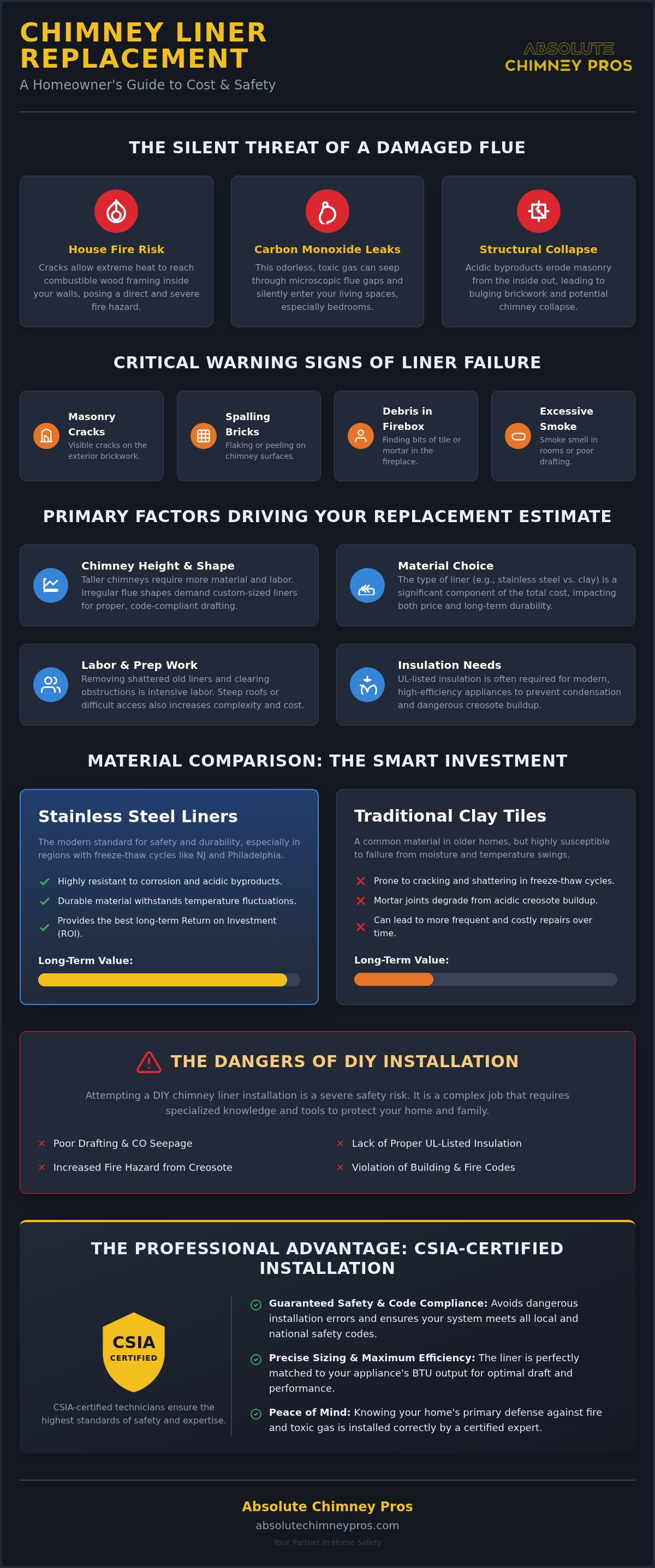
A Chimney flue liner serves as the invisible backbone of your home's heating system. Its primary job is to channel toxic gases and extreme heat safely out of the living space. Without a functional liner, your masonry is directly exposed to acidic byproducts that dissolve brick and mortar from the inside out. Estimating the chimney liner replacement cost involves more than just selecting a pipe. It is an investment in your home's structural integrity. Industry averages for professional replacement vary widely. These figures are dictated by the material chosen and the complexity of the existing flue.
Local environmental factors in New Jersey and the Philadelphia area create unique challenges for masonry. Our region experiences high humidity in the summer and deep freezes in the winter. This relentless freeze-thaw cycle is a primary driver of liner failure. Moisture enters the flue and expands as it freezes, causing rigid materials like clay to shatter. If you notice small bits of tile or debris in your firebox, your liner has likely already failed. Understanding the chimney liner replacement cost now can prevent a total system collapse later.
Why Your Current Liner is Failing
Liner failure is rarely a sudden event. It is usually a slow, silent process of degradation. Creosote is highly acidic. When it builds up, it eats through the mortar joints of clay tile liners. Once those joints vanish, heat and gas can escape into your walls. Structural settling is another common culprit. As a house shifts over decades, the rigid flue can develop vertical cracks. In NJ, moisture intrusion remains the most common enemy. Water seeps through chimney crowns and saturates the liner, leading to spalling and structural weakness that requires immediate professional intervention.
The Consequences of Ignoring a Damaged Flue
Operating a fireplace or furnace with a damaged liner is a severe safety hazard. The most immediate risk is a house fire. A cracked liner allows heat to transfer to combustible wooden framing members behind the masonry. Carbon monoxide is an even more silent threat. This odorless gas can seep through microscopic gaps in the flue and enter your bedrooms. Finally, ignoring a failing liner will eventually lead to extensive chimney repair New Jersey. When the liner fails, the exterior brickwork begins to bulge and crack, turning a liner replacement into a full masonry reconstruction project.
Primary Factors That Drive Your Replacement Estimate
Every chimney presents a unique engineering challenge. You shouldn't expect a generic quote for a custom safety component. The chimney liner replacement cost is heavily influenced by the physical geometry of your home and the current state of your flue. Factors like height, diameter, and roof accessibility play critical roles in the final estimate. Professionals look beyond the surface to identify structural hurdles that could impact the safety of the installation. We prioritize transparency, ensuring you understand exactly where your investment is going.
Chimney Height and Flue Dimensions
Height is the most direct cost driver. A single-story ranch requires significantly less material and labor than a three-story Victorian. The total linear footage of the flue determines the amount of stainless steel or clay tile needed. The diameter of the flue also dictates the material volume. Many older homes in the NJ and Philadelphia area feature oversized or irregularly shaped flues. These require custom-sized liners to comply with the International Mechanical Code. Proper drafting depends on precise sizing. Generic "one size fits all" kits often fail to provide the necessary suction for modern heating appliances. This leads to dangerous carbon monoxide seepage into your living space. We ensure the liner matches the appliance's BTU output for maximum efficiency.
Labor Complexity and Prep Work
Labor is where the complexity of the job becomes truly apparent. If your original clay liner has shattered due to freeze-thaw cycles, technicians must remove the debris. This process involves breaking out old tiles and clearing obstructions that block the path. It's a grueling, dusty, and essential task. Accessibility is another major factor. Steep roof pitches or chimneys located in the center of a structure require specialized safety rigging and scaffolding. For high-efficiency appliances, we often add UL-listed insulation blankets. This prevents condensation and rapid creosote accumulation. A comprehensive chimney inspection New Jersey is the first step to uncover these variables. It ensures the structural integrity of the masonry before the new liner is secured. This professional oversight eliminates the guesswork that leads to future failures.
Identifying these hidden factors early is the best way to avoid unexpected expenses. You can request a transparent on-site estimate to understand exactly what your specific chimney requires.
Stainless Steel vs. Clay Tile: Material Cost Comparison
Choosing the right material is the most critical decision in your relining project. The chimney liner replacement cost varies significantly between modern alloys and traditional masonry. A Chimney liner must withstand extreme thermal shock and acidic condensation without degrading. Stainless steel has become the industry standard for its resilience. Clay tile remains a traditional option but often fails to meet modern safety demands. Your fuel source, whether wood, gas, or oil, dictates which material is required for your specific flue.
Stainless Steel: The Modern Gold Standard
Stainless steel liners are prized for their durability and "once and done" nature. We typically use two specific grades: 316L and 304L. 316L is the superior choice. It contains molybdenum to resist the highly corrosive acids produced by coal, oil, and wood. 304L is often sufficient for basic wood-burning applications. These liners come in flexible or rigid formats. Flexible liners allow us to navigate offsets and bends in older NJ chimneys without damaging the surrounding masonry. Rigid liners offer a smoother interior for better drafting in straight flues. This material is the preferred solution for a gas fireplace service NJ. It provides a seamless, airtight path for combustion byproducts. Most professional-grade stainless liners include a lifetime warranty. This protects your investment for as long as you own the home.
Clay Tile and Cast-in-Place Alternatives
Clay tile is the material found in most original builds. While the tiles themselves are inexpensive, the installation labor is immense. Replacing clay tiles often requires breaking into the chimney breast at multiple points. This creates a massive mess and high labor fees. Cast-in-place liners offer a different approach. A cement-like mixture is pumped into the flue, creating a seamless, insulated tube. This method is excellent for historic New Jersey homes with weak masonry. It reinforces the entire structure from the inside out. The initial chimney liner replacement cost for cast-in-place is often higher than stainless steel. You must weigh the structural benefits against the upfront price. For most homeowners, stainless steel provides the best balance of safety, longevity, and cost-effectiveness.
The Safety Risk of DIY: Why Professional Installation Matters
Attempting a DIY installation to lower the chimney liner replacement cost is a high-stakes gamble with your home's safety. A chimney is a complex venting machine. It relies on precise thermal dynamics to pull toxins out of your home. Improperly sized liners destroy this balance. If the pipe is too large, the draft slows. If it is too small, smoke backs up into your living room. Most DIY homeowners also skip the critical UL-listed insulation blankets required for zero-clearance safety. Without this barrier, the flue remains cold. This accelerates creosote buildup and creates a significant risk of a high-intensity chimney fire that can spread to your home's framing.
The Importance of CSIA Certification
Certification is not just a badge. It represents rigorous training in fire physics and venting safety. CSIA-certified technicians understand the strict NFPA 211 standards that govern every installation in New Jersey and Pennsylvania. We don't guess. We verify. Every professional installation should conclude with a high-definition camera scan. This verifies that the liner is seamless and free of obstructions from the top cap to the appliance connection. Absolute Chimney Pros guarantees that every project meets or exceeds local building codes. This level of technical precision is impossible to achieve with a retail kit and a ladder. Professional oversight ensures your system is a protector, not a hazard.
Liability and Insurance Considerations
Your home insurance policy is a legal contract. Many providers include specific clauses that require professional maintenance for solid-fuel or gas appliances. If a fire occurs and the investigation points to a non-professional liner installation, your claim may be denied entirely. A professional receipt from a licensed contractor is also a vital asset during the home resale process. Modern home inspectors will flag uncertified repairs, often forcing you to pay for a professional relining before the sale can close. The real chimney liner replacement cost of a failed DIY attempt often includes the price of removing the botched work and starting over. Professional oversight provides the only true peace of mind for your family's safety. We offer same-week appointments to address these urgent safety concerns without delay.
Secure your home today. Book a professional on-site estimate with our certified experts.
Get a Precise Estimate from Absolute Chimney Pros
Pricing anxiety often prevents homeowners from addressing critical safety repairs. We eliminate that stress through total transparency. Most contractors provide vague ranges over the phone. We provide on-site estimates that reflect the actual reality of your flue. This ensures your chimney liner replacement cost is accurate from the start. No guesswork. No hidden fees. Just a clear, professional assessment of what your home needs to stay safe. We value your time and your environment.
We serve the entire New Jersey and Philadelphia Pennsylvania region. Our team understands the local building codes and the specific environmental stressors of the Northeast. Whether you are in a historic Philly rowhouse or a suburban NJ colonial, we bring disciplined expertise to every project. We offer same-week appointments for urgent safety concerns. If you suspect a liner failure, waiting is not an option. We show up, assess the hazard, and provide a definitive solution with technical mastery.
Our Transparent Estimating Process
Our process is methodical and designed for your peace of mind. We follow three specific steps to ensure accuracy and safety:
- Step 1: Visual and Camera-Assisted Assessment. We perform a high-definition flue scan. This allows us to see cracks, gaps, and structural shifts that a standard inspection might miss. We identify the exact condition of your masonry.
- Step 2: Material Recommendation. We match the liner material to your specific heating appliance. We ensure the alloy grade and diameter are perfectly calibrated for your BTU output. This prevents drafting failures.
- Step 3: Clear Quoting. You receive a flat-fee or tiered quote. We explain every line item. There are no "gotchas" or surprise add-ons once the work begins.
A professional installation often requires prep work. A thorough chimney sweep NJ is essential to remove creosote and debris before the new liner is secured. This ensures a clean, tight fit. It also prevents trapped flammable material from causing future issues behind the new steel wall.
Schedule Your Safety Review Today
Don't wait for a chimney fire or a carbon monoxide alert to take action. These are preventable disasters. Our CSIA-certified technicians prioritize your family's well-being above all else. We combine traditional craftsmanship with modern diagnostic tools. Experience the discipline and mastery of local experts who value punctuality and ethical transparency. Call now for a professional consultation. We will help you navigate the chimney liner replacement cost with honesty and technical precision. Your home is your sanctuary. Let's keep it that way.
Secure Your Home With Professional Oversight
Your chimney liner is the most critical safety barrier in your home. It acts as a shield against toxic gases and extreme heat. Choosing a high-grade stainless steel material ensures a lifetime of protection against corrosion and thermal shock. While the initial chimney liner replacement cost is a significant investment, it is far less expensive than the structural damage or fire risks associated with a failed flue. Don't leave your family's safety to guesswork or uncertified DIY kits. Our CSIA-Certified Technicians provide the technical mastery needed to ensure your venting system meets every modern safety standard.
Absolute Chimney Pros is your dedicated partner in home safety. We operate with a firm "no hidden fees" promise and are fully licensed and insured in NJ and PA. You deserve transparency and precision when it comes to your home's infrastructure. Schedule Your Professional Chimney Liner Estimate with Absolute Chimney Pros today. Take the first step toward a safer, more efficient home and enjoy the peace of mind that comes from professional oversight. We are ready to help you protect your sanctuary.
Frequently Asked Questions
How long does a chimney liner replacement take?
A standard chimney liner installation typically takes between four and eight hours to complete. Most residential projects are finished within a single day. Complex jobs involving multi-story homes or the removal of heavy debris from a collapsed clay flue may extend into a second day. Our CSIA-certified technicians prioritize efficiency to minimize disruption to your home. We ensure the installation is seamless and secure before we leave the site.
Is a stainless steel chimney liner worth the extra cost?
Yes, stainless steel is the modern gold standard for safety and longevity. It offers superior resistance to corrosion and thermal shock compared to traditional clay tiles. Most professional-grade stainless liners come with a lifetime warranty. This protects your investment for decades. While it impacts the initial chimney liner replacement cost, the long-term ROI is unmatched. You avoid the recurring labor fees and structural risks associated with brittle masonry alternatives.
Do I need to replace my liner if I am installing a new wood stove?
Installing a new wood stove almost always requires a dedicated, properly sized liner to meet safety codes. Modern stoves have specific venting requirements that old, oversized clay flues cannot handle. An incorrectly sized flue leads to poor drafting and rapid creosote accumulation. This increases your risk of a high-intensity chimney fire. We verify the stove’s BTU output and install a UL-listed stainless steel liner to ensure your system operates safely.
Can a cracked chimney liner be repaired without full replacement?
Minor mortar joint issues can sometimes be addressed with specialized resurfacing, but a cracked liner usually requires full replacement. Cracks are structural failures. They allow heat and toxic gases to reach your home’s framing. Patching a failed flue is often a temporary fix that doesn't address the underlying decay. For homeowners in the NJ and Philadelphia area, we recommend a total reline to ensure permanent protection against the freeze-thaw cycles that destroy masonry.
What are the signs that my chimney liner is failing?
Look for visible signs like bits of clay tile or red flakes in your firebox. This indicates your flue is spalling and losing its structural integrity. Other warnings include a persistent smell of smoke in the house, poor drafting, or white staining on the exterior brickwork. If you notice these symptoms, a professional camera inspection is mandatory. We use high-definition tools to identify hidden gaps before they lead to carbon monoxide leaks or house fires.
Does home insurance cover the cost of chimney liner replacement?
Home insurance typically covers the chimney liner replacement cost only if the damage resulted from a sudden, accidental event. This includes chimney fires or lightning strikes. Standard wear and tear, age, or lack of maintenance are almost never covered. We provide detailed documentation and camera scans that can assist with your claim if a covered event occurred. It's vital to review your policy for specific exclusions regarding solid-fuel appliances and professional maintenance requirements.
Why is there a smell of smoke in my house even when the fireplace is off?
A persistent smoke odor often signals a significant drafting issue or a failing liner. When the fireplace is cold, creosote deposits inside the flue emit a strong, acrid smell. If the liner is cracked or improperly sized, air can pull these odors back into your living space. This is more than a nuisance. It is a warning that your ventilation system is compromised. A professional cleaning and inspection will identify the source of the downdraft.
How often should a new chimney liner be inspected?
Every chimney liner requires a professional safety inspection at least once per year. This is the standard recommended by the NFPA to ensure no new cracks or obstructions have formed. Homeowners in New Jersey and Philadelphia should schedule this before the winter heating season begins. Regular oversight allows us to catch minor issues before they become expensive hazards. Our CSIA-certified team provides on-site estimates with no hidden fees to keep your system safe.


