
Skipping your annual chimney sweep isn't a savvy cost-saving measure. It's a high-stakes gamble with your home's structural integrity. Many homeowners wonder is chimney cleaning worth it when they only light a few fires each winter. The reality is simple. Neglect creates silent killers. Creosote, a highly flammable byproduct of wood smoke, builds up every time you burn. It only takes one spark to turn a cozy evening into a residential fire. Safety isn't a luxury. It's a requirement.
It's natural to feel uncertain about hidden hazards or fear being overcharged for repairs you can't see. You want a safe home and peace of mind without the stress of unnecessary fees. This guide proves why professional maintenance is a high-ROI safety investment that prevents fires and saves you thousands in structural damage. We'll break down the latest 2026 safety standards, the real risks of creosote, and how to validate the financial benefit of expert oversight before the winter season arrives. Professional clarity starts here.
Key Takeaways
- Decide if an annual sweep is a necessity or a luxury. Discover why the question of is chimney cleaning worth it depends on environmental factors, not just usage.
- Understand the three stages of creosote. Learn which types of flammable residue require specialized chemical intervention before they ignite.
- Compare the modest cost of maintenance against the high price of a full chimney liner installation. Prevent masonry failure before it starts.
- Identify the subtle smells and visual cues that signal a dangerous blockage. Don't wait for a visible fire to realize your system is compromised.
- See how CSIA-certified technicians eliminate guesswork. Get transparent, flat-fee pricing and camera-assisted proof for your NJ or PA home.
The Value Debate: Why Homeowners Question Chimney Sweeping
Many homeowners view chimney maintenance as a seasonal suggestion rather than a safety requirement. They look at a fireplace used only on holidays and assume the system is pristine. This is a dangerous gamble. When asking is chimney cleaning worth it, the answer isn't found in how many logs you burn, but in the chemical state of your flue. Even a dormant chimney faces environmental threats. Humidity and seasonal temperature shifts cause moisture to mix with existing soot. This creates corrosive acids that eat away at masonry and liners from the inside out. Neglect is a choice; choose safety instead.
View a professional sweep as a high-yield insurance policy for your home. A simple sweep removes flammable debris, but a professional inspection identifies structural rot. These are distinct services. An inspection utilizes high-resolution cameras to check for mortar decay and liner breaches that the naked eye cannot see. You aren't just paying for a clean flue. You are buying technical verification that your house won't burn down. The cost of a routine visit is negligible compared to the price of a full chimney liner installation NJ. One prevents a disaster; the other fixes one.
The 'I Only Use It Once a Week' Fallacy
Infrequent use creates a specific, hidden hazard. A cold flue doesn't draw smoke efficiently. It traps it. This slow-moving smoke cools rapidly, condensing into thick layers of creosote on the chimney walls. Frequent users often have hotter, cleaner-burning fires that push gases out before they solidify. In contrast, the occasional weekend fire often results in more rapid, glazed buildup. Throughout the history of chimney sweeping, professionals have known that consistent airflow is the primary defense against blockages. Usage frequency is a poor indicator of actual safety; chemical accumulation happens regardless of the calendar.
DIY vs. Professional Sweeping: Is the Savings Worth the Risk?
Homeowners often try to save money with hardware store brushes and vacuum attachments. This is a mistake that compromises your home. Professional equipment is designed to navigate complex turns, smoke shelves, and narrow damper crevices where creosote hides. A DIY brush often just pushes soot into a pile, creating a new blockage that restricts airflow. CSIA-certified pros use specialized tools to find cracks that a manual brush will never reach. There is also the matter of liability. Insurance companies often require proof of a professional chimney inspection New Jersey before they pay out on a fire claim. Without a certified report, your claim might be denied. Saving a few dollars on a DIY kit isn't worth losing your entire home. Professional is chimney cleaning worth it because it provides legal and physical protection that a DIY project cannot match.
The Invisible Danger: Understanding Creosote and Ventilation Risks
A chimney is more than a stone pillar. It's a precision ventilation system. When wood burns, it releases gases, water vapor, and unburned carbon. These elements cool as they rise, sticking to the flue walls. This substance is creosote. It's highly flammable and acidic. Ignoring this buildup is why many homeowners eventually ask is chimney cleaning worth it after a close call. If you don't remove it, you're living with a fuel source inside your walls. The U.S. Consumer Product Safety Commission provides clear data on chimney fire risks resulting from this specific neglect. It doesn't take much to ignite a disaster.
The Three Stages of Creosote Buildup
Creosote transforms as it ages. Understanding these stages helps you gauge the urgency of a sweep. Professionals categorize it to determine the necessary cleaning method. Each stage represents a higher level of danger.
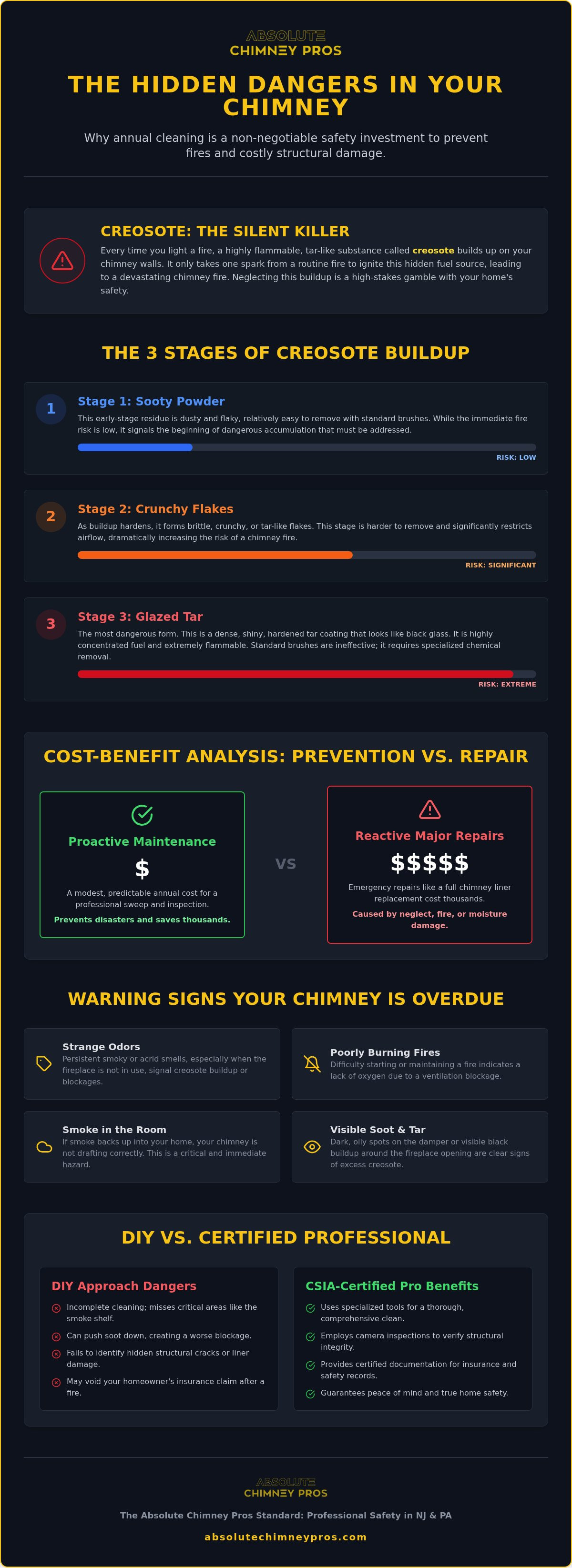
- Stage 1: Sooty Powder. This is early-stage residue. It's dusty and relatively easy to brush away. It poses a low risk but signals the start of dangerous accumulation.
- Stage 2: Crunchy Flakes. This looks like burnt sugar or honeycomb. It's harder to remove and indicates restricted airflow. At this point, the risk of a flash fire increases significantly.
- Stage 3: Glazed Tar. This is the most dangerous form. It looks like shiny, black glass. It's extremely dense and highly explosive. Standard brushes won't touch it. It often requires chemical treatments or specialized rotary tools to clear safely.
Beyond Fire: Blockages and Carbon Monoxide
Fire isn't the only threat. A chimney blockage can be just as lethal. Animals like birds and squirrels often nest in flues during the off-season. Twigs, leaves, and even falling masonry can obstruct the path of rising gases. When a flue is blocked, toxic fumes have nowhere to go but back into your home. This includes carbon monoxide (CO). CO is odorless, colorless, and deadly. It's the silent killer of the heating world.
Modern, airtight homes are particularly vulnerable to these issues. High-efficiency windows and heavy insulation prevent natural air exchange. This creates a vacuum effect. If your chimney isn't venting perfectly, the house can actually "suck" exhaust gases back into the living room. This is called backdrafting. Ensuring your system is clear isn't just about fire safety. It's about breathable air. If you haven't had a professional look at your flue, the answer to is chimney cleaning worth it becomes a matter of life and death. You can schedule a safety check to ensure your ventilation is functioning at peak efficiency before the first freeze.
Cost-Benefit Analysis: Cleaning vs. Massive Chimney Repairs
Financial logic dictates that maintenance is always cheaper than restoration. When homeowners ask is chimney cleaning worth it, they often ignore the corrosive nature of neglect. Soot isn't just dirty; it's acidic. When mixed with atmospheric moisture, it forms a caustic paste that eats through mortar joints and compromises stainless steel components. This chemical reaction happens silently. By the time you notice debris in your firebox, the structural damage is already advanced. Small cracks in the masonry allow heat to transfer to combustible wall studs. This leads to catastrophic failure. A routine sweep stops this degradation in its tracks.
The math is undeniable. A standard annual sweep is a fraction of the cost of a full chimney liner installation NJ. If a liner cracks due to creosote fires or corrosion, the entire system becomes unusable. You face a choice between a modest maintenance fee or a massive structural overhaul. Neglect has a compounding interest rate. What starts as a hairline fracture in a flue tile eventually becomes a collapsed chimney. Professional oversight ensures you pay for prevention, not a total rebuild.
Prevention vs. Structural Restoration
Structural repairs are invasive and expensive. Masonry repointing requires scaffolding and specialized labor. If moisture enters through a cracked crown, it rots floorboards and ceilings long before the chimney falls. Annual inspections identify these water entry points early. You save money by fixing a seal rather than replacing a roof. Consider this: the cost of a professional sweep is often less than half of a standard homeowner's insurance deductible. Paying for the service yourself is significantly cheaper than filing a claim for fire damage or structural collapse later.
Efficiency Gains: Saving Money on Fuel
A clean chimney saves you money on every log you burn. Thick layers of residue restrict airflow and kill the draft. This forces you to use more wood to achieve the same heat output. Better airflow means a more complete combustion process. You get more heat from less fuel. Additionally, a professional check ensures your damper seals correctly. A warped or soot-caked damper acts like an open window, sucking heated air out of your home all winter. Fixing these minor mechanical issues lowers your utility bills instantly. When you calculate fuel savings and heat retention, the question of is chimney cleaning worth it answers itself through lower monthly expenses.
When to Call a Pro: Signs Your Chimney Is Overdue
Most homeowners expect a chimney fire to be a loud, explosive event. In reality, many are silent, slow-burning disasters. These "invisible" fires burn at temperatures high enough to melt steel liners and ignite wooden house framing without a single flame ever reaching the living room. You won't always hear a roar or see sparks. Identifying the warning signs early is the only way to prevent a total loss. If you notice even one of the following red flags, the question of is chimney cleaning worth it becomes an urgent matter of home preservation.
The 5-Point Homeowner Self-Check
Perform a quick diagnostic before you light your next fire. Your chimney often "talks" to you through smells and performance changes. Listen to what it says.
- Odors: If you smell asphalt or a stale campfire when the fireplace is cold, you have heavy creosote buildup. This isn't just a nuisance; it's a fuel source waiting for a spark.
- Visuals: Use a flashlight to examine the firebox. Black, oily gunk or a "honeycomb" texture on the walls indicates dangerous Stage 2 or 3 creosote.
- Performance: If smoke lingers in the room or fires are suddenly hard to start, your draft is compromised. A blockage is likely.
- Debris: Finding bits of red clay tile or sand-like mortar on the hearth is a critical alert. Your liner is disintegrating. This requires an immediate chimney inspection New Jersey to check for structural breaches.
Local Environmental Factors in NJ and PA
The Philadelphia and New Jersey regions face unique masonry challenges. High summer humidity in the Delaware Valley accelerates the hardening of creosote into explosive glaze. Heavy winter snow and ice then force moisture into the porous masonry of your chimney crown. When this water freezes, it expands. It cracks the brickwork and allows leaks to reach your attic and floorboards. This freeze-thaw cycle is a primary cause of chimney collapse in our area.
Spring is actually the optimal time for a sweep. Removing winter corrosive salts and soot immediately prevents them from eating into your mortar joints all summer long. If you wait until fall, you've allowed a corrosive cocktail to sit in your flue for six months. For local homeowners, is chimney cleaning worth it as a preventative measure? Yes. It stops environmental wear before it becomes a structural failure. Don't ignore the warning signs; book a professional assessment today to secure your home before the next season hits.
The Absolute Chimney Pros Standard: Professional Safety in NJ & PA
Choosing a technician is a safety decision. It shouldn't be a gamble. Many homeowners ask is chimney cleaning worth it when they see discount sweeps advertised by unlicensed handymen. The value is found in certified precision. Absolute Chimney Pros sets the standard for NJ and PA residents. We don't just brush soot. We evaluate the entire health of your ventilation system. Our process eliminates the guesswork that leads to house fires. You receive a clear, technical report on your home's safety. We treat every chimney as a critical life-safety component. This vigilance is our baseline.
We provide same-week appointments for local homeowners. Speed matters when winter is approaching. We offer a flat-fee inspection process so you never face hidden surprises. You know the cost before we arrive. Our technicians show up on time and prepared. We respect your home and your schedule. This professional reliability is why we are the trusted partner for families across the region.
Certified Expertise You Can Trust
CSIA certification is the gold standard for a reason. It means our technicians have passed rigorous exams on NFPA 211 codes. This isn't just about cleaning; it's about insurance compliance. If a fire occurs, a report from a certified pro protects your claim. We are fully licensed and insured in both New Jersey and Pennsylvania. We value technical mastery over shortcuts. Our technicians provide detailed on-site estimates before any work begins. You approve the plan. We execute the task. There is no ambiguity in our service. Safety is a requirement, not an option.
Comprehensive Ventilation Safety
Safety doesn't stop at the hearth. Your home's airflow is a connected system. We often find that neglected chimneys coincide with dangerous lint buildup in other areas. That's why we offer dryer vent cleaning NJ as part of our total home safety approach. We utilize camera-assisted inspections to see what is happening behind your walls. You see what we see. Our digital reporting provides photographic proof of your chimney's condition. This transparency is why is chimney cleaning worth it for our clients. They have visual confirmation of their home's integrity. No myths. Just data.
We use modern tools to provide traditional reliability. Our cameras find the cracks that manual brushes miss. We provide a path from concern to resolution in a single visit. Our goal is your peace of mind before the first freeze. Don't wait for a performance failure to take action. Schedule your flat-fee inspection today and secure your home. We show up. We assess. We protect. It is that simple.
Secure Your Home Before the First Freeze
A chimney is a precision instrument. Neglect turns it into a liability. Throughout this guide, we've established that the question of is chimney cleaning worth it is actually a question of home safety. Creosote buildup is a silent, combustible threat. Structural decay from environmental moisture is a significant financial drain. Professional maintenance identifies these risks before they become household emergencies. You aren't just paying for a clean flue; you're investing in structural longevity and fire prevention.
Absolute Chimney Pros eliminates the uncertainty. We provide technical clarity through camera-assisted inspections and digital reporting. Our team brings discipline and precision to every local household. We prioritize your family's environment above all else. We offer flat-fee inspections to ensure there are no surprises on your bill. Our CSIA-certified technicians serve NJ and the Philadelphia PA area with a no-nonsense approach to safety and transparency.
Don't wait for a performance failure or a dangerous blockage to take action. We provide peace of mind through expert oversight and reliable service. Book Your CSIA-Certified Chimney Inspection Today. Let our experts protect your environment so you can enjoy your fireplace with total confidence this winter.
Frequently Asked Questions
Is chimney cleaning really necessary if I use a gas fireplace?
Yes. Gas fireplaces don't produce creosote, but they do generate water vapor and acidic byproducts. This moisture can cause the chimney liner to corrode or crumble over time. Additionally, bird nests, spider webs, and debris can block the vent, leading to carbon monoxide backup. A professional inspection ensures the pilot assembly and ventilation remain clear. It's a vital safety check for your New Jersey home.
How much does a typical chimney cleaning cost in New Jersey?
Pricing depends on several variables, including the type of chimney and the amount of residue present. Factors like roof accessibility and the specific level of inspection required in the Philadelphia area will influence the final rate. Absolute Chimney Pros utilizes a transparent flat-fee inspection model to give you a clear starting point. This approach helps homeowners decide is chimney cleaning worth it based on their specific system needs.
Can I clean my own chimney to save money?
DIY cleaning is risky and often incomplete. Household tools often miss the smoke shelf and narrow damper crevices where flammable gunk hides. You also won't have the high-resolution cameras needed to find hairline cracks in the liner. These hidden breaches are often the primary cause of house fires. Saving a small amount on a DIY kit isn't worth the loss of professional technical verification and safety.
What happens if I never clean my chimney?
Neglect leads to heavy creosote accumulation and structural decay. Acidic soot eats through mortar joints, which allows heat to transfer to the combustible wood framing of your house. Eventually, the flue may block completely, forcing toxic carbon monoxide into your living room. The final result is often a catastrophic chimney fire or a total system collapse. Regular maintenance is a high-ROI investment that prevents these life-threatening structural failures.
How long does a professional chimney sweep take?
A standard sweep and safety inspection typically take between 45 and 90 minutes. This timeframe depends on the accessibility of your flue and the level of buildup we encounter. Our technicians work efficiently to assess the system, perform the cleaning, and provide a digital report. We respect your time while ensuring every safety check is completed with precision. Same-week appointments are available for residents in NJ and PA.
Will chimney cleaning make a mess in my living room?
Professional sweeps use high-powered HEPA vacuums and industrial drop cloths to protect your interior. We seal the fireplace opening before we begin to ensure soot stays contained within the vacuum system. Your living room should look exactly as it did when we arrived. Our "no-mess" standard is a cornerstone of our service in the Philadelphia region. We prioritize your home's cleanliness as much as its safety.
Does homeowner's insurance cover chimney fires if I haven't had it cleaned?
Insurance companies may deny a claim if a fire was caused by gross neglect. Many policies require proof of annual maintenance to stay in compliance. Having a report from a CSIA-certified technician provides the documentation you need during an investigation. It's a legal safeguard for your property. Professional documentation proves that is chimney cleaning worth it as a critical liability protection measure for your household.
Do 'cleaning logs' actually work as a substitute for a sweep?
Cleaning logs are not a replacement for a professional sweep. These logs use chemicals to loosen creosote, but they don't remove it from the flue. The loosened debris often falls and collects on the smoke shelf, creating a secondary fire hazard. They also cannot identify structural cracks, masonry rot, or animal nests. Only a physical inspection and manual sweep can ensure your system is truly safe to operate.


