A single hairline crack in your chimney's mortar isn't just a cosmetic flaw. It is an open invitation for New Jersey's harsh freeze-thaw cycles to dismantle your home's structural integrity. With 26,000 chimney-related fires occurring annually nationwide, ignoring these small gaps is a risk you can't afford. You need reliable masonry chimney repair NJ solutions to secure your property before a minor leak becomes a major collapse.
It's frustrating to deal with crumbling mortar joints that make your backyard feel unsafe. You've likely seen water stains on your interior ceilings or received conflicting advice from various contractors. We understand that you want clarity and safety, not guesswork. This guide provides the technical precision you need to identify damage early. We compare essential restoration methods like repointing and rebuilding so you can make an informed decision. You'll learn exactly how to protect your New Jersey home from structural failure and ensure your chimney remains a safe, functional asset for your family.
Key Takeaways
- Spot visual red flags like spalling bricks and crumbling mortar before they lead to total structural failure.
- Understand how New Jersey's unique freeze-thaw cycles create a destructive "Ice Wedge" effect inside your masonry.
- Compare restoration methods like repointing and rebuilding to choose the most cost-effective solution for your home's stability.
- Discover the precise, step-by-step process for masonry chimney repair NJ that prioritizes safety and technical excellence.
- Learn why CSIA-certified oversight is essential for transparent assessments and protecting your property from hidden damage.
Identifying Critical Masonry Damage: When to Worry
A Masonry Chimney is a massive, vertical structure. It isn't just a stack of bricks. It's a precision-engineered exhaust system. When the integrity of this system fails, the risks are immediate. You need to know what to look for. Early detection is the only way to avoid a total rebuild. Ignoring small gaps today leads to a collapse tomorrow.
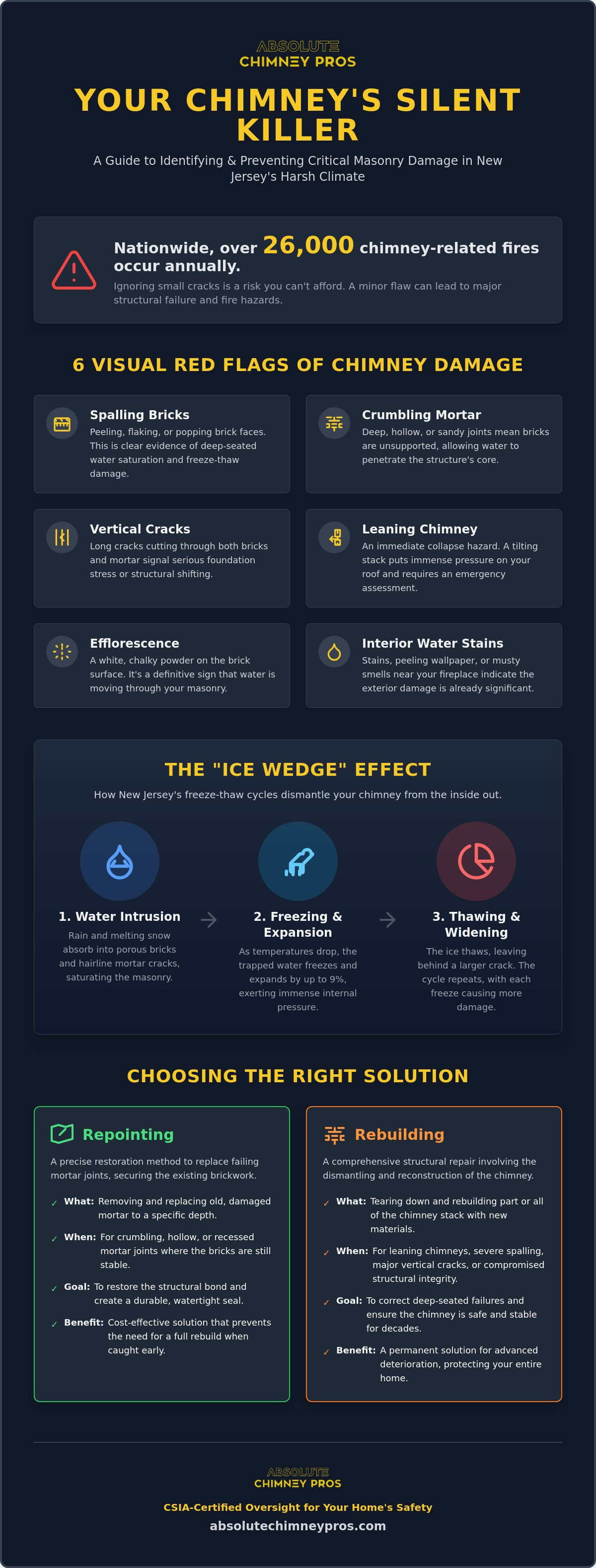
Start with a visual scan from the ground. Look for long, vertical cracks that cut through both bricks and mortar. This is a sign of foundation stress. Notice if the stack is leaning away from the house. A tilting chimney is a collapse hazard. It puts immense pressure on your roofline. These are not minor repairs. They are structural emergencies. If you notice a lean, you need a professional assessment immediately. Reliable masonry chimney repair NJ starts with identifying these core instabilities.
Don't overlook the mortar joints. Mortar is designed to be the "sacrificial" part of the chimney. It should wear down before the bricks do. However, if the joints are deep, hollow, or crumbling into sand, the bricks are no longer supported. This decay allows water to seep behind the brickwork. Eventually, this moisture reaches the flue liner. Once the flue is compromised, the safety of your entire heating system is in question. Professional masonry chimney repair NJ can often save the structure through repointing, but only if you catch the decay before the bricks shift.
The Red Flags of Chimney Spalling
Spalling is a critical warning sign. It looks like the face of the brick is peeling, flaking, or popping off entirely. You might find brick fragments on your roof or in your gutters. This happens because bricks are porous. They absorb moisture like a sponge. When New Jersey winters hit, that water freezes and expands. This internal pressure forces the brick to shatter. Spalling isn't just an eyesore. It is evidence of deep-seated water saturation. If you see flaking bricks, the internal structure is already weakening. You cannot simply paint over this. The damaged masonry must be replaced to restore stability.
Efflorescence: That White Powdery Substance
Have you noticed a white, chalky film on your chimney? This is efflorescence. It is a deposit of salt left behind by evaporating water. While the powder itself isn't dangerous, its presence is a red flag. It proves that water is moving through your masonry. This moisture will eventually lead to mold, rot, and structural decay. If you see white staining, you likely have a hidden leak. Consult a Chimney Leak Repair NJ: Diagnostic Guide & Professional Solutions to identify the entry point. Addressing this early prevents the need for extensive structural work later.
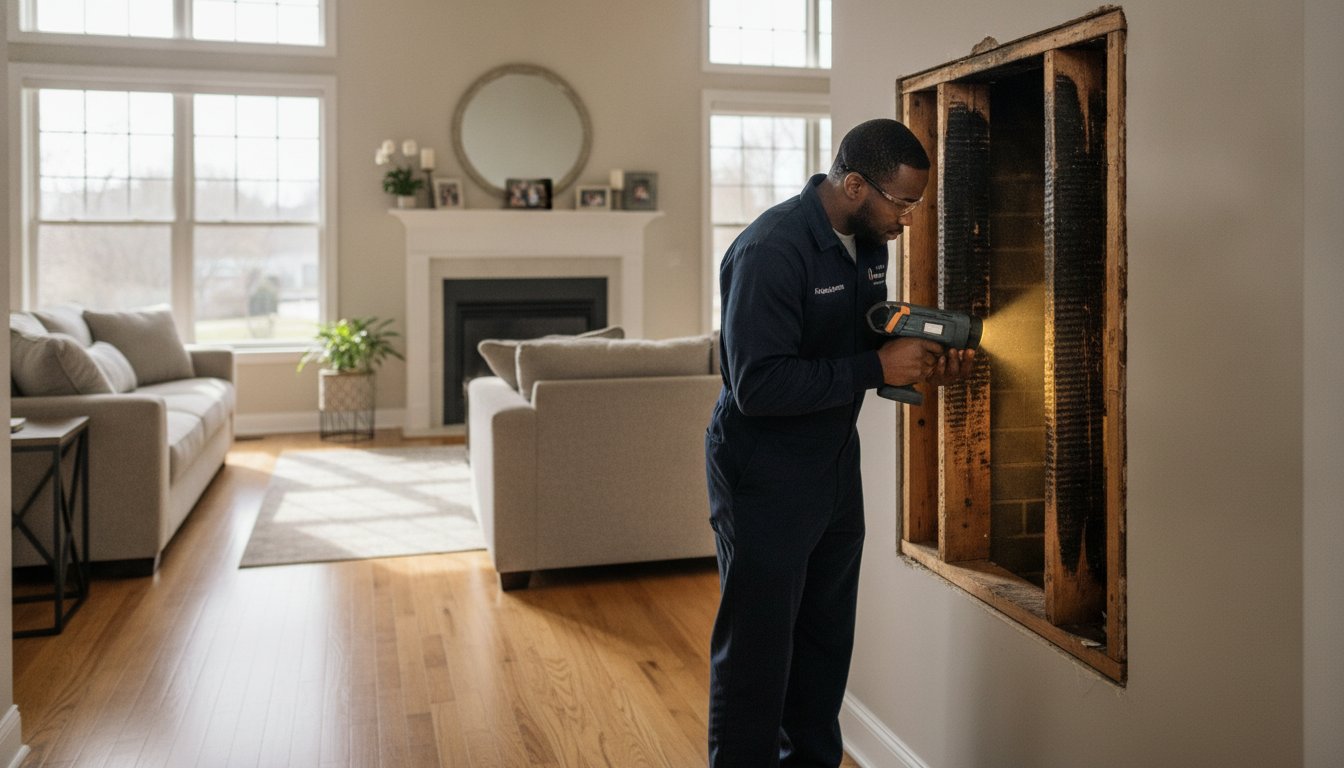
Look inside your home too. Check the ceilings and walls surrounding the fireplace. Water stains, peeling wallpaper, or a musty smell are clear indicators of masonry failure. Exterior cracks allow water to bypass the flashing and enter your living space. By the time you see a spot on the ceiling, the exterior damage is usually significant. Don't wait for the ceiling to drip. Inspect the masonry now.
The Masonry Restoration Process: A Step-by-Step Guide
Effective restoration isn't a DIY job. It's a technical procedure that requires precision. It starts with a CSIA-certified inspection. This assessment identifies the root cause of failure. We look for flue damage, cracked crowns, and structural shifting. Following established guidelines for chimney safety and maintenance ensures the entire system remains fire-safe and efficient. We don't start work until we have a clear map of the damage.
We protect your property before the first brick is touched. Heavy-duty tarps cover the roof. Plywood protects your landscape and shrubs. Dust control is mandatory. We treat your home with respect. Our goal is to leave your property exactly as we found it, minus the crumbling masonry. This preparation phase is vital for safety and cleanliness.
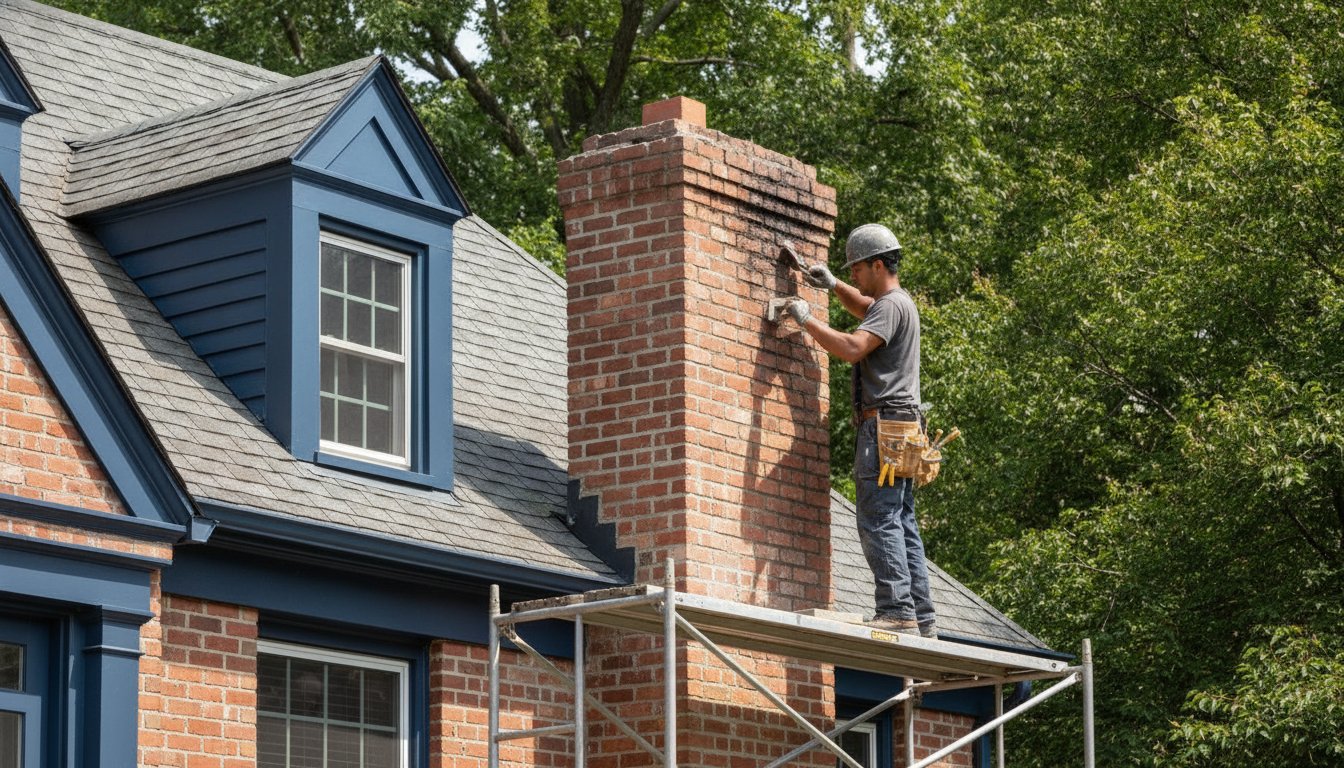
Technicians then remove the old, failing mortar. We grind the joints to a uniform depth of at least 3/4 inch. This creates a solid "key" for the new material. We don't just smear mortar on top of existing cracks. That's a temporary fix that will fail within a year. We perform deep-set masonry chimney repair NJ that restores the actual structural bond between the bricks.
Tuckpointing vs. Repointing
Repointing is the structural renewal of failing mortar joints. It restores the watertight seal of the chimney. Tuckpointing is a decorative technique using contrasting mortar to create the illusion of perfectly level, thin joints. Tuckpointing is a structural necessity for aging NJ homes. It provides an extra layer of protection while restoring the classic aesthetic of your historic brickwork.
Ensuring Mortar Compatibility
Material science is the backbone of a lasting repair. Modern Portland cement is often too hard for historic New Jersey bricks. It doesn't allow for natural thermal expansion. This causes the bricks to crush themselves over time. Absolute Chimney Pros uses custom-blended mortar matched to your specific brick type. We match the original strength, porosity, and color. This precision prevents future spalling and ensures the repair moves with the house.
New mortar needs time to cure correctly. We monitor the hydration process to prevent shrinkage cracks. Once cured, we apply a professional-grade, breathable water repellent. It keeps liquid water out but allows internal vapors to escape. This prevents the destructive freeze-thaw cycles described earlier. If you suspect your brickwork is failing, a professional chimney inspection is the best way to determine the correct path forward.
Repointing vs. Rebuilding: Selecting the Right Solution
Deciding between repointing and rebuilding is a technical choice. It determines the longevity of your home's exterior. You need transparency to avoid overpaying or under-repairing. Be vigilant. The State of New Jersey warns homeowners about chimney repair scams that often target residents after storms. Always demand a clear explanation of why a specific method is recommended. We provide honest assessments based on structural physics, not sales quotas.
Depth of erosion is the primary metric. Measure the gaps in your mortar. If the decay reaches deeper than one third of the brick's width, the bond is compromised. At this stage, the chimney loses its ability to resist wind loads. If the bricks remain solid and the stack is plumb, repointing is the standard solution for masonry chimney repair NJ. It's a proactive investment that stops leaks before they rot your rafters.
Structural shifting changes the math. Look at the lead flashing where the chimney meets the roof. If there's a widening gap, the chimney is moving. You cannot fix a moving structure with a new layer of mortar. This requires a rebuild. A rebuild is a long-term investment in safety. It's better to rebuild a stable stack today than to clear a collapsed one off your lawn tomorrow. We prioritize your home's integrity over quick fixes.
When Repointing is Sufficient
Repointing is your best defense when the damage is localized. If your bricks are still hard and haven't started spalling, renewing the mortar joints will seal the system. This method is cost-effective and preserves the original aesthetic of your home. It prevents water from entering the core of the masonry. For a deeper look at this process, read our Chimney Repointing NJ: The Homeowner’s Guide to Masonry Restoration. Catching decay at this stage saves thousands in future construction costs.
When a Partial or Full Rebuild is Required
A rebuild becomes necessary when the internal structure is fundamentally broken. Leaning stacks, widespread brick failure, or a compromised foundation cannot be "patched." Applying a band-aid fix to a leaning chimney is dangerous. It masks the problem while the risk of collapse grows. When we perform a rebuild, it often necessitates a new chimney liner installation NJ. This ensures your new masonry is protected from the corrosive acidic gases produced by your furnace or fireplace. We rebuild to modern codes, ensuring your chimney is safer than the day it was built.
NJ Freeze-Thaw Cycles: The Silent Killer of Masonry
New Jersey's winters are uniquely hostile to brickwork. We don't just experience cold weather. We endure constant temperature fluctuations. One day is 45 degrees and rainy; the next is 20 degrees and freezing. This cycle is the primary driver of structural deterioration. It's the reason masonry chimney repair NJ is a seasonal priority for proactive homeowners. Your chimney is a vertical sponge, and the climate is its greatest enemy.
Water is a destructive force when trapped. When moisture enters a small crack and freezes, it expands by approximately 9%. This creates the "Ice Wedge" effect. It generates thousands of pounds of pressure per square inch. This internal force literally pushes the brick apart from the inside out. Over a single season, a hairline fracture can become a gaping hole. This is an aggressive mechanical failure. It doesn't stop until the moisture source is cut off.
Timing determines the success of your restoration. Mortar requires specific temperature ranges to cure and bond correctly. Once the ground freezes, masonry work becomes significantly more complex. Autumn is your critical window. You must seal the structure before the first frost hits. Waiting until mid-winter means the damage will accelerate for three more months. By then, a simple repointing job may turn into a full rebuild.
Preventing Water Intrusion with Chimney Caps
A missing or damaged cap is an open invitation for disaster. Rain falls directly into the flue and saturates the internal masonry core. This causes the chimney to rot from the inside where you can't see it. A professional chimney cap installation NJ is your first line of defense. It diverts water away from the sensitive interior. We recommend annual inspections to catch cap failures before the freeze-thaw cycle begins its work.
Professional Waterproofing and Sealants
Standard bricks are naturally porous. Professional waterproofing changes their physical properties. We utilize vapor-permeable sealants that allow the chimney to "breathe." This allows internal vapors to escape while repelling external liquid water. Store-bought sealants often create a non-breathable film. This traps moisture inside the brick, which actually speeds up spalling during a freeze. A professional-grade application ensures the sealant penetrates deep into the masonry for lasting protection.
For homeowners seeking a comprehensive approach to exterior maintenance, utilizing high-quality drainage systems—such as those offered by Copper Gutter Supply Company—can further protect masonry by efficiently directing heavy rainfall away from the building’s structure.
Don't let the next winter cycle compromise your home's safety. Schedule a chimney repair assessment today to stop the freeze-thaw cycle before it starts.
Securing Your Home with Absolute Chimney Pros
Your home is your most significant investment. A failing chimney threatens that investment every time it rains or freezes. You don't need a salesperson; you need a disciplined expert. Absolute Chimney Pros provides the technical mastery required for complex masonry chimney repair NJ. We act as your vigilant protector. Our process is rooted in precision and ethical transparency. We don't just fix bricks. We secure your environment.
CSIA certification is our baseline. It's non-negotiable for structural work. This certification ensures our technicians understand the physics of heat, moisture, and structural load. We don't guess. We assess. Every recommendation we make is backed by industry standards and local building codes. This level of professional oversight gives you the peace of mind that your family is safe from the risks of fire and collapse.
Transparency is the core of our business model. Many contractors provide vague quotes that balloon once the work begins. We don't. We provide clear, on-site estimates with no hidden fees. You'll know exactly what the restoration involves before a single brick is removed. This direct approach eliminates the conflicting advice that often leaves homeowners paralyzed. We provide the facts so you can protect your home with confidence.
The Absolute Chimney Pros Advantage
We take a no-nonsense approach to structural assessments. Our technicians are fully licensed and insured, providing a layer of security for your property. We offer a flat-fee inspection for your initial diagnosis. This allows for a thorough, unbiased evaluation of your chimney's health without the pressure of a high-stakes sales pitch. We identify the hazard and provide the definitive solution. Our goal is to blend old-world craftsmanship with contemporary efficiency.
Timing is everything in New Jersey. As established in our discussion of freeze-thaw cycles, the window for repair is narrow. We value your time and your safety. That's why we offer same-week appointments for homeowners across New Jersey and the Philadelphia area. We show up on time. We execute the task with precision. We leave your property clean and secure. This methodical approach mirrors our operational style: show up, assess, report, and execute.
Schedule Your Masonry Assessment Today
Don't wait for the ice wedge effect to dismantle your chimney. Proactive masonry chimney repair NJ is the only way to avoid a total structural collapse. Our team is ready to provide the technical expertise your home deserves. Contact Absolute Chimney Pros to secure your appointment this week. Reliability and technical mastery are just a phone call away. Protect your family. Secure your home. Let us be your partner in professional maintenance.
Secure Your Chimney Before the Next Freeze
Structural failure doesn't happen overnight. It's a slow, silent process driven by moisture and New Jersey's aggressive temperature swings. You now have the tools to identify critical red flags like spalling bricks and eroded mortar joints. Addressing these issues early prevents the high costs and dangers of a total structural collapse. Professional masonry chimney repair NJ is about more than aesthetics. It's a vital safety measure for your family and your property.
Don't leave your home's stability to chance. Our team provides the expert oversight you need to make an informed decision. We offer transparent, flat-fee inspections to give you total clarity without the guesswork. Our CSIA-certified technicians are ready to assess your brickwork and provide a definitive, technical solution. With same-week appointments available, you can secure your chimney before the winter weather arrives. Schedule your professional masonry inspection with Absolute Chimney Pros today. We're your partner in home safety. Take action now to ensure your fireplace remains a safe, reliable centerpiece for your home.
Frequently Asked Questions
How do I know if my chimney needs repointing or a full rebuild?
Repointing is the solution when your bricks are stable but the mortar joints have receded or crumbled. A full rebuild is mandatory if the chimney stack is leaning, shifting, or shows signs of deep internal structural failure. We use a professional inspection to determine if the masonry core is still sound enough to support new mortar or if the entire structure is a collapse hazard.
Is masonry chimney repair covered by homeowners insurance in NJ?
Insurance typically does not cover repairs for general wear and tear or lack of maintenance. Coverage usually applies only to sudden, accidental damage caused by "named perils" like lightning strikes, chimney fires, or severe storm impact. It's important to review your specific policy. Most New Jersey insurers require proof of annual inspections to process claims related to structural chimney failure.
How long does a typical chimney repointing project take to complete?
Most repointing projects are completed within one to three days depending on the size of the stack. Larger chimneys or those with difficult roof access may require additional time for staging and safety setup. The process includes grinding out old mortar, deep-cleaning the joints, and applying new material. We monitor local weather closely to ensure the mortar has adequate time to cure in dry conditions.
What happens if I ignore crumbling mortar on my chimney?
Ignoring mortar decay allows water to bypass the chimney's exterior and saturate the internal brickwork. This leads to mold growth, rotted roof rafters, and damaged interior ceilings. Over time, the "Ice Wedge" effect from New Jersey winters will expand these gaps until the chimney becomes structurally unstable. What starts as a minor repointing job can quickly escalate into a total structural collapse.
Can I perform masonry chimney repairs myself as a DIY project?
DIY masonry repair is not recommended because matching mortar strength to your specific brick type is a technical science. Using modern, hard mortar on older NJ bricks can cause the bricks to shatter during thermal expansion. Additionally, working at significant heights requires specialized safety harnesses and scaffolding that most homeowners don't possess. Professional execution ensures the repair is watertight and structurally sound.
What is the best time of year to schedule masonry repairs in New Jersey?
Spring and autumn are the ideal seasons for masonry chimney repair NJ due to the moderate temperatures. Mortar requires a specific thermal window to cure correctly without shrinking or cracking. Extreme summer heat dries the mortar too fast, while winter freezes can destroy the bond before it sets. Scheduling your assessment in the fall ensures your home is protected before the first freeze-thaw cycle begins.
How much does masonry chimney repair typically cost in NJ?
The cost for masonry chimney repair NJ varies based on the height of the chimney and the extent of the mortar erosion. Factors like the type of brick used and the difficulty of roof access also play a role in the final investment. Because every structure is unique, we provide transparent, on-site assessments to give you an accurate understanding of the work required for your specific home.
Will repointing my chimney stop water from leaking into my attic?
Repointing seals the mortar joints, which is a common entry point for moisture, but it may not be the only fix needed. Attic leaks are often caused by a combination of failing mortar, cracked chimney crowns, or damaged lead flashing. In these cases, a roof inspection from UEC Roofing can help determine if the flashing or surrounding shingles need professional attention. A comprehensive restoration assessment identifies every potential leak source. We ensure that the masonry, flashing, and cap all work together to keep your attic completely dry.