What if the only thing standing between your living room and an expensive masonry repair is a single piece of stainless steel? Your chimney is a direct portal into your home. Without a professional chimney cap installation NJ, every Nor'easter and summer thunderstorm sends water straight into your firebox. It's an open invitation for local wildlife. A small investment now prevents a structural disaster later.
You likely agree that keeping your home dry and pest-free is a constant battle in our climate. Whether it’s the smell of soot during a downdraft or the sound of raccoons nesting in your flue, these issues are urgent safety hazards. We promise to show you why a professional chimney cap installation is the most cost-effective way to prevent water damage and animal intrusions in your New Jersey home. We will cover durable material choices, compliance with the 2021 International Residential Code, NJ Edition, and how this simple upgrade helps you meet the state's mandatory annual inspection requirements.
Key Takeaways
- Protect your home from the elements. A professional chimney cap installation NJ acts as a shield against heavy rain, corrosive snow, and invasive wildlife.
- Prioritize material longevity. Understand why stainless steel and copper are the only reliable choices for the volatile New Jersey climate.
- Distinguish between the cap and the crown. Learn how these two distinct components work together to seal your entire chimney system from the top down.
- Ensure technical precision. Professional installation guarantees a secure fit that withstands high winds and meets state fire safety standards.
- Reduce long-term maintenance costs. Prevent expensive masonry erosion and foul soot odors by securing your flue opening today.
Why Chimney Cap Installation is Essential for NJ Homes
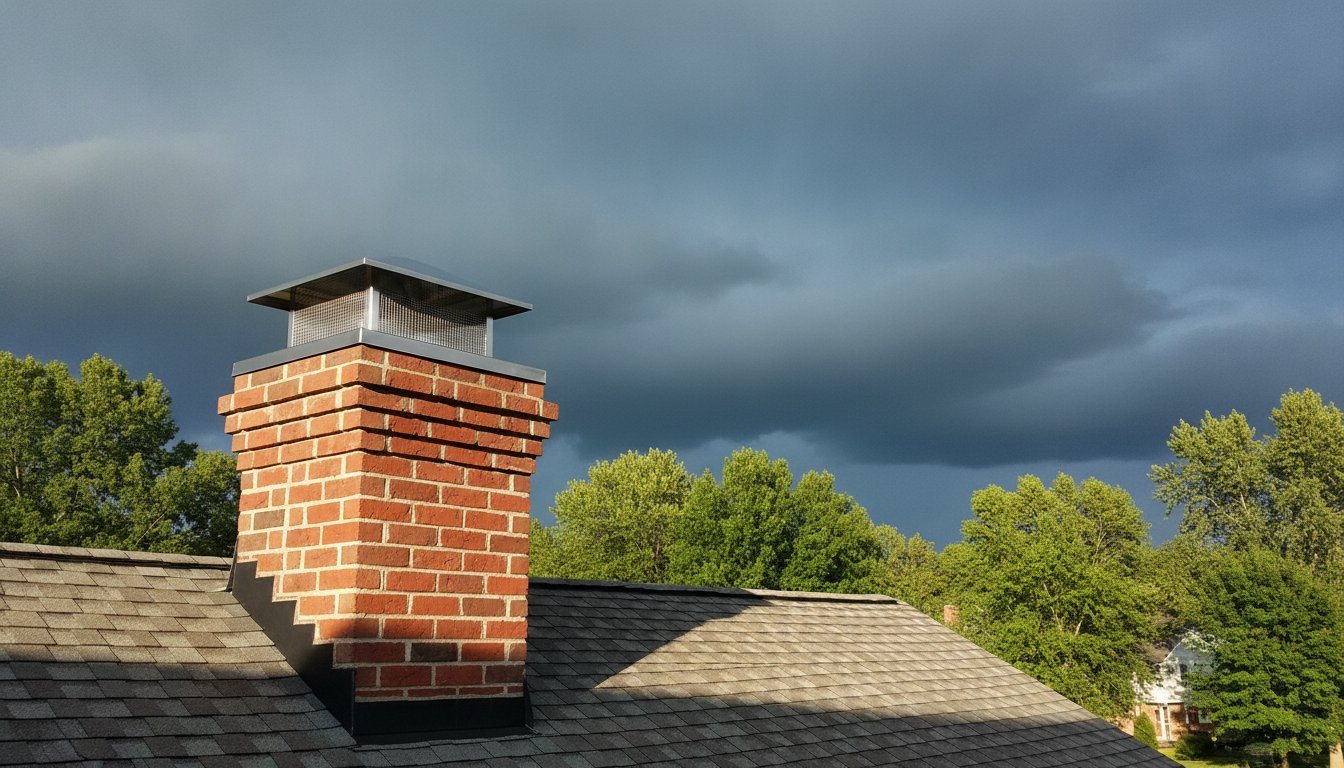
A chimney cap is not an optional accessory. It is a critical safety component. Think of it as a protective roof for your flue. To grasp the full scope of its role, it helps to review what is a chimney and how it serves as the lungs of your home. In our region, the weather is relentless. Nor'easters and coastal storms dump gallons of water into unprotected openings. A professional chimney cap installation NJ seals this entry point. It stops the cycle of damage before it compromises your home's structure. It is a barrier. It is a shield. It is your first line of defense.
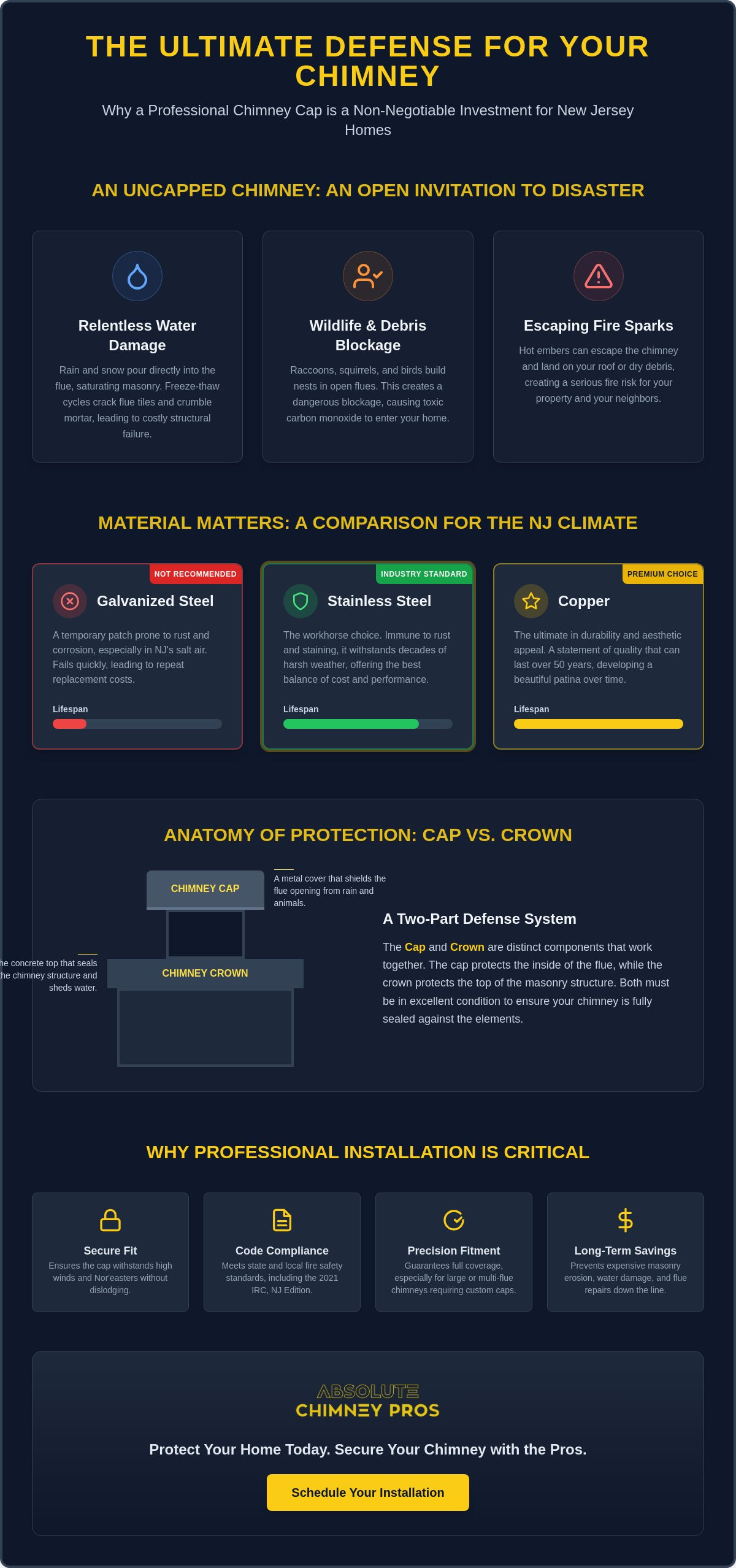
Beyond weather protection, the cap serves as a spark arrestor. This is a vital fire safety feature that many homeowners overlook. As wood burns, it releases hot embers and sparks. Without a mesh barrier, these embers can float out of the flue and land on your cedar shingles or dry yard debris. A high-quality cap contains these sparks. It protects your property and your neighbors from accidental fires. This is not just about convenience; it is about risk mitigation.
Stopping Water Damage Before It Starts
Water is the silent killer of masonry. When rain pours down an open flue, it soaks into the porous mortar and brickwork. This is especially dangerous in New Jersey. Our winters are defined by rapid temperature swings. Water enters the masonry, freezes, and expands. This physical pressure cracks flue tiles and turns mortar to dust. Over time, the internal structure of your chimney begins to crumble. You should protect your masonry with professional chimney sweep NJ services to monitor these conditions. However, the most effective defense is keeping the water out entirely. A secure cap ensures your firebox stays dry and your masonry stays intact.
Wildlife and Debris Management
An open chimney is a prime target for local pests. Raccoons, squirrels, and birds frequently seek shelter in flues. They bring in mud, sticks, and grass to build nests. These materials create a physical wall inside your chimney. This blockage is a severe hazard. It prevents smoke and toxic gases from exiting. If your flue is blocked, carbon monoxide can seep back into your home. This is a colorless, odorless, and lethal threat. Dry nesting material is also highly combustible. A single spark can ignite a chimney fire that spreads to the rest of your house. A professional installation provides a sturdy mesh barrier. It keeps animals out while allowing your chimney to breathe safely. No nests. No blockages. No surprises.
Choosing the Right Material: Stainless Steel vs. Copper
Material choice is the foundation of your defense. It determines if your chimney cap installation NJ is a permanent fix or a temporary patch. New Jersey weather is unforgiving. Humidity, snow, and driving rain will test every seam of your flue cover. We don't believe in guesswork. We believe in high-performance materials that endure the local climate without failing. Your choice dictates the lifespan of your chimney's protection.
Stainless steel is the workhorse of the industry. It is virtually immune to the rust that plagues cheaper alternatives. It maintains its structural integrity through decades of intense freeze-thaw cycles. It is the reliable standard for a reason. It does not stain your masonry. It does not warp under high heat. For most residential applications, stainless steel provides the best balance of cost and long-term performance.
Choosing copper is a statement of quality and extreme longevity. It is the most durable metal available for this application. It can last for over half a century. Conversely, galvanized steel is a short-term solution. It is prone to corrosion. It will eventually rust. It will fail. In the long run, replacing a rusted galvanized cap costs more than doing it right the first time. We prioritize solutions that save you money over the life of your home.
Many NJ homes feature large, multi-flue masonry chimneys. Standard caps often fail to provide adequate coverage for these complex structures. A custom-sized chimney cap installation NJ is necessary for these buildings. It covers the entire chimney crown. It provides a uniform, professional look. It offers total protection for every flue opening simultaneously. Precision fitment is the only way to ensure a dry, secure system.
The Coastal Factor: Salt Air and Corrosion
New Jersey’s coastline presents a unique challenge for home maintenance. If you live near the Jersey Shore, salt air is your chimney’s greatest enemy. It accelerates oxidation. It turns galvanized steel into a rusted mess in record time. This corrosion doesn't just look bad; it creates orange rust streaks that permanently stain your brickwork. For coastal properties, we recommend 304 or 316-grade stainless steel to ensure your chimney cap remains structurally sound for decades.
Aesthetic and Historic Considerations
Your chimney is a visible part of your home’s silhouette. The material should complement your architecture. Copper caps are iconic. They eventually develop a distinct green patina that perfectly suits Victorian or Colonial-style homes. If your home is modern, consider a powder-coated black steel cap for a sleek, low-profile appearance. Design matters, but function is paramount. You can coordinate your cap with a gas fireplace service NJ maintenance plan to ensure your entire heating system is optimized. If you are unsure which metal is right for your roofline, consult with our technicians to find a durable match for your specific location.
Chimney Caps vs. Chimney Crowns: Identifying the Difference
Terminology matters. Homeowners often use these terms interchangeably, but they serve distinct roles. The chimney crown is the masonry slab at the very top of your chimney structure. It is the foundation. The chimney cap is the metal device that sits directly over the flue opening. Think of the crown as the roof and the cap as the lid. A professional chimney cap installation NJ ensures the lid is secure. Without both, your chimney remains an open target for the elements.
A perfect crown is useless if the flue remains open. Rain falls vertically. It travels straight down the "throat" of your chimney. It bypasses the masonry slab entirely. Conversely, a high-quality cap cannot save a crumbling crown. If the masonry slab is cracked, water seeps into the chimney’s internal skeleton. This leads to structural failure from the inside out. Both components must be in peak condition. One protects the brickwork. The other protects the flue. They are a unified defense system. Compromising on either leads to disaster.
Water is patient. It finds every microscopic crack. In New Jersey, the freeze-thaw cycle turns those small cracks into gaping holes within a single season. This is why we emphasize a dual-check approach. We don't just look at the metal. We look at the masonry. A secure cap on a broken crown is a half-measure. We don't do half-measures. We provide total protection. Your home deserves a system that works in harmony to keep the interior dry and the structure sound.
How the Crown and Cap Work Together
The crown is engineered with a slight slope. This angle sheds water away from the flue and toward the roofline. It prevents puddling. The cap then blocks the remaining vertical entry point. It stops moisture from entering the exhaust system. Watch for warning signs on your crown. Cracks are a red flag. Peeling mortar is a danger signal. Even small weeds growing from the top indicate deep moisture penetration. Ignoring these signs leads to expensive masonry rot and internal fireplace damage.
When to Replace Your Current Cap
Caps are durable, but they are not immortal. Even stainless steel models can suffer damage from extreme weather events. Look for visible rust on the mesh. Check for loose mounting brackets that rattle in the wind. A tilted cap is a failing cap. It no longer provides a complete seal. New Jersey windstorms are notoriously harsh. High gusts can bend or dislodge older, poorly installed units. It is critical to check for crown and cap damage during a chimney inspection New Jersey. If the mesh is missing or the lid is loose, replacement is the only safe option. Don't wait for a leak to reveal the problem. Be proactive. Inspect your hardware after every major storm.
The Professional Installation Process in New Jersey
Precision is the difference between a secure home and a legal liability. A professional chimney cap installation NJ begins with exact measurement. We don't guess. We measure the outer dimensions of the flue tile or the chimney chase with surgical accuracy. Even a half-inch discrepancy can compromise the seal. A poorly fitted cap will rattle, leak, or blow away during the next storm. We eliminate that risk through rigorous site assessment.
We then select the mounting style that fits your specific architecture. Flue-mount caps attach directly to the clay tile. Top-mount caps cover the entire masonry crown. Top-mount is often the superior choice for NJ homes with multiple flues. It provides a unified shield for the entire structure. We use heavy-duty masonry fasteners to secure the unit. New Jersey Nor'easters regularly produce wind gusts exceeding 60 MPH. A cap that is simply "slipped on" will not survive these conditions. Our technicians ensure the hardware is anchored to withstand extreme pressure. No shortcuts. No compromises.
Why Sizing Matters for Draft and Safety
Sizing directly affects your home's air quality. An undersized cap creates backpressure. This restricts airflow and forces smoke or carbon monoxide back into your living space. Conversely, if the mesh clearance is too large, it invites trouble. Small birds and bats can squeeze through gaps as small as an inch to nest in your flue. A professional installation maintains the perfect balance. As a general rule of thumb, the lid of the cap must sit at least five inches above the top of the flue tile to ensure a proper draft.
Compliance with NJ Fire Codes
Safety is governed by strict regulations. New Jersey follows the NFPA 211 standards for chimneys, fireplaces, and venting systems. These codes require specific mesh sizes for spark arrestors. The mesh must be tight enough to catch hot embers before they hit your roof. It must also be open enough to prevent soot buildup from clogging the exhaust. We verify that your new cap does not interfere with the chimney liner or any existing gas fireplace components. If you are ready to secure your home against fire and weather, you can schedule your chimney cap installation NJ with our certified team to ensure full code compliance.
Reliable Chimney Cap Installation with Absolute Chimney Pros
Absolute Chimney Pros is your vigilant partner in home safety. We bring technical mastery to every chimney cap installation NJ. Our technicians are CSIA-certified. They are disciplined experts. We understand the specific threats New Jersey homes face. Coastal salt air. Heavy snow loads. High-velocity winds. We don't just install hardware. We provide a definitive shield for your environment. Trust is built through professional oversight and exactness.
Our operational style is direct. Transparent pricing. No hidden fees. No guesswork. Clear reports. Honest assessments. We value your time. We respect your property. This is a no-nonsense approach to maintenance. We identify the hazard and provide the resolution immediately. You get a protective partner who takes responsibility for your chimney's performance. Punctuality and technical precision are our standards. We don't believe in filler; we believe in results.
Time is a critical factor. Water damage doesn't wait for a convenient schedule. Animal intrusions escalate within hours. We offer same-week appointments for urgent leak or wildlife issues. We show up on time. We assess the situation thoroughly. We execute the task efficiently. Every installation includes a comprehensive safety check of your entire system. We verify your flue's integrity. We ensure your family is protected from carbon monoxide and fire risks. There's no room for error regarding your home's safety.
The Absolute Chimney Advantage
We refuse to use inferior materials. Galvanized steel is a temporary fix that leads to permanent stains. We use high-quality stainless steel and copper only. These metals endure the New Jersey climate. Our professionals are licensed and insured. We provide on-site estimates that are accurate and transparent. You get a definitive solution from a technical master. Our focus is your family's safety. We blend old-world craftsmanship with modern efficiency to provide traditional services that last for decades.
Book Your NJ Installation Today
Don't ignore the warning signs of a failing flue. A missing or damaged cap is an open invitation for disaster. Stop water damage and animal intrusions before they escalate into structural failure. If your flue has been exposed to the elements for a long time, you should consider a chimney liner installation NJ if your flue is unprotected. Exposure often leads to internal decay and cracked tiles. Act now to secure your property. Schedule your chimney cap installation in NJ today.
Secure Your Home with a Permanent Chimney Defense
NJ weather is relentless. Salt air and freeze-thaw cycles destroy unprotected masonry. You've learned why material choice matters. Stainless steel and copper are the only reliable options for our climate. A professional chimney cap installation NJ stops water intrusion and keeps wildlife out of your living space. It works in harmony with your chimney crown to provide a unified defense. This is the most cost-effective way to prevent structural decay and hazardous blockages.
If your chimney or other exterior structures have already reached a point of irreparable decay, you can discover JBM Custom Contracting for professional demolition and property maintenance services.
Our team provides the expert oversight you need. We are CSIA-Certified Technicians. We are Licensed & Insured in NJ. We provide on-site transparent estimates. No hidden fees. No guesswork. You deserve the peace of mind that comes from a secure, code-compliant flue. We take responsibility for your home's safety so you don't have to.
Take action before the next Nor'easter arrives. Secure Your Chimney with a Professional Cap Installation. Your home is now ready for whatever the New Jersey seasons bring.
Frequently Asked Questions
How much does chimney cap installation cost in NJ?
General industry averages for chimney cap installation NJ vary based on material and project complexity. Most homeowners see national average costs around $335, though custom multi-flue projects in New Jersey can exceed $2,500. Labor typically accounts for approximately 50% of the total project cost. Material choice, such as copper or stainless steel, is the primary factor in final price variations.
Can I install a chimney cap myself?
DIY installation is not recommended due to high-altitude safety risks and precision requirements. A cap must be securely anchored to withstand 60+ MPH gusts during coastal storms. Improper fitting leads to water leaks or persistent animal intrusion. Professional installers ensure the hardware meets NFPA 211 standards and functions correctly as a spark arrestor.
How long does a stainless steel chimney cap last?
A high-quality stainless steel chimney cap typically lasts between 20 and 30 years. These units are engineered to resist rust and structural warping under high heat. In coastal New Jersey areas, 304 or 316-grade stainless steel is essential for maximum longevity against salt air. Regular annual maintenance ensures the mounting brackets remain secure throughout the unit's lifespan.
What is the best chimney cap for high-wind areas in New Jersey?
Top-mount caps with heavy-duty masonry anchors are the superior choice for high-wind NJ regions. These units cover the entire chimney crown and provide a lower profile against wind resistance compared to flue-mount models. They are physically anchored into the masonry. This design prevents the unit from tilting or blowing away during intense Nor'easters.
Do chimney caps prevent downdrafts and smoky smells?
Yes, specialized chimney caps are designed to mitigate downdrafts and soot odors. These caps use a unique aerodynamic shape to redirect wind flow and improve the chimney's upward draw. While a standard cap stops rain and pests, a vacuum-style or wind-directional cap actively prevents smoky air from being pushed back into your living room during windy weather.
Are chimney caps required by law in New Jersey?
New Jersey state law does not explicitly mandate a cap on every existing home, but annual inspections are mandatory for all chimneys. Local building codes and the 2021 International Residential Code, NJ Edition, require caps for new fireplace or stove installations. A cap is a critical safety feature that helps your system pass the required yearly professional inspection.
What should I do if an animal is already in my chimney?
Never light a fire if you suspect an animal is nesting in your flue. This creates a dangerous blockage and leads to immediate carbon monoxide backup into your home. Contact a professional to safely remove the wildlife and assess the damage to your liner. Once the flue is clear, a professional chimney cap installation NJ is the only definitive way to prevent a repeat intrusion.
How often should I have my chimney cap inspected?
You should have your chimney cap inspected at least once per year. This schedule aligns with the New Jersey state requirement for annual chimney inspections. Technicians check for loose mounting hardware, mesh blockages, and signs of metal corrosion. Inspecting the hardware after major windstorms is also a disciplined practice for maintaining home safety.