

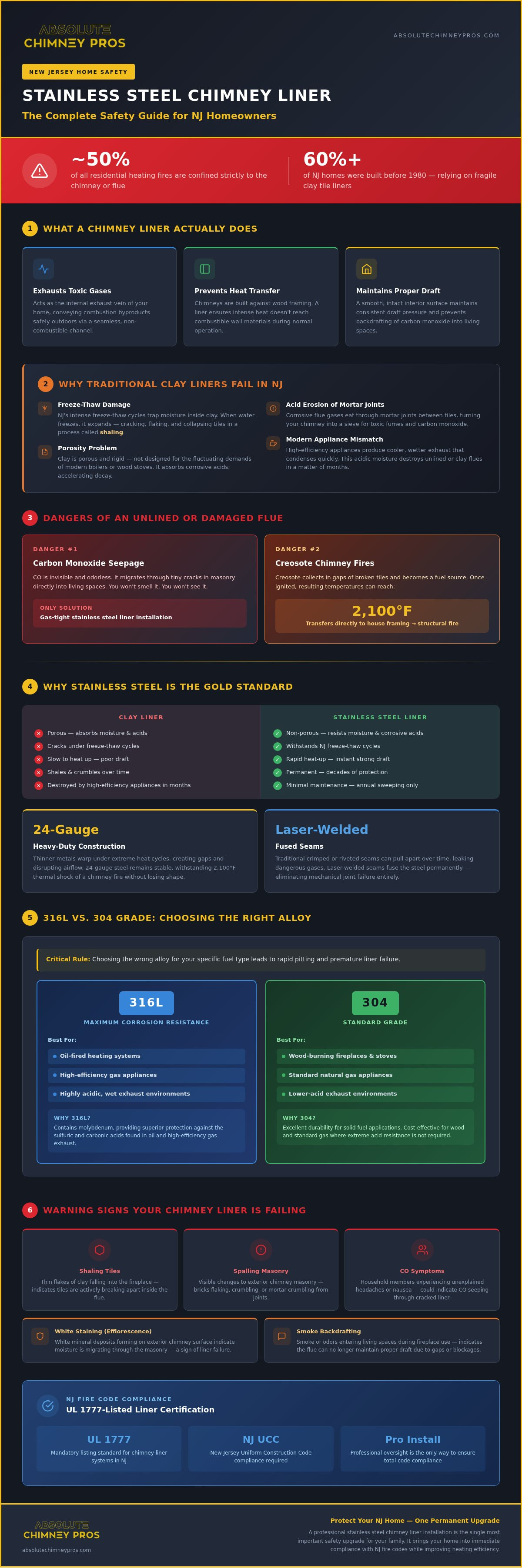
Did you know that nearly 50% of all residential heating fires in the country are confined strictly to the chimney or flue? In New Jersey, where more than 60% of homes were built before 1980, this isn't just a statistic. It's a serious daily risk. Your older chimney likely relies on fragile clay tiles that crack, gap, and decay over time. These hidden flaws allow heat and carbon monoxide to seep into your living spaces. It's a hazard you can't afford to ignore.
We understand that the technical jargon around steel grades and fire codes can feel overwhelming. You want a home that's safe, not a constant list of expensive masonry repairs. A professional stainless steel chimney liner NJ installation is the single most important safety upgrade you can provide for your family. It's a permanent, maintenance-free solution that brings your home into immediate compliance with NJ fire codes while improving heating efficiency.
This article explains why upgrading to a UL 1777-listed liner is the definitive fix for crumbling flues. You'll learn how to choose the right alloy for your specific heating system and why professional oversight is the only way to ensure total peace of mind. Let's turn your decaying chimney into a high-performance exhaust system that actually protects your home.
Key Takeaways
- Protect your home's structure by understanding how a liner serves as a vital exhaust vein for toxic byproduct gases.
- Discover why a professional stainless steel chimney liner NJ installation provides a lifetime of protection against corrosive fuel acids.
- Find out which specific steel alloy is required for your fuel type to prevent rapid pitting and premature liner failure.
- Learn to identify the red flags of a failing flue, including specific visual changes to your chimney's exterior masonry.
- Understand why professional oversight is essential for meeting NJ fire codes and ensuring your heating system operates at peak efficiency.
The Critical Role of a Chimney Liner in NJ Home Safety
A chimney liner is the internal exhaust vein of your home. It serves as a critical safety barrier between high-temperature combustion gases and your family. Its primary job is to convey toxic exhaust safely outdoors. Without this protective layer, your masonry is exposed to a constant stream of corrosive byproduct gases. These acids eat into brick and mortar from the inside out. This leads to rapid structural failure. A stainless steel chimney liner NJ upgrade stops this decay immediately. It creates a seamless, non-combustible channel that keeps your home safe.
Beyond gas containment, the liner prevents dangerous heat transfer. Chimneys are often built directly against wood framing and insulation. During a fire or even normal operation, temperatures can soar. A liner ensures that this intense heat doesn't reach combustible materials in your walls. Modern high-efficiency appliances make this even more vital. They produce cooler, wetter exhaust that condenses quickly. This acidic moisture destroys unlined flues in a matter of months. Proper chimney flue operation depends on a smooth, intact interior surface to maintain a consistent draft and prevent backdrafting.
Why Traditional Clay Liners Fail in New Jersey
Over 60% of homes in Northern and Central New Jersey were built before 1980. These older structures typically rely on terra cotta clay tiles. Clay is a porous, rigid material. It isn't designed for the fluctuating heating demands of modern boilers or wood stoves. Our local climate creates a specific hazard. New Jersey's intense freeze-thaw cycles trap moisture inside the clay. When that water freezes, it expands. The clay tiles crack, flake, and fall. This process is known as shaling. Eventually, corrosive flue gases eat through the mortar joints between these tiles. This turns your chimney into a sieve for toxic fumes.
The Dangers of an Unlined or Damaged Flue
An unlined or damaged flue is a direct threat to your household. The most significant risk is carbon monoxide seepage. CO is an invisible, odorless killer. It migrates through tiny cracks in your masonry and enters your living spaces. You won't smell it. You won't see it. A stainless steel chimney liner NJ installation is the only way to guarantee a gas-tight seal. There is also the risk of creosote-fueled chimney fires. Creosote collects in the gaps of broken tiles and becomes a fuel source. Once it ignites, the resulting heat can reach 2,100°F. If your liner is compromised, that heat transfers directly to your house framing, leading to a structural fire. Ignoring these warning signs can result in a total loss of property.
Why Stainless Steel is the Gold Standard for Flue Protection
Stainless steel is the definitive upgrade for any NJ home. While clay tiles eventually shale and crumble, a high-grade metal liner provides a permanent safety barrier. It's a non-porous surface. This means it won't absorb moisture or corrosive acids. It offers a level of durability that cast-in-place or masonry flues simply cannot match. Once installed, it requires minimal maintenance beyond standard annual sweeping. It's a one-time investment that secures your home for decades.
One major performance benefit is rapid heat-up time. Masonry is slow to warm. Cold flues struggle to establish a draft. Stainless steel reaches operating temperature almost instantly. This creates a strong, consistent pull that carries toxic gases out of your home. It prevents the condensation of acidic moisture that destroys chimney walls. Investing in a stainless steel chimney liner NJ ensures your system remains compliant with New Jersey Uniform Construction Code requirements. It's the most reliable way to protect your property and family.
Heavy-Duty 24-Gauge Construction
Thickness matters for safety. We prioritize heavy-duty 24-gauge steel for its structural integrity. Thinner metals can warp when exposed to extreme heat cycles. Warping creates gaps and disrupts airflow. A 24-gauge liner remains stable. It can withstand the intense, 2,100°F thermal shock of a chimney fire without losing its shape. This provides a rigid, secure exhaust path for any fuel type, from seasoned hardwood to high-efficiency gas. It handles the stress of NJ winters without compromising its form.
Laser-Welded Seams for Maximum Integrity
Traditional liners often rely on crimped or riveted seams. These are mechanical joints. Over time, they can pull apart or leak dangerous gases. Laser-welded seams are different. The steel is fused together at the molecular level. This creates a 100% airtight seal that never fails. There are no weak points. This seamless construction also results in a smoother interior wall. Soot and creosote have fewer places to cling. This leads to better airflow and significantly reduces the risk of dangerous blockages. If you want a flue that performs perfectly for decades, a certified chimney liner installation is the logical choice.
316L vs. 304 Grade: Choosing the Right Alloy for Your Fuel
Alloy selection isn't a matter of preference. It's a chemical requirement. The fuel you burn dictates the environment inside your chimney. Some fuels produce dry, high-heat exhaust. Others create moisture-laden, acidic byproducts. Corrosion resistance is the primary differentiator between stainless steel grades. Choosing the wrong alloy leads to rapid pitting and structural failure. A professional stainless steel chimney liner NJ installation starts with identifying your specific heating needs. We match the metal to the fuel to ensure a permanent fix. This precision prevents expensive rework and keeps your home safe from toxic leaks.
When to Choose 316L Stainless Steel
316L is the gold standard for versatility. It contains molybdenum and titanium to resist extreme chemical wear. This is the "all-fuel" solution. It's mandatory for oil-burning furnaces. Heating oil creates sulfuric and hydrochloric acids as it burns. These acids are incredibly aggressive. They will chew through standard steel in just a few seasons. 316L is also essential for modern gas boilers. These high-efficiency units produce low-temperature exhaust that stays wet inside the flue. This moisture traps acids against the liner wall. Following U.S. Fire Administration heating safety guidelines requires using materials rated for these conditions. 316L provides the peace of mind that your liner can handle wood, gas, coal, or oil without degrading.
The Limitations of 304 Grade Steel
304 Grade is a budget-friendly but fuel-specific option. It's a durable material for traditional fireplaces. However, it lacks the specialized additives found in 316L. It is highly susceptible to corrosion if used with gas or oil heating systems. If you connect a furnace to a 304 liner, the metal will pit and leak within a few years. It's best suited for dry wood-burning applications where acidic condensation isn't a factor. We only recommend 304 when we're certain the flue will never vent a mechanical appliance. If you're planning a future conversion to gas, 304 is a mistake. You'll end up paying for a second installation when the first one fails. Stick to the alloy that matches your home's long-term heating plan.
Warning Signs Your Current Chimney Liner is Failing
Your chimney provides clear physical warnings before a total failure occurs. You just need to know where to look. A failing liner isn't just a maintenance headache. It's a breach in your home's primary fire defense. If you notice smoke backing into your living room or persistent drafting issues, the internal structure is likely compromised. These symptoms often point to a blockage or a collapsed tile. A stainless steel chimney liner NJ installation resolves these performance issues permanently by providing a smooth, unobstructed path for exhaust.
Another subtle but dangerous sign is moisture. Look for damp spots or peeling wallpaper on walls adjacent to the chimney stack. This happens when acidic condensation seeps through cracked masonry. You might also see efflorescence. This is a white, powdery residue on the exterior brickwork. It's caused by salt and moisture being pushed out from the inside. It confirms that your current liner is no longer containing byproduct gases. These signs indicate that your chimney is actively decaying from within.
The "Clay in the Firebox" Alert
Finding red or tan chips at the bottom of your fireplace or in the cleanout door is a critical warning. This is shaling. It occurs when the original terra cotta liner begins to delaminate and flake away. These flakes are proof that the clay is no longer airtight or structurally sound. Once the lining starts to fall, your home is vulnerable to carbon monoxide leaks and heat transfer to wooden framing. This requires an immediate chimney inspection New Jersey to assess the depth of the damage. Don't wait for a fire to confirm what these chips are already telling you.
Understanding NFPA 211 Safety Codes
National safety standards are not suggestions. NFPA 211 mandates that all products of combustion must be entirely contained within the flue until they exit the building. Any crack, gap, or missing mortar joint in a clay liner is a direct violation of this code. In New Jersey, local inspectors strictly enforce these rules during property transfers or heating system upgrades. If you're replacing an old furnace or boiler, you'll likely need a stainless steel chimney liner NJ to meet current safety mandates. Professional relining ensures your home stays compliant and your family stays protected. If you've spotted these red flags, schedule a professional flue assessment today to secure your home.
Professional Stainless Steel Liner Installation in NJ
Professional installation is a non-negotiable safety requirement. It's not a weekend DIY project. Improperly installed liners lead to carbon monoxide leaks and devastating house fires. Absolute Chimney Pros brings disciplined, CSIA-certified expertise to every New Jersey home. We prioritize your family's safety through technical mastery and ethical transparency. Our process is fast and efficient. We offer same-week appointments to address urgent safety concerns. Every job starts with a transparent on-site estimate. You'll know the exact scope before we begin. There's no guesswork involved in our process. No hidden fees.
We understand the specific masonry challenges of NJ and Philadelphia homes. Older chimneys require a delicate touch and specialized equipment. Attempting to force a liner into a decaying flue can cause structural collapse. Our team acts as a protective partner for your home. We ensure the job is done right the first time. This turns a decaying hazard into a high-performance exhaust system. It's a permanent solution that secures your environment for decades.
The Absolute Chimney Pros Installation Process
The work starts with a comprehensive chimney sweep NJ. We must clear all glaze and soot to ensure the stainless steel chimney liner NJ fits perfectly. We use advanced video scanning tools to identify hidden masonry gaps and structural voids. Precision sizing is the next step. A liner that is too large or too small will fail to draft properly. We match the dimensions to your specific heating appliance for peak efficiency. We also wrap every liner in specialized ceramic insulation. This keeps the exhaust hot until it leaves the stack. It protects your exterior brick from thermal shock. It's the difference between a temporary fix and a lifetime safety upgrade.
Certified Safety and Peace of Mind
Our technicians are more than just installers. They are vigilant protectors of your home. CSIA certification ensures that every connection is airtight and precise. We navigate the complex New Jersey Uniform Construction Code requirements for you. This includes filing the necessary UCC Form F370 for appliance conversions. We handle the technical details so you don't have to. Once the stainless steel chimney liner NJ is secured, we conduct a final smoke test and draft verification. We confirm that your ventilation meets every local fire safety standard. This methodical approach mirrors our operational style. We show up, assess, and execute with precision. You receive the peace of mind that comes from professional oversight and a job well done.
Secure Your Home With a Permanent Flue Solution
Don't leave your family's safety to chance with a decaying clay flue. A professional stainless steel chimney liner NJ installation is the most effective way to eliminate fire risks and carbon monoxide leaks. You've learned how clay tiles shale and how moisture-laden acids destroy masonry from the inside. Upgrading to a high-grade 316L or 304 alloy creates a seamless, airtight exhaust path that lasts a lifetime. It's a complete safety transformation that ensures your home meets all current fire codes.
Absolute Chimney Pros is your protective partner in this process. Our CSIA-certified technicians handle every technical detail, from precision sizing to final draft verification. We are fully NJ licensed and insured, providing the professional oversight you need for total peace of mind. With flat-fee inspections available, there's no guesswork involved in securing your environment. Take the proactive step to protect your property and improve your heating efficiency today. Secure your home today with a professional chimney liner installation from Absolute Chimney Pros.
Frequently Asked Questions
Do I really need a stainless steel chimney liner if my clay one is okay?
Most clay liners in older NJ homes have hidden defects that a standard visual check won't reveal. Even microscopic cracks allow carbon monoxide to seep into your walls. A stainless steel chimney liner NJ installation provides a seamless barrier that clay simply cannot match. It's the only way to guarantee your flue is gas-tight and fireproof. Don't wait for visible shaling or a chimney fire to confirm your clay liner has failed.
How long does a stainless steel chimney liner last in NJ?
A high-quality stainless steel liner is a permanent solution for your home. When properly installed and maintained with annual cleanings, these systems are designed to last for the lifetime of the structure. Unlike clay tiles that crack during New Jersey's intense freeze-thaw cycles, stainless steel expands and contracts without breaking. It provides a durable, corrosion-resistant exhaust path that eliminates the need for future masonry relining or expensive structural repairs.
What is the difference between 304 and 316L stainless steel liners?
The primary difference lies in chemical resistance. 304 grade steel is strictly for wood-burning applications. 316L is a superior "all-fuel" alloy containing molybdenum. This additive protects the metal from the highly acidic condensate produced by oil and gas furnaces. If you're venting a heating appliance, 316L is mandatory to prevent rapid pitting. We always recommend 316L for its versatility and long-term protection against the corrosive byproducts of modern heating systems.
Can I install a chimney liner myself or do I need a pro?
Professional installation is essential for safety and legal compliance. In New Jersey, relining work requires a municipal permit and a signed UCC Form F370. DIY kits often lack the necessary insulation and precision sizing required by fire codes. Our CSIA-certified technicians ensure every connection is airtight and structurally sound. This prevents dangerous backdrafting and ensures your home insurance remains valid in the event of a heating-related incident.
Will a new liner stop my chimney from leaking or smelling?
Yes, a new liner creates a non-porous channel for exhaust. Old masonry flues often absorb moisture and creosote odors, which then seep into your living spaces. A stainless steel chimney liner NJ installation seals these porous surfaces. It stops "soot smells" during humid summer months and prevents acidic moisture from dampening your interior walls. It's a definitive solution for improving your home's indoor air quality and structural integrity.
How much does it cost to reline a chimney with stainless steel in NJ?
Costs vary based on several technical factors. The height of your chimney, the diameter of the flue, and the complexity of the masonry work all influence the final investment. We provide transparent on-site estimates with no hidden fees to give you an exact figure for your specific home. Investing in a professional liner prevents the far greater expense of rebuilding a collapsed masonry stack or repairing fire damage later.
Do I need to insulate my stainless steel chimney liner?
Insulation is highly recommended for both safety and performance. It helps maintain high flue temperatures, which creates a stronger draft and reduces creosote buildup. Insulation also ensures that your installation meets UL 1777 zero-clearance safety standards. This is particularly important for exterior chimneys in New Jersey's cold winters. Keeping the exhaust hot prevents moisture from condensing inside the liner and protects your home's framing from heat transfer.
Does a stainless steel liner improve my fireplace efficiency?
Yes, a properly sized liner significantly improves heating efficiency. It creates a smooth, round passage that allows exhaust to exit faster and more consistently than irregular clay tiles. This improved draft means your fire burns hotter and cleaner. It also prevents heat from being wasted on warming up cold masonry. You'll notice better heat output and a significant reduction in the amount of fuel required to warm your home.


